










































Critical Choices - Assessing the Effects of Education and Civic Engagement on Somali Youths' Propensity Towards Violence
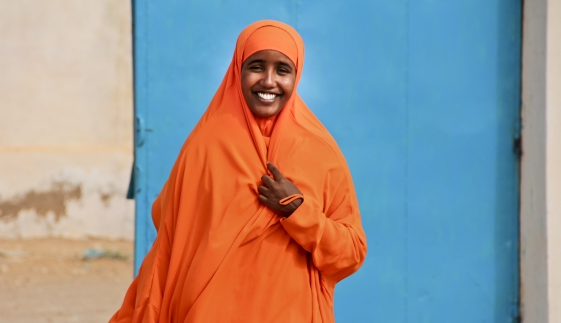
“As with most violent extremist groups, Al Shabaab feeds on the frustrations and grievances of youth that feel excluded from society and opportunities for upward mobility. With this in mind, it is important to consider what approaches and interventions are able to counter the appeal of groups like Al Shabaab from drawing more youth to join in violence.”
This study sets out to generate evidence on the impacts of a youth-focused stability programme in Somalia on reducing youth engagement in violence and improving stability through education and civic engagement. As explained in the report, “[F]or far too long, evidence on “what works” has evaded practitioners working on violence reduction, particularly Countering Violent Extremism (CVE). While a vast literature exists on the drivers to violence and violent extremism, few rigorous evaluations have been done to figure out what works to prevent or reduce individuals from engaging in violence. Many existing strategies and programs are based on conventional wisdom or anecdotal information on what are perceived to be the drivers of violence. Among these, lack of equitable, quality education and political marginalization are often cited as drivers for youth joining violent groups. However to be able to effectively address the growing threat of political violence and violent extremism in fragile and conflict affected contexts, empirical research testing the impact of programs meant to reduce violence is needed.”
To respond to this evidence gap, Mercy Corps carried out a rigorous mixed-methods impact evaluation of a youth-focused stability programme in Somaliland, funded by the United States Agency for International Development (USAID), known as the Somali Youth Leaders Initiative (SYLI). The programme supported the Somali National Strategy and Action Plan on Preventing and Countering Violent Extremism, which prioritises education in particular, as well as engagement with civil society. Alhough the SYLI programme has several inter-related components, the evaluation focused on two interventions:
- Increased access to formal secondary education: Under this component, the SYLI program has expanded secondary school access to youth across Somalia, through the construction and rehabilitation of schools, training of teachers, and the development of Community Education Committees.
- Youth empowered to contribute positively and productively to society through civic engagement: This component of the programme focuses on helping youth in schools to be leaders in the community through skills building and organising community action campaigns. Specifically, the programme identified 22 youth leaders in each of the new secondary schools, to serve as peer mobilisers. These youth were trained in the areas of conflict analysis, peacebuilding, teambuilding and leadership. Youth leaders then apply their skills to work on concrete issues at the local level that are drawn from their own daily experiences. Specifically, youth leaders have mobilised their peers to plan and carry out student-led community action projects that highlight the value of civic participation and civic responsibility, and model the principles of good governance and peaceful action. This exercise has given students first-hand experience on how to identify, plan, and execute projects working with the wider community for a social impact. Examples of civic engagement activities included youth constructing small gardens and planting trees to beautify school areas; youth organising an event with over 200 people during International Peace Day to discuss issues affecting youth, peace and importance of civic responsibility; youth conducting a district-wide sanitation and hygiene campaign; and youth conducting sensitisation campaigns in communities to discourage risky, illegal migration.
The research compared the impact of these two components of the SYLI program on youth propensity towards political violence. Using survey data from Somaliland - where the programme has been implemented the longest — the study compared attitudes and reported violent behaviours among youth in the programme and outside of it. In addition, researchers conducted in-depth interviews with teachers, community leaders, government officials and youth.
The following is an excerpt from the report, which offers a brief outline of the findings: “Although improving access to secondary education through this program reduced youth participation in political violence by 16%, it increased support for political violence by 11%. However, when combining secondary education with civic engagement opportunities that allow youth to carry out community action campaigns, both participation in and support for violence drop significantly, by 14% and 20% respectively. Giving youth in schools the ability to participate in civic engagement activities alongside formal education, it seems, fulfills a common desire among youth - the desire to do something positive, meaningful and impactful. Addressing this need, our research indicates, is one way to steer youth away from a path towards violence. Creating a sense of empowerment for youth and giving them hope in the possibility of making a difference through nonviolent actions are pathways through which civic engagement activities can support stability-related outcomes.
As violence reduction, particularly CVE, is a key priority for many governments, the results from this study have potentially far reaching and significant policy implications. Our findings signal that increasing access to education by itself does not fully address the underlying drivers of potentially destabilizing actions such as support for political violence. By increasing young people’s concern about future employment prospects and their dissatisfaction with government’s provision of education, schooling does not relieve youths’ frustrations; rather it can compound them. What matters to youth is not just having an opportunity to learn, but also being able to use their capabilities to achieve their ambitions and shape their future and the trajectories of their communities and nation."
Based on the results of this study, Mercy Corps is urging international donors, development agencies, and the Government of Somalia to:
- Put political will and investment into the youth education and civic society pillars of the Somalia National Strategy and Action Plan for Preventing and Countering Violent Extremism.
- Ensure that youth education programmes with violence reduction goals work to simultaneously improve access to school, enhance the quality of education, and increase access to community or civic engagement opportunities. Donors, national governments, and operational agencies should design youth-focused violence reduction and CVE programmes to take multi-pronged approaches that: (a) reduce feelings of hopelessness, isolation, and exclusion that can increase youth’s likelihood of engaging in violent organisations; (b) reduce the drivers of grievance related to governance - be they government provision of quality education, corruption, or biased service delivery; and (c) provide platforms for youth to engage in their communities and with governments in order to transform their perception of grievance. The Government of Somalia should incorporate civic engagement activities centered on community service into its education strategy and curriculum.
- Provide greater support to initiatives to improve the quality of education in Somaliland, and other transitional parts of Somalia.
- Increase government investment, engagement, and visibility in development projects, particularly in education.
Click here to access the report, executive summary, and research brief in PDF format.
Mercy Corps website on March 1 2017.
- Log in to post comments