










































Four Pillars PLUS Programme
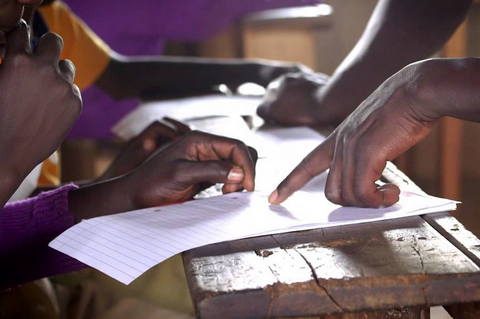
The Four Pillars PLUS strategy was designed to engage communities in the particular challenges facing girls and their families. In addition to the four pillars - scholarship, teacher development, mentoring, and community participation - the PLUS aspect of the programme takes into account the culture and context of each project location and incorporates activities that are most appropriate for building support for girls' education, enriching the local economy, and ensuring sustainability through education, skills building, training, and employment.
The four pillars involve the following:
- Girls mentoring - Trained and passionate mentors work in primary, secondary, and vocational schools. Each mentor meets with a group of 25 girls two times per month to address topics such as reproductive health, making good decisions, peer pressure, and planning for the future.
- Scholarships - A rigorous and transparent scholarship selection process is designed to fully engage school administrators and parents. The scholarships seek to defray the cost of education for primary- and secondary-level girls and boys.
- Teacher professional development/innovative approaches to learning - Teachers are trained in student-centered interactive methods, gender-sensitive approaches, use of visual aids, peer-tutoring to improve students’ academic performance, and methods to nurture a love for learning — particularly in math and science.
- Community participation - Parents and caregivers are engaged from the start to create a supportive culture for the education of girls and other vulnerable children. Income-generating activities empower families to save for girls’ education, increase food security, and invest in entrepreneurial activities.
The Four Pillars PLUS strategy was implemented in several phases:
- The first Four Pillars PLUS was implemented in the Gem District of Kenya from 2008 to 2015 with 10 primary schools, 17 secondary schools, and one vocational training institute. The overall goal was to improve enrolment, retention, and completion of primary and secondary education. "The PLUS component of the project focused on helping students transition from school to the labor market through mentoring and building partnerships with public, private and informal sectors to offer internships, apprenticeships and job placement for project beneficiaries within the counties of Kisumu and Siaya. The project also addressed strengthening the capacity of communities to engage in income-generating activities and increasing commitment to invest in girls’ education."
- Based on lessons learned, the Four Pillars PLUS approach was expanded to Benue State, Nigeria in 2012. Here the project "encouraged community engagement as a means to solve the particular challenges facing adolescent girls, especially those in junior and senior secondary schools, and their families. The PLUS aspect of the project took into account the particular culture and context of Benue State and responded with relevant interventions. These included transitioning graduating students to the labor market, through internships and employment, and higher education while empowering communities with skills and training so that they could become more economically productive."
- Running from 2015 to 2018, the Four Pillars PLUS project in Calabar, Cross River State, Nigeria, operates in three secondary schools and their communities and "provides scholarships to orphans and vulnerable children (with a focus on girls), mentoring to girls and boys, teacher training and community mobilization. The PLUS component of the project aims to strengthen adolescent reproductive health education, address and respond to school-related gender-based violence and early pregnancy, and strengthen the capacity of primary health centers to enable youth-friendly services."
Education, Girls
According to FHI 360, “notable changes have been realized in girls’ enrollment, retention and completion at the primary school level and in their improved performance, transition and retention at the secondary school level. The community has gradually accepted and supported the important role of girls in society, and teachers too are motivated to use the gender lens in achieving success in educational programs.”
FHI 360, GE Foundation
FHI360 website and FHI360 website on January 19 2016.