










































Effective Strategies to Provide Adolescent Sexual and Reproductive Health Services and to Increase Demand and Community Support
Department of Pediatrics, University of Washington (Denno, Hoopes), Department of Global Health, University of Washington (Denno), Department of Reproductive Health and Research, World Health Organization (Chandra-Mouli)
"This study is a descriptive review of the effectiveness of initiatives to improve adolescent access to and utilization of sexual and reproductive health services (SRHS) in low- and middle-income countries."
This article, one of the six, is part of a stock-taking effort of progress toward the 1994 Cairo International Conference on Population and Development (ICPD) definition of SRHS as a fundamental human right, including for adolescents. Adolescent ability and willingness to access SRHS can, as indicated here, serve to reduce the rate of HIV and sexually transmitted infections (STIs), births and maternal deaths, and unwanted pregnancies, among other benefits to their health. For example: "Despite the clear need for access to SRHS, coverage rates are low. Data from five countries in [Sub-Saharan Africa] SSA with high rates of new HIV infections found that 7%-31% of males and 9%-58% of girls aged 15-24 years had been tested for HIV and received their results." [Footnotes are removed throughout.]
This study used literature reviews, looking for reports with systematic review methodology (i.e., reproducible and broad search strategy, clear inclusion/exclusion criteria, examination of biases, and strength of evidence). It also sought updated data about initiatives that were included in identified review articles and examined information from a set of organisations that are involved in the delivery, funding, or evaluation of adolescent SRHS. It “examined four SRHS intervention types: (1) facility based, (2) out-of-facility based, (3) interventions to reach marginalized or vulnerable populations, (4) interventions to generate demand and/or community acceptance. Outcomes assessed across the four questions included uptake of SRHS or sexual and reproductive health commodities and sexual and reproductive health biologic outcomes.”
To differentiate programmes, the review used a 2006 World Health Organization typology framework: "type 1: training health providers and/or staff to improve their knowledge, attitudes, and skills to more appropriately respond to the needs of adolescents or type 2: provider/staff training plus adjustments in the facility to make them more adolescent friendly (e.g., extending operating hours, reducing prices, modifying physical layout to increase privacy or confidentiality)." From the same source, it also adopted the "Do not go, Steady, Ready, Go" classification to describe the level of effectiveness.
By type, among the findings for clinical and facility-based studies, were the following:
- In two studies for interventions that included information dissemination both via the community and either the education sector and/or mass media or both, one showed increased likelihood of seeking contraceptive services and reduced pregnancy rates. The other was able to demonstrate some increase in condom distribution, numbers of males presenting for outpatient STI-related services, and self-reported condom use. "However, biologic outcomes including prevalence of HIV and other STIs were not found to be influenced by the intervention… and neither [was] able to affect uptake of other SRHS nor able to reduce prevalence of HIV or other STIs."
- Regarding interventions that not only provided training for health professionals but also made adolescent-friendly facility-based modifications, though none showed biologic (e.g. pregnancy or HIV/STI prevalence changes), a Ugandan study in which adolescents were involved in stages of health centre reorganisation showed "a more than twofold increase in self-reported use of health services, including family planning and STI services, and a more modest increase in self-reported use of family planning, among adolescents in intervention compared with the control communities."
- A second initiative of this type "entailed multiple strategies including information distribution and awareness-building activities [for] Chinese youth and the distribution of free contraceptives…” resulting in 14-fold increased odds of contraceptive and condom use among those in the intervention compared with the control community.
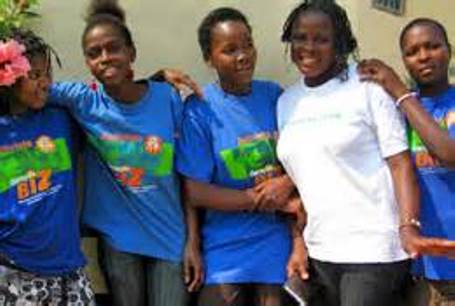
- A Mozambique initiative Geracao Biz (see related summary below) developed adolescent-only clinics, training materials, and periodic health worker exchange of technical information. "Peer activists welcomed and educated clients in the waiting room. Longitudinal assessment of records from a subset of clinics demonstrated a dramatic increase in total clinic attendance and condom distribution."
- "In Madagascar, 15 private clinics 'franchised' as a youth-friendly network and offered subsidized SRHS. Extensive community outreach, social marketing, and mass media communication were also used. Clinic attendance increased almost twofold for males and fivefold for females."
- "A national program in South Africa to improve adolescent-friendly health services (AFHS), including via national accreditation guidelines, was linked to a multimedia HIV prevention campaign..." increasing attendance and HIV testing.
- "In Bangladesh, community- and school-based education coupled with referrals to services free of charge did not result in a significant difference in self-reported use of condoms. They did report an increase in service use, especially at sites that included the school-linked component."
- In Nigeria, training of private clinic doctors, along with clinic certification as adolescent friendly and of patent medicine vendors and pharmacists, coupled with school-based health education on STI prevention and treatment delivered by peer counselors and health providers, increased self-reported condom use and care seeking.
For out-of-facility studies, some findings were the following:
- "In Kenya, delivery of messages regarding abstinence, faithfulness, and condom use to students from primary to university levels was combined with mobile HIV testing within school settings and an annual HIV testing day. Although self-reported condom use did increase over time (there was no comparison group), outcomes regarding health service use were not reported.”
- In general, studies of youth centres with SRH programmes found that they were used largely by males for recreation and gathering; female use was largely for vocational reasons - and, overall, clinic use for SRH was low.
- A Mexico study compared condom/contraception uptake using a youth centre strategy and a community-based youth promoter strategy. Uptake increased in youth centres by 44% and through youth promotion by 98%, which was less costly. The study showed that campaigns specifically focused on youth were more successful with that population.
- A Zambian study "evaluated the efficacy of providing emergency contraception (EC) prescriptions via four different provider groups: clinic-based providers, pharmacy staff, peer outreach counselors, and community sales agents such as shopkeepers and small-scale vendors." Youth completed the prescriptions primarily at pharmacies and traditional health facilities, and they received 30% of the prescriptions from peer counselors, even though the "prestudy qualitative assessments that identified the community sales agents as a preferred source of health services and the fact that most condoms obtained by adolescents in the project areas were from community-based distributors.
A focus on demand creation showed that it was an element in most of the studies above.
- In addition, the review examined 6 school-based programmes, of which two used a referral system, but, though these showed increased care seeking for STIs, they showed no increase in condoms or contraceptive use.
- The "Population Council’s Frontiers in Reproductive Health Program in four countries allowed for the examination of the impact of adding school-based in addition to community-based demand- generation and youth-friendly clinic activities..." with differing results: increased SRHS use in both control and non-control communities in Kenya, no change or decreased use in Mexico, increased use for boys but not girls in Senegal, and increased use in Bangladesh in sites with school-based activities.
- Community-based information, education, and communication (IEC) strategies showed mixed results, though an Indian study showed higher use of SRHS by girls associated with an empowerment programme. A Nepal study compared a participatory approach using activities such as youth clubs and street theatre to more traditional peer- and teacher-led education and found increased health seeking from the former approach.
- Generating community support was done by strategies such as radio and other media, IEC dissemination, launch events, drama, and discussions in community groups used to generate demand among adolescents and were also used to mobilise parental and more general community support for SRHS. Degrees of acceptance of information provision varied by country/culture - in some locations, there was parent approval for SRH education because parents found the conversations difficult; in other locations, there was disapproval, sometimes indicating a need for community-based activities to generate support. In some studies, work with religious leaders correlated with declines in negative attitudes on SRH education and conversation. Results attempting to correlate conversations on SRH with increased use of SRHS found some, though weak, association.
Table 6, page S39, shows programme types with "Do not go, Steady, Ready, Go" designations and notations of supply side actions and demand side actions. The type with the highest designation (though none received a "go" ranking) used staff training plus youth-friendly facility adjustment with community-based plus mass media or school-based interventions.
HC3 evidence database, accessed April 21 2015.
- Log in to post comments