










































I Can't Change My HIV Status But You Can Change Your Attitude Campaign
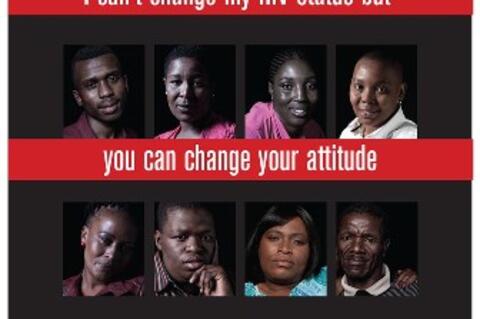
The campaign has been developed within the context of the Joint United Nations Programme on HIV/AIDS (UNAIDS) global World AIDS Day theme for 2011 to 2015: "Getting to Zero". Starting with the campaign launch on World AIDS Day 2014, this year, South Africa will focus on zero discrimination, although zero new infections and zero AIDS-related deaths will still be a key part of national interventions.
The campaign is built around a series of testimonials featuring people living with HIV sharing their own personal experiences. These stories are shared through short videos, photographs, and text. The materials are available free of charge on the SANAC website for civil society, the private sector, media, and others to use. According to SANAC, "these stories are not of despair and hopelessness but rather of courage and hope, and tell how key people in their lives helped them to overcome challenges." For example, 43-year old Phindile Madonsela talks about how she disclosed to her daughter when she was 7 and then again at the age of 14, Koketso Mokhetoa, 23 years, describes how she was born HIV positive, and doctors told her she would not make it past 13 years of age, and she would not have any children. Today, she is 23 and a mother to a healthy HIV-negative baby.
Click here to access the testimonials online.
The videos stories will be used as part of a series of community dialogues. In addition to the stories, other downloadable materials, such as banners, posters, leaflets, social media banners, and ideas of how people can get involved in the campaign, are available on the SANAC website, including the 2014 World AIDS Day Campaign Toolkit and Guiding Messages Booklet [PDF]. People can also interact with the campaign by liking the Zero Stigma, Zero Discrimination Facebook page.
As part of the campaign, SANAC and partners are collaborating to undertake the first National Stigma Index Survey among people living with HIV/AIDS (PLHIV) in 18 districts across South Africa (two per province). This study will include over 10,000 participants who are HIV positive and older than 15 years. "The Stigma Index will measure self-reported stigma and discrimination experienced by PLHIV and will ultimately inform the development and implementation of national policies and programmes that protect the rights of PLHIV. An update on the survey will be released on World AIDS Day 2014 and it is anticipated that the final report will be released by April 2015."
HIV/AIDS
According to SANAC, addressing the challenge of discrimination and stigma is strategically important to HIV/AIDS prevention and response. For example, fear of stigma discourages people from knowing their status and from seeking treatment. Stigma also disproportionately affects women and vulnerable groups such as sex workers, men who have sex with men, people who inject drugs, prisoners, and people with tuberculosis, who are some of the populations at greatest risks of contracting HIV.
South African National AIDS Council, National Association for People Living with AIDS (NAPWA), Treatment Action Campaign (TAC), Positive Living Women’s Network, Human Sciences Research Council (HSRC), WITS Reproductive Health and HIV Institute (WRHI), Deutsche Gesellschaftfür Internationale Zusammenarbeit (GIZ), Joint United Nations Programme on HIV/AIDS (UNAIDS), Department of Health.
Johns Hopkins Health and Education in South Africa website and South Africa AIDS Council website on December 8 2014.
- Log in to post comments