










































Sustainable Development in East Africa: Lessons from Four Population, Health, and Environment Projects
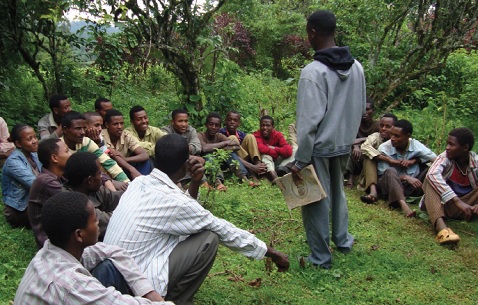
This 8-page brief discusses integrated Population, Health, and Environment (PHE) approaches, which are based on the idea that people’s health is closely linked to the environment and the protection of natural resources where they live. The brief shares perspectives from four projects in East Africa led by Pathfinder International and Deutsche Stiftung Weltbevölkerung (DSW), which were designed to "improve access to reproductive and other health services for vulnerable populations in rural and ecologically threatened areas, while at the same time empowering these communities to manage their natural resources in ways that benefit their livelihoods." According to the brief, linking these issues helps to motivate people to change behaviours to improve their health, livelihoods, and environment.
The brief highlights four projects - the Integrated Bonga Forest Project in Ethiopia; the Kakamega Environmental Education Programme (KEEP) in Kenya; the Tuungane project in Tanzania; and HoPE-LVB in Kenya and Uganda. The projects combine such strategies as participatory management and governance of natural resources; youth empowerment; health system strengthening; reproductive health demand, supply, and services; maternal health and family planning; income generation; and women's empowerment.
The brief explains that historically, PHE efforts have focused on the idea that smaller, healthier families place less pressure on natural resources, but Pathfinder and DSW have recognised the need to include reproductive rights and active citizen participation. "This commitment to support people and their rights begins with fostering community engagement and empowerment. Pathfinder and DSW conduct activities that expand people’s access to health information and services and build their advocacy skills, so they can demand the healthcare they need and make informed choices that benefit their families and ecosystems."
While each differs in specific activities and context, the following communication related strategies, among others, are considered part of a cohesive approach:
- "Start with Communities:Pathfinder and DSW place particular emphasis on communities to promote human rights, empowerment, and sustainability. All activities are designed to use local wisdom, respect customs, and sustainably utilise available natural and human resources whenever possible. Both organisations engage local leaders and community groups in dialogues about the projects and their intended outcomes. This allows for activities to be shaped by community feedback and promotes local ownership of the projects."
- "Empower Youth: DSW’s strategy is grounded in the belief that if younger generations are empowered, they can speed the transition towards sustainable green economies. This transition can be further propelled by providing young people access to new technologies that offer livelihood options and informed reproductive choice."
- "Advance Gender Equality:Pathfinder International and DSW believe not only in empowering women and girls but also in addressing broader gender roles through open communication. The PHE approach addresses a wide range of topics that have great potential to bridge gender divides by encouraging input and support from entire communities - women, men, girls, and boys. By setting criteria and collecting gender-disaggregated monitoring data, both organisations design projects to ensure full participation of both genders.
- "Advocate at Every Level: Advocacy for policy adoption and enforcement by community members, local leaders, government, and international stakeholders creates an environment for successful implementation. Corruption and violations of environmental laws are common. Health systems are also under-resourced, so advocacy to demand greater budget allocations is crucial."
Moving forward, the report recommends identifying and developing expertise in integrated, rather than sectoral, community development. As well, greater attention to monitoring and evaluation will help to create the evidence base necessary to be able to advocate for PHE strategies among policymakers. However, traditional approaches to monitoring and evaluation are questioned, and it is suggested that alternative approaches may need to be tested to capture the true picture of integrated approaches. The report notes that PHE are particularly important as policy makers move past the Millennium Development Goal target date of 2015 - “international stakeholders across sectors agree that the overarching themes for the post-2015 development agenda will be based on the integration of economic growth, social justice, and environmental stewardship."
Pathfinder website on June 16 2014.
- Log in to post comments