










































Remembering Mandela
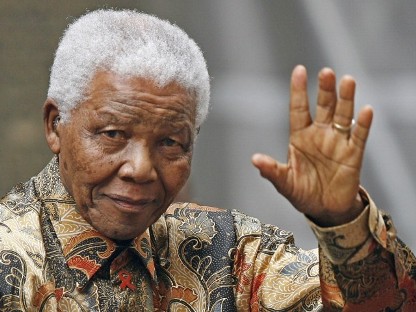
Author: Syed Mohammad Ali, originally published December 12 2013, cross-posted January 13 2014 The whole world has been mourning the passing away of Nelson Mandela, one of the most inspirational leaders of our time. While leaders of major countries and mainstream media outlets remain unequivocal in eulogising Mandela, it is quite interesting to note the manner in which this ongoing praise is being expressed, especially how it serves to avoid challenging the prevailing sociopolitical hegemonies.
World leaders rushed to South Africa to attend Mandela’s memorial ceremony and global media outlets continue to enthusiastically laud the South African statesman’s commitment to social justice and human rights. Yet, while taking cursory note of the fact that Mandela strongly resisted the apartheid regime based on the principle of racial segregation until its dismantlement in 1994, greater emphasis is being placed on how Mandela’s long-term detention actually transformed him from an ‘angry young man’ into an advocate for tolerance and cooperation. This recurrent attention to Mandela’s transformation into a peacemaker glosses over the fact that he long remained a very controversial figure for dominant world powers like the US and the UK. Besides being demonised by Ronald Reagan and Margaret Thatcher, Mandela remained on the US terrorism watch list until 2008.
It is also interesting to note how much of the current media coverage, especially by Western media conglomerates, is conveniently ignoring Mandela’s very vocal criticism of the US invasion of Iraq, which he considered to have been impelled by the lust for controlling the country’s oil. Mandela had even insinuated that both the UK and US governments chose to ignore the UN secretary general in their rush to go to war with Iraq perhaps due to the fact that Kofi Annan was not white. Mandela has also made overt statements pointing to the problem of lingering racism within the US. Such views are, however, not being paid much attention by mainstream Western media outlets, which seem to project Mandela as someone who had managed to transcend the problem of race and instead become a champion of tolerance and peaceful coexistence.
There is no doubt that Mandela had shown great foresight in renouncing violence and instead pursuing reconciliatory policies after the fall of the apartheid regime, preventing much bloodshed and ushering in a period of democracy within his country. Such sagacity rightly won him international accolades and even a Nobel Peace Prize. Mandela’s political acumen avoided the persecution and resulting flight of white settlers which other African leaders such as Robert Mugabe in Zimbabwe were incapable of managing. But Mandela, too, was not able to inhibit the emergence of the prevailing patronage system and crony capitalism that now afflicts South Africa, preventing its masses from breaking free of the shackles of grinding poverty.
Nonetheless, Mandela remained a fairly progressive thinker and political activist even after he got a chance to lead his country. Inspiration does indeed need to be drawn by leaders around the world, including by our own countrymen, from Mandela’s services to the cause of social justice.
It was good to see the Pakistani parliament paying respect to Mandela as an extraordinary leader and human being. It will be even more encouraging if our political representatives can tangibly demonstrate similar dedication and acumen as Mandela in addressing the growing divisiveness currently afflicting our own country.
Click here to access this in The Express Tribune blog site.
Image credit and caption: AFP - The late anti-apartheid hero Nelson Mandela.