










































APHIAplus Nuru ya Bonde
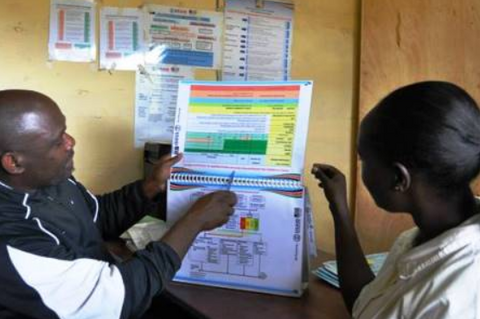
The sex worker interventions are based on the idea that in order to check the spread of HIV, there is need for education and outreach programmes for sex workers and their clients. All interventions are informed by evidence and guided by the national Minimum Package of Services for Sex Workers. APHIAplus Nuru ya Bonde interventions for sex workers combine different but complementary strategies for maximum impact. Some of the key strategies are as follows:
- Assessments: Assessments are conducted to collect in-depth information on the number and situation of sex workers, including high-risk behaviours as well as social, cultural, and economic factors that hinder or support adoption of safer behaviours.
- Strategic behavioural communication: APHIAplus Nuru ya Bonde implements strategic behavioural communication interventions informed by theory, combining different evidence-informed approaches that meet minimum standards to promote healthy behaviours with regard to HIV, STIs, family planning, and other health issues. This component includes peer education, risk assessment, risk reduction planning, skills training, and condom promotion.
- 100% Condom Use: APHIA plus Nuru ya Bonde promotes condom use to prevent sexual transmission of HIV and other STIs among sex workers and the general population. Peer educators work to empower sex workers to negotiate for condom use with clients. The project works with the Public Health Department and other stakeholders to ensure provision of information on male and female condoms; collaboration with establishment owners, law enforcement officers and other influencers to create an enabling environment; easy access to a reliable supply of free or affordable condoms and water-based lubricants; and effective behaviour change communication interventions to promote condom use.
- Provision of health services: Drop-in centres have been established to provide health care services responsive to the needs of the sex workers. Regular outreach is organised in hotspots and sex workers are referred to the drop-in centres and health facilities for services.
- Orientation training and dissemination of guidelines:Working with NASCOP, APHIAplus Nuru ya Bonde conducts short, focused, and thematic orientation training and sensitisation for service providers, enabling them to provide acceptable services that address the needs of sex workers while respecting their health and human rights. Service providers are mentored to improve their skills in interacting, counselling, and treating sex workers with compassion and care. The project also disseminates national guidelines for sex workers HIV and STI interventions.
- Addressing social determinants of health: The project addresses social issues affecting women in sex work, including giving them skills and opportunities for alternative livelihoods. Other activities include psycho-social support, family and social services and support to mitigate sexual violence.
- Monitoring and Evaluation: A comprehensive and participatory monitoring system has been put in place to promote the use of data for decision-making to improve services and project implementation.
HIV/AIDS, Reproductive Health
According to USAID’s APHIAplus Nuru ya Bonde project, sex workers are disproportionately at higher risk for acquiring or transmitting HIV due to increased frequency of high risk sex such as unprotected anal and vaginal sex, multiple partners, and frequency of partners. Sex workers also experience barriers to accessing services because their behaviours are criminalised and stigmatised making them marginalised and hard to reach. Although HIV transmission among sex workers and their clients has reduced over the years in Kenya, it remains much higher than in the general population. Sex workers account for 14% of all new infections, according to recent estimates.
FHI 360, African Medical and Research Foundation (AMREF), Catholic Relief Services (CRS), Liverpool VCT, Care and Treatment (LVCT), the National Organization for Peer Educators (NOPE), Gold Star Kenya and Government of Kenya.
HIV Education and Health Services for Sex Workers[PDF] on August 24 2013.
- Log in to post comments