










































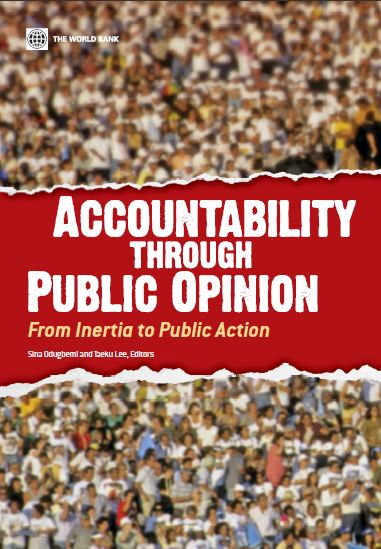
Accountability Through Public Opinion: From Inertia to Public Action
Communication for Governance and Accountability Programme (CommGAP)
This book, published by Communication for Governance and Accountability Programme (CommGAP), seeks to address some core questions that the book’s contributors believe are “crucial to understanding what accountability is and why is affects the effectiveness of development aid.”
Specifically, it looks at the following questions:
- What does it mean to make governments accountable to their citizens?
- How does one hold governments to account?
- How does one create genuine public demand for accountability?
- What needs to be done to move citizens from inertia to public action?
The authors argue that genuine public opinion is central to accountability. “Governments will only be accountable if there are incentives for them to do so - and only an actively engaged and critical public will change the incentives of government officials to make them responsive to citizens' demands. Accountability without public opinion is a technocratic solution, not an effective one.”
Nearly 30 accountability practitioners and thinkers made contributions to this book. In the book they discuss “the concept and its structural conditions; the relationship among accountability, information, and the media; the role of deliberation to promote accountability; and mechanisms and tools to mobilise public opinion.” The book includes case studies from around the world designed to illustrate the centrality of public opinion.
The Communication for Governance and Accountability Programme (CommGAP) of the World Bank is dedicated to exploring and documenting the role of communication tools and approaches to improving governance and, as a result, development effectiveness. The project was concluded in October 2011.
See Related Summaries below for further publications by CommGAP.
CommGAP website on August 13 2012.