










































Community Media: A Good Practice Handbook
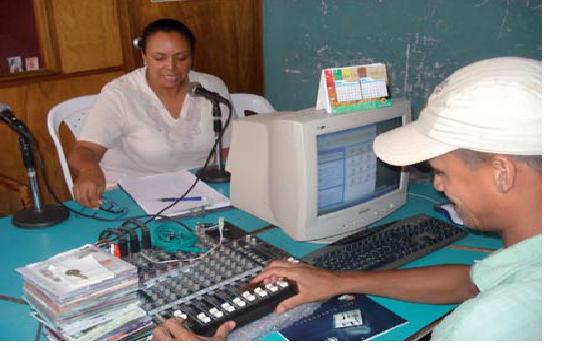
"These isolated examples of the social impact of community media, when interwoven with similar illustrations from other parts of the world, reinforce their significance as an alternative form of communication."
From the United Nations Educational, Scientific and Cultural Organization (UNESCO), this handbook offers a collection of case studies of good practice in community media. It intends to provide inspiration and support for those engaged in community media advocacy and to raise awareness and understanding of community media among policymakers and other stakeholders. Community media are understood in this collection as independent, civil-society-based media that operate for social benefit and not for profit. According to the handbook, community media "provide communities with access to information and voice, facilitating community-level debate, information and knowledge sharing and input into public decision-making."
The collection is focused on electronic media, including radio, television, the internet, and mobile devices. It is global in spread, with examples from 30 countries, but primarily drawn from developing countries. This has the consequence that radio features predominantly in the handbook, in view of its extensive presence today in developing country media environments and its reach into rural as well as urban communities. The collection endeavours to draw from a broad range of geopolitical contexts - different regions, cultures, languages, and political systems - including urban and rural examples and small and large countries. The criteria of good practice include: the adaptability, relevance, and sustainability of the case example; whether it is community-owned and participatory; its uniqueness or innovative nature; as well as the evidential base and credibility of the source material. The handbook highlights problems while at the same time offering possible solutions, focusing on sustainability and social impact of community media.
The collection is organised in three sections. The first section addresses the enabling environment for community media; the second one looks at sustainability; and the third one is concerned with social impact. Each case study has a summary of the good practice, a short description that provides further context, plus highlights of some of the key characteristics. References and links are provided for those who seek further information.
Editor's note: World Radio Day is February 13, and was celebrated for the first time in 2012.
English.
77
Radio for Peacebuilding Africa (RFPA) Update, February 15 2012; UNESCO website, February 16 2012; and email from Mirta Lourenço to The Communication Initiative on February 17 2012.
- Log in to post comments