










































Building Paths to Peace: Bo Peace and Reconciliation Movement
Conciliation Resources
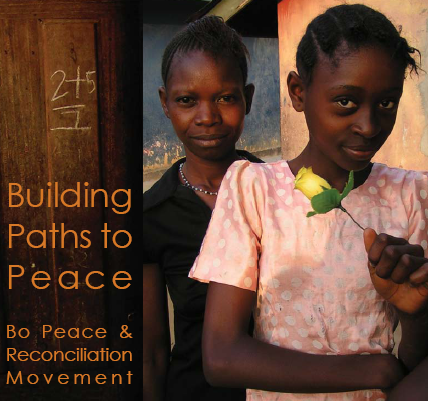
This 43-page report, published by Conciliation Resources (CR), reviews the work of Sierra Leone's Bo Peace and Reconciliation Movement (BPRM) in post-conflict reconciliation and peace-building following Sierra Leone's civil war. Through a partnership with Conciliation Resources (CR), BPRM has identified and trained voluntary peace monitors, or community leaders perceived to be sensitive and neutral intermediaries. These peace monitors receive regular training in conflict management, human rights, and justice issue. According to the report, BPRM has helped to prevent and transform conflict into opportunities where peace, reconciliation, human rights, and participatory governance can be established in order to stimulate social and economic development in communities. BRPM’s approach significantly helps to reduce some of the aggressive and negative impacts characteristic of a war- traumatized nation.
As explained in the report, a team of 18 BPRM peace monitors is made up of representatives from the nine affiliated organisations. As the war affected mainly rural communities, BPRM believes that the long-term process of building peace and reconciliation needs to take place in these communities. They do this by supporting community and traditional authorities to explore and develop alternative approaches to conflict resolution. Peace monitors are able to combine knowledge in conflict resolution gained during trainings with traditional methods of conflict resolution in an approach that has developed over time as good practices and lessons learned have been incorporated.
Locally sourced peace monitors bring an added strength to the programme in that they are able to identify potential conflicts at the community level early, before conflicts escalate into violence. In the case of larger disputes, BPRM sends in a select group of staff and peace monitors to assess the conflict. Assessment groups are comprised of similar ages, sex, political standing, and sometimes religious affiliation to their peers involved in the conflict, which allows for a confidence-building connection between the group and conflicting parties.
The report concludes with key lessons learned in BPRM's ten years of work, including:
- Maintaining peace at a community level can contribute to greater national stability by diffusing small-scale domestic violence and larger political and chieftaincy conflicts, which all have the potential to escalate if left unaddressed.
- Balancing an understanding of cultural and social norms with the ability to carefully challenge the traditions that are central to the conflict dynamics plays an important role in building stable and cohesive communities; and
- Involving the whole community, including traditionally excluded groups such as women and youth and perpetrators, is key to sustaining the peace process while contributing to social justice.
The report mentions that in the future, Conciliation Resources will work with BPRM to create a Peace Resource Centre in Bo town to supporting skills training programmes. The new centre would cater for training peace monitors in economic as well as reconciliation skills as a means towards economic justice. The centre will also be a base for training and exchange visits for peace monitors and Chiefdom Peace and Reconciliation Committees, which has proved so successful in terms of motivating volunteers and helping people share their experiences, both of conflict and peace.
Conciliation Resources website on February 3 2012.
- Log in to post comments