










































Hlokomela Project
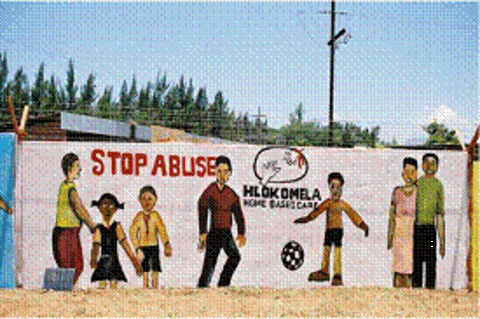
Hlokomela works to increase awareness of HIV vulnerability on farms in Hoedspruit; improve knowledge and skills through capacity building of beneficiaries, care workers, Health Lifestyle Action Teams, and farm management; facilitate access to HIV-related services; improve the working environment of farm workers through promotion of productive healthy lifestyles; and increase understanding of the HIV vulnerability of farm workers which will contribute to evidence-based programming.
The programme offers a comprehensive response to HIV including access to health services, peer-led communication, gender interventions, and social and behavioural change communication. As part of this, the project works with farm management to assist in developing a healthier work environment, and to develop and implement workplace wellness policies and programmes that include HIV/AIDS. The project also provides primary health care by training and mentoring farm workers as care givers (Nompilos), and has a strong gender component which seeks to sensitise, train, and mentor male role models to address issues such as gender-based violence, transactional sex, and poor health-seeking behaviour in men.
The project also developed and implemented an integrated social change communication programme. This includes peer communication (face-to-face dialogue between Nompilos and farm workers), peer education, and the participatory development of local communication tools such as billboards, pamphlets, newspaper articles, murals, and other materials. The goal is to build individual and collective esteem and create a supportive environment of caring that enables individuals to reduce high-risk behaviour and lead healthier lives.
Recreational programmes are also organised to increase social participation and improve the quality of farm workers' lives. Wellness clinics provide information, condoms, health care services, and referrals including to voluntary counselling and testing and antiretroviral treatment services. The project also runs a community vegetable and herb garden, and works to build partnerships with public and private entities to build capacity, attract resources, improve access to services, and enhance sustainability.
According to the organisers, the project has resulted in reduced employee absenteeism and employee turnover and has increased productivity. In addition, addressing gender issues in a non-threatening way, though role models, has proved to be effective in reach men.
HIV/AIDS
The project has become a learning site for the PHAMSA Project Model on HIV interventions for mobile and migrant populations, and currently works with 69 agricultural businesses in the Hoedspruit area. Based on the success of this partnership, IOM, with funding from USAID, has replicated this health promotion and service delivery model in three other farming areas in the Limpopo and Mpumalanga provinces. Known as Ripfumelo, the project involves partnerships with local implementing partners and reaches 20,000 farm workers and their families on 120 farms.
Hlokomela has received three awards, including a Silver Impumelelo Award for innovative work in 2008, an "Investing in Life Award" in 2009, and an Impumelelo Innovations Star Award in 2010.
Hoedspruit Training Trust and International Organisation for Migration.
HTT website, IOM website on January 4 2011 and Eye on Migration Health, Issue 4.
- Log in to post comments