










































Mbariza Ntore
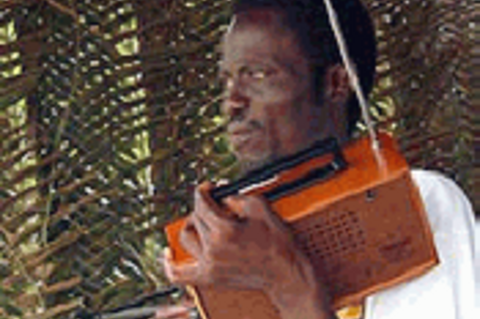
Mbariza Ntore takes a pragmatic approach by working with combined media houses, by following up pre-election peace pledges, and by tracking and avoiding violent incidents.
Benevolencija has put in place a pool of 16 journalists from Burundi's radio, print, television, internet, and news agencies to facilitate investigation and production work on a regular basis. Among the priorities of this pool is the production of a common outlet (a weekly radio programme/newspaper dossier) that is designed to be a source of credible information for the population. Organisers explain that having access to information in forms that people can understand, in their own (Kirundi) language, seems to be a basic democratic necessity in the pre-electoral phase.
Together with other media stakeholders that are all unified under a Plan d'Action Commun d'Appui aux Médias pendant le cycle électoral (PACAM) umbrella, the pool of journalists will be involved in pre-electoral debates among all political parties. In electoral and post-electoral phases, the focus will be on developing communication content that can help audiences "immediately" in helping to understand the situation better and change their attitudes and behaviour (with regard to staying or becoming non-violent citizens). The main focus here will be on the "bystander in transition to becoming an average potential perpetrator". Challenging those people who are in danger of joining a negative group and arming themselves will be done through asking them questions that seek to create small "critical moments", leading them into reflection before they engage in violent behaviour.
Democracy and Governance.
According to organisers, in low-income, post-conflict-dominated countries, voters have, in general, little knowledge about the important choices they face. Furthermore, the past performances of elected leaders are rarely visible or understandable, since impact studies are often not made available to the larger public.
While electoral processes in war-prone societies present particular problems, they also provide core opportunities for change - that is, for participation in governance. However, the campaign, the voting, and the proclamation phases of the elections are frequently accompanied by violence, as recently witnessed in the Democratic Republic of the Congo (DRC) and Kenya.
In Burundi, journalists and media proprietors face commercial and political constraints which limit their journalistic independence, integrity, and practical and logistical capacity to analyse the political context. Lack of time and means limits each media outlet to have a selected, but well-trained and informed, pool of specialists, able to cover the elections correctly. Through this project, Benevolencija is suggesting a more appropriate content debate that should enhance political leaders and factions to engage them into developing more accountability and programme development.
The National Radio of Burundi, The National Television of Burundi, Radio Isanganiro, Radio Renaissance, Radio Rema FM, Radio Bonesha FM, Radio CCIB FM +, Radio Umuco, Radio Star FM, Radio RPA, Radio Salama, Iwacu, Renouveau, Ubumwe, Arc en Ciel, Burundi Tribune, Net Press and Agence Burundaise de Presse.
Email from Johan Deflander to The Communication Initiative on March 4 2010. Image credit: East Africa Wire
- Log in to post comments