










































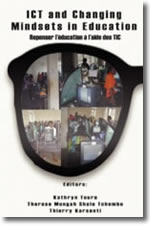
ICT and Changing Mindsets in Education
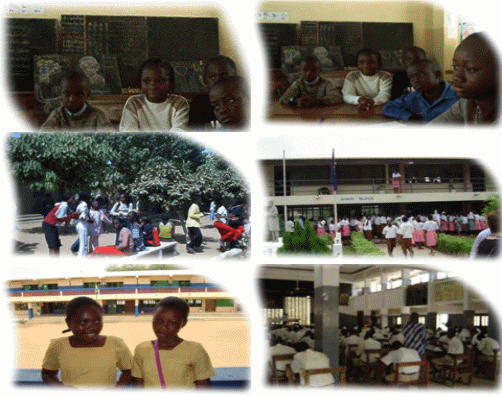
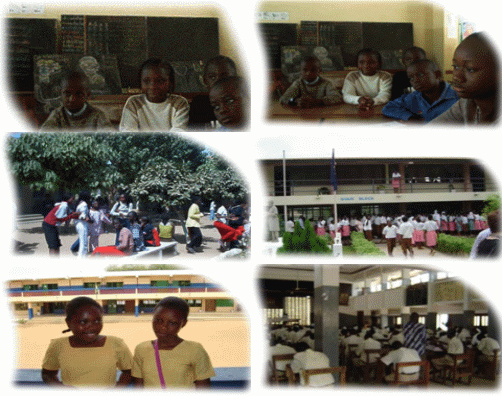
Educational Research Network for West and Central Africa/ Réseau Ouest et Centre Africain de Recherche en Education
According to this report, the debate is no longer whether to use information and communication technologies (ICTs) in education in Africa but how to do so, and how to ensure equitable access for teachers and learners, whether in urban or rural settings. This publication looks at how Africans adopt and adapt ICT and how ICT is shaping African schools and classrooms. It seeks to answer some of the following questions: Do girls and boys use ICT in the same way? How are teachers and students in primary and secondary schools in Africa using ICT in teaching and learning? Why might they not be using ICT, and what are the barriers? How does the process of using ICT transform relations among learners, educators, and knowledge construction?
The publication is a collection of articles by 19 researchers from Africa, Europe, and North America, who explore these questions from a paedagogical perspective and from specific socio-cultural contexts. Many of the contributors draw on learning theory and survey data from 36 schools, 66,000 students, and 3,000 teachers. In the introduction to the collection, the editor suggests that ICT on its own will not bring about improvements in educational quality, but, when mindsets are changed to use it reflectively and strategically, teaching and learning processes can be deepened.
According to the report, creative and contextualised appropriation of new technologies contributes to more active and interactive paedagogies, increased motivation, updated teaching materials, discovery of self and others, and changed roles and relationships - among teachers and students, and with knowledge and information. This includes leaving behind paradigms of teacher as master. As reported here, learning can become more dynamic as teachers and students become partners in accessing information, constructing relevant knowledge, and representing self and others.
The document makes the point that too often the emphasis in ICT use is on equipment, on making profits from schools, or on promises of modernity, instead of on opportunities for teachers to learn and experiment with effective uses of technologies to enhance teaching and learning processes. The focus seems to be on technology rather than on learning objectives and contexts. Instead, the focus needs to shift to appropriate policy frameworks that will guide ICT initiatives to promote quality of education. Teacher training and new skills in partnership management are essential. In Africa, local, national, and regional efforts are needed to facilitate development by educators of appropriate digital resources created by and for Africans and others.
The collection includes the following contributions:
- Introduction: ICT and Changing Mindsets in Education - by Kathryn Touré
- Reflections on Cultural Imperialism and Pedagogical Possibilities Emerging from Youth Encounters with Internet in Africa - by Kathryn Toure, Mamadou Lamine Diarra, Thierry Karsenti, Salomon Tchaméni-Ngamo
- Réflexions sur l’impérialisme culturel et les possibilités pédagogiques, émergeantes des rencontres des jeunes en Afrique avec internet - by Kathryn Toure, Mamadou Lamine Diarra, Thierry Karsenti, Salomon Tchaméni-Ngamo
- Gender and Psycho-paedagogical Implications for Cognitive Growth through Access to Information and Communication Technologies - by Therese Mungah Shalo Tchombe
- Comment intégrer les TIC dans les écoles béninoises si les enseignants restent en marge? - by Thierry Azonhe, Aristide Adjibodou, Florentine Akouété-Hounsinou
- Quelle durabilité pour les TIC dans l’éducation au Bénin? - by Aristide Adjibodou, Alexandre Biaou, Toussaint Noudogbessi
- L’usage pédagogique des TIC et les enseignants des écoles fondamentales privées au Mali - by Mamadou Lamine Diarra
- Usages et représentations sociales du courriel dans les cybercafés de Bamako - by Béatrice Steiner
- Introduction of ICT in Schools and Classrooms in Cameroon - by Moses Atezah Mbangwana
- Evaluation de la pratique des enseignants en matière de TIC dans les écoles au Sénégal - by Papa Amadou Sène
- Teacher ICT Readiness in Ghana - by Kofi B. Boakye, Dzigbodi Ama Banini
- L’intégration des TIC dans l’enseignement: quelles perspectives pour l’école béninoise? - by Pascal Codjo Dakpo, Florentine Akouété-Hounsinou, Thierry Azonhe
- Quel avenir pour l’usage pédagogique des TIC en Afrique subsaharienne? Cas de cinq pays membres du ROCARE - by Djénéba Traoré
- Les TIC, l’apprentissage et la motivation des filles et des garçons au secondaire au Cameroun - by Brigitte Matchinda
- Les TIC: instruments de médiation socioconstructiviste - by Daouda Dougoumalé Cissé
Comments

Merci beaucoup pour ce texte.
Merci beaucoup pour ce texte. Avez-vous un flux RSS ?. Je ne m'y connais pas trop dans ce domaine, moi c'est plutôt l'optique, mais je trouve que c'est un très bon article.
Léa.
Reflections on Cultural
Reflections on Cultural Imperialism and Pedagogical Possibilities Emerging from Youth Encounters with Internet in Africa.
Team building