










































Evaluation of the Gacaca Promotional Campaign in Rwanda
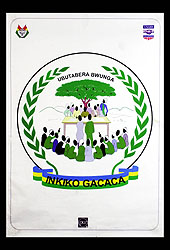
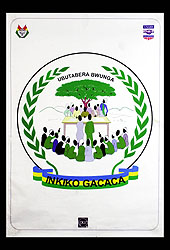
This document reports the findings from the evaluation of the Gacaca promotional campaign in Rwanda. The Johns Hopkins University/Population Communication Services (JHU/PCS) provided technical assistance to the Ministry of Justice and Institutional Relations of the Republic of Rwanda to design, implement, and evaluate the campaign. Funding for the project and this study came from the United States Agency for International Development (USAID).
Following the genocide that occurred in Rwanda in 1994, thousands of genocide suspects were arrested and awaited trial. In an attempt to speed up the trials, ensure timely justice, promote reconciliation among the various groups in the country, and foster a vibrant and peaceful post-genocide society, the government of Rwanda established the Gacaca judicial system. Gacaca is a communal judicial system that allows active participation of the community in the provision of evidence, trial, and sentencing of genocide suspects.
The overall goal of the campaign supported by JHU/PCS was to increase knowledge about Gacaca jurisdictions among Rwandans and to encourage active participation of community members in the process. As a preparatory step to designing project activities, JHU/PCS conducted population-based formative and baseline research activities in collaboration with the Center for Conflict Management of the National University of Rwanda to explore community perceptions about the Gacaca judicial system. Results from the studies that were conducted between June and October 2000 indicated that there was minimal public awareness about Gacaca law. The follow-up survey described in this report further explored community perceptions about the Gacaca jurisdictions and assessed the levels of actual participation and participation intentions in the activities connected with the Gacaca jurisdictions. The purpose of the follow-up survey was to assess the effects of the communication campaign and to evaluate current community knowledge, attitudes, and expectations of the Gacaca jurisdictions.
Key findings from the evaluation:
According to the report, the campaign had a wide reach: four-fifths of the respondents reported exposure to at least one campaign material or activity and almost half were exposed to 5 or more different campaign materials or activities. The combined use of modern and traditional media and the wide variety of campaign materials and activities made it possible to reach the various socio-demographic groups that the campaign intended to reach. Although the research showed that there were still strong emotions related to the genocide, there was a perception that Rwandans were gradually moving beyond the genocide experience and rebuilding the social capital that was compromised by the events.
According to the report, knowledge about Gacaca jurisdictions had increased since the baseline. The data showed that campaign exposure was associated with increased knowledge about the jurisdictions, and that the higher the level of exposure, the higher the level of Gacaca knowledge. However, research also showed that that there was still a high level of misinformation about the jurisdictions. In addition, knowledge about some provisions of the Gacaca law like the communal work scheme and guilty plea provision was still low. The report recommends more efforts to improve this situation.
Regarding perceptions about Gacaca jurisdictions, the research showed that proportionally more people at the follow-up than at the baseline expressed specific concerns about Gacaca jurisdictions. The respondents who were exposed to the campaign were more likely to express concern about the jurisdictions. In spite of the concerns, the perceived response-efficacy of the Gacaca system was very high and had increased since the baseline. The majority of the respondents were very confident that Gacaca would help to solve problems of genocide suspects and survivors and at the same time bring lasting peace in Rwanda.
The data indicated that the campaign had helped to foster participation in the Gacaca process and helped promote positive attitudes towards participation. The evaluation showed that the level of participation was relatively high in the communities where Gacaca jurisdictions had started their activities. Among the respondents who had not yet participated in the activities of the jurisdictions, participation intentions were very high. On the other hand, the data showed that people rarely talked to each other about participation in the Gacaca process or encouraged others to testify or plead guilty, despite the fact that many perceived the self-efficacy involved in taking such actions.
Concerning the conditions for reconciliation between genocide perpetrators and genocide victims, the survey showed that the majority of the respondents believed that perpetrators should ask for pardon, while genocide victims' families should be ready to forgive - whether there is compensation or not.
Evaluation of the Gacaca Promotional Campaign in Rwanda [PDF] on August 21 2008.
- Log in to post comments