










































Working with Individuals, Families and Communities to Improve Maternal and Newborn Health
Executive Summary:
"The Making Pregnancy Safer (MPS) Department was established to enhance WHO's [World Health Organization's] efforts in Safe Motherhood. MPS states that both improvement of health services and actions at the community level are required to ensure that women and their newborns have access to the skilled care they need, when they need it.
Working with individuals, families and communities (IFC) is considered by MPS to be the critical link in ensuring the recommended continuum of care throughout pregnancy, childbirth and the postpartum periods. Furthermore, it is recognized that the availability of quality services will not produce the desired health outcomes where there is no possibility to be healthy, to make healthy decisions, and to be able to act on those healthy decisions.
Based on the Health Promotion approach as outlined in the Ottawa Charter, the present document proposes a framework for the development of interventions at the IFC level to improve maternal and newborn health. It is a first step for the WHO MPS towards the elaboration of a consistent and validated IFC approach.
The aim of working at this level is to contribute to the empowerment of women, families and communities to improve and increase their control over maternal and newborn health, as well as to increase the access and utilization of quality health services, particularly those provided by the skilled attendants. Interventions are organized into four priority areas:
- developing CAPACITIES to stay healthy, make healthy decisions and respond to obstetric and neonatal emergencies;
- increasing AWARENESS of the rights, needs and potential problems related to maternal and newborn health;
- strengthening LINKAGES for social support between women, men, families and communities and with the health care delivery system;
- improving QUALITY of care and health services and of their interactions with women, men, families and communities.
A comprehensive strategy, with interventions from each one of the four priority areas, is recommended. The complex nature of maternal and newborn health, and of work at the IFC level, requires an integrated approach that maximizes the benefits of a broad range of activities, both internally within the health system and externally with other sectors (intersectoral approach), in particular with education and income-generating programmes.
Making Pregnancy Safer has specific roles, based on the mission and comparative advantages of WHO. Major efforts for working with individuals, families and communities to improve maternal and newborn health will be expended in the following areas of action:
- building a body of research and experiences related to this area,
- actively promoting the critical importance of this work, and
- establishing partnerships for implementation within maternal and newborn health strategies."
The following is excerpted from the document (page 12)
"Overview of interventions in the priority areas
- Developing CAPACITIES to stay healthy, make healthy decisions and respond to obstetric and neonatal emergencies
- Self-care
- Care-seeking behaviour
- Birth and emergency preparedness
- Increasing AWARENESS of the rights, needs and potential problems related to maternal and newborn health
- Human & reproductive rights
- The role of men and other influentials
- Community epidemiological surveillance and maternal-perinatal death audits
- Strengthening LINKAGES for social support between women, families and communities and with the health delivery system
- Community financing and transport schemes
- Maternity waiting homes
- Roles of TBAs [traditional birth attendants] within the health system
- Improving QUALITY of care, health services and interactions with women and communities
- Community involvement in the quality of care
- Social support during childbirth
- Interpersonal & intercultural competence of health care providers"
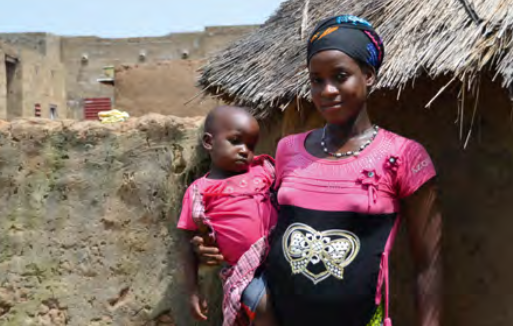
WHO website November 19 2010. Image credit: Enfants du Monde