










































Working in Conflict: A Faith Based Toolkit for Islamic Relief
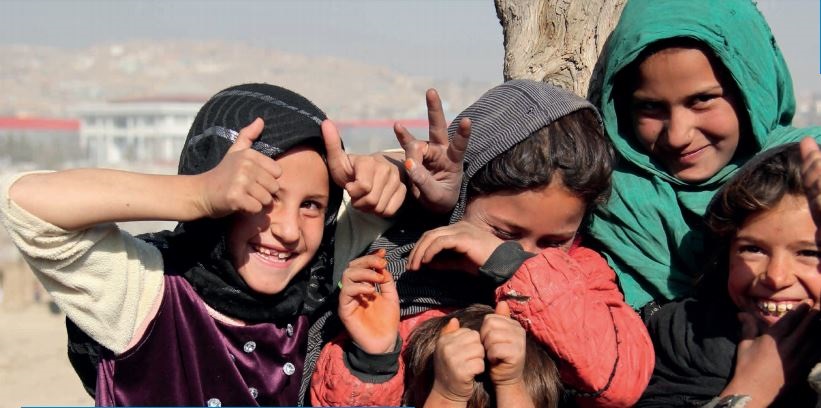
"This toolkit has been designed to be a practical resource for Islamic Relief staff working in conflict zones and fragile contexts that takes our Islamic faith as a foundation."
From the Islamic Relief Worldwide (IRW) working paper "Understanding an Islamic Framework for Peacebuilding", IRW developed this toolkit based upon the principles and frameworks provided by Islam in the pursuit of peace and the transformation of conflict. The approaches and methodologies in this toolkit, written primarily for IRW field offices, were piloted in Sudan, Afghanistan and Mali in 2013–14.
The IRW found that, in Muslim communities, "Islamic discourse provides a source of legitimacy upon which notions of truth, justice and peace are built. As such, awareness and sensitivity to the Islamic faith of a community can be invaluable in seeking to build their resilience to conflict." The resource begins with an introduction to Islamic culture in order to enhance awareness of the religious and cultural differences that may need to be taken into account by practitioners across various faith communities. (Pages 9-11 give a Muslim context including a contrast with Western approaches.)
Unlike Western legal approaches, "conflict resolution approaches within Muslim societies focus on wrong-doing as an offence both against the individual and the community, and processes typically involve the whole community in participatory mechanisms along with the offender(s) and victim(s)." The Islamic Relief strategy recognises that conflict is both a cause and result of poverty, suffering, and injustice. It tries to make resources available to local communities to strengthen peace building and conflict transformation skills. Sites are selected through conflict mapping assessments. IRW then assesses projects for conflict sensitivity, and develops projects that integrate conflict transformation into activities and interventions. Project development includes risk assessment and planning and network building in order to work in insecure conditions.
The toolkit has a section on Islamic principles as a basis for conflict transformation starting on page 14 and then offers standards of work in conflict environments including: build and maintain trust;
resilience and disaster risk reduction; community driven impact; inclusivity and neutrality; and integrated sustainable development - based upon Shari’a, and, as stated here, include faith, life, intellect, posterity, and wealth. (See chart on page 25 to identify where more traditional development aims lie within these development principles.) Islamic guidelines for behaviour in conflict and principles for non-violent action complete the first section.
The second section describes the cost of human violence and what vulnerable groups need amid conflict, including women and gender-based violence, children, elderly and disabled (for example, develop support networks, facilitate emergency training for the elderly), minority groups, and refugees (for example, individuals, as well as states, have the right to come forward to help refugees), including men, who have lost their traditional role and might be less likely to express distress or despair or feelings or post-traumatic stress disorder (PTSD). Pages 12 and 13 review child protection standards for children recruited as child soldiers, for example: "Include information on community based disarmament, demobilization or reintegration (DDR)....Work with local leaders, families, communities and youth organisations to prevent recruitment and change any norms that are favouring the participation of children in armed forces or groups...." page 25 lists ways to support sexual assault survivors, for example, not disclosing information about them without consent, and referring them to support groups and medical assistance.
Conflict mapping tools are included in the third section. Participatory approaches are emphasised to understand the dynamics of disputes. Questions on when and how to create conflict maps are answered by fundamental steps in the process using conflict sensitivity methods. A checklist on stakeholders includes such headings as their stake/interests, problems, resources, positive and negative roles, capacity to cope and capacity gaps, among others. Relationship mapping places stakeholders in relation to each other and to the conflicting groups. ABC mapping or triangle mapping can identify behaviour, attitudes, and context. tree analysis exercise can reveal the dynamics and connections in overlapping conflicts. Participatory mapping can include geographic mapping, timeline mapping, and five dimensions mapping. The five dimensions tool refers to the five mentioned above: faith, life, intellect, posterity, and wealth. Questions such as " What do people in this community most value with regard to their happiness and well-being?" can lead to a community analysis of how the conflict has affected those areas of value. A customary mechanisms analysis delves into supporting or redeveloping community mechanisms for address conflict. The ABC triangle exercise can be used to clarify the conflict situation and can be done a second time asking: "What does peace look like?" A gender and peace exercise can "include progressive thinking, leadership, role models and initiatives targeting men, for example men working in domestic settings." Alternative tools are, for example: mapping social capital; making sense of turbulent conflicts (MSTC), which is three-and-a half day workshop of 25 participants with four facilitators and one full-time documenter "to move towards tangible humanitarian, development, and advocacy priorities and practical recommendations relevant to fragile contexts."
Chapter 4.a covers managing risk: reviewing security for civilians and staff. Its communication section examines use of language through a case study of Israel-Syria peace negotiations, showing the fundamental differences in interpretation. It offers categories of communication types, discusses direct speech and innuendo, and analyses non-verbal communication.
Chapter 4.b discusses conflict sensitivity, what it is, how to deliver conflict sensitive aid, planning - a 5W-1H analysis (why, what, where when, with whom, by whom, how), scenarios and options planning, and applying conflict sensitivity to the project cycle. Delivering aid is discussed and a series of questions analyses who are the beneficiaries and who delivers the aid, suggesting the implicit ethical messages from Islam be used, referring to sincerity and purity in aid delivery because "poor decision-making can risk inflaming tensions and increasing risk to civilians.
Chapter 4.c covers project design for conflict transformation including programming options, an integrated sustainable development model, intervention options, working with others and promoting participation, as well as writing funding proposals. Project design describes data gathering through mapping tools and then translating data and theory of change into strategy including steps:
- Outlining your mapping data
- Envisioning the future
- ‘What needs to change?’
- Strategy development or how to plan to make the change
- Assessing your options.
A review of options suggests the need for water, sanitation and hygiene projects as an entry: "WASH projects and provision of health services are likely to be appropriate for agencies operating in conflict environments and are in an excellent position to include integration of conflict transformation..." giving an Islamic basis for this approach. Similarly: education; micro-finance, land, and livelihoods; shelter; and the environment are aspects that can be integrated in planning approaches to create sustainable development in relief planning. Discussions on small arms, demobilisation and disarmament, prejudice reduction, and reconciliation are addressed. Creating networks and partnerships including inter-religious work, and including women in peacebuilding are suggested in moving resolution forward. "Working with media" suggests an Islamic tradition of communication ethics and discusses the positive and negative potential of media and how to analyse media use and relationships.
Promotion of participation includes:
- planning engagement with stakeholders;
- obtaining insider and outsider advocacy;
- timing the networking, training, policy seminars, sharing of good practices, lobbying, publishing of articles piloting alternative approaches, sending newsletters to policy makers, and working with policymakers; and
- publicising messages through letters, position papers,meetings, reports, consultations, face-to-face meetings, and national conference and meeting attendance.
The final chapter offers monitoring and evaluation tools and discusses choosing indicators, planning a design, and using specific evaluation tools for peacebuilding.
225
Islamic Relief Worldwide website, January 23 2018. Image credit: IRW
- Log in to post comments