










































Women in Agriculture: A Toolkit for Mobile Services Practitioners
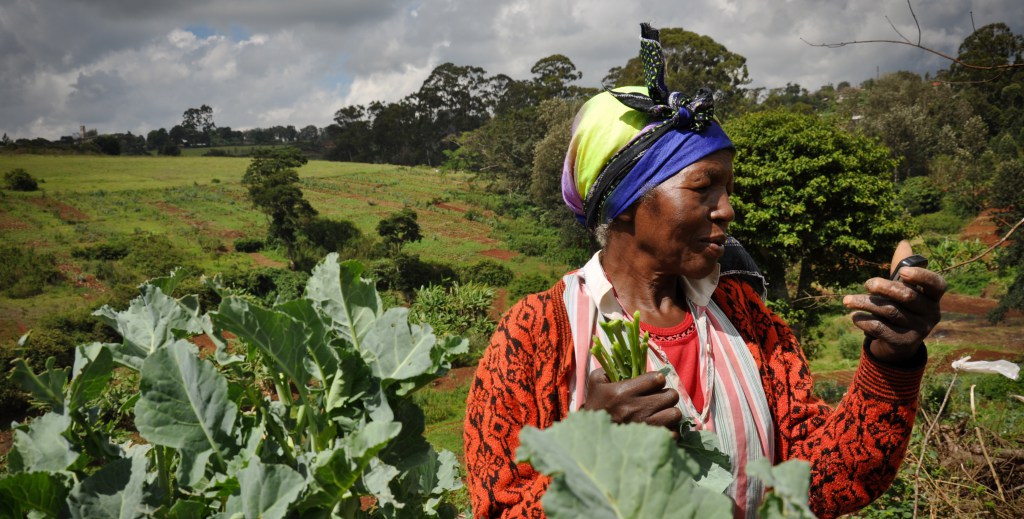
Created by GSMA mWomen in partnership with GSMA mAgri, this is a resource for mobile network operators (MNOs) and members of the wider mobile ecosystem who are thinking about developing mobile-enabled agricultural services (mAgri services) for rural women. The toolkit provides a step-by-step guide across each stage of the product development process, along with successful examples and recommendations. It covers a full range of mobile services, including value-added (information, advisory, or other), financial, and basic services (voice, short messaging service (SMS), and data).
GSMA notes that women play a key role in food production and make up 43% of the rural agricultural workforce globally, yet they are exposed to a number of challenges that prevent them from accessing farming technologies, information, and other factors that are crucial for productivity and economic gain. Women working in agriculture account for an estimated 556 million potential mobile users globally, but are underserved as a unique customer segment, according to GSMA. Women working in agriculture are an extremely diverse group, so GSMA stresses that operators must tailor mAgri service offerings to the local context, taking the particular crop type, farming methods, language, and cultural context into account. The purpose of this toolkit is to provide a methodology and examples for mobile operators to understand this emerging segment of the market and to provide a starting point for tailoring their products and services to meet the unique needs of women in agriculture across the developing world.
The format of the toolkit is intended to be modular, with certain sections applying to those performing specific management functions within a mobile operator's organisational structure. It is comprised of 6 key stages which GSMA states should be part of an ongoing, iterative development process that will update and improve services over time:
- Define the Market: Outlines the development of the core business case rationale, with recommendations on how to define and assess the intended market of women working in agriculture.
- Generate Consumer Insights: Describes methods and guidelines for identifying user needs and conducting research on women in the agricultural value chain, with recommendations for market segmentation. For example, customer registration information data should generally not be treated as a reliable source of the gender composition of an operator's subscriber base, as SIMs tend to be purchased by the male members of the households even if they are ultimately used by women. Understanding the key data gaps can help to identify targeted research needs that will help to segment the market and setting initial priorities, as well as initiating consumer insights research using a gender lens to inform product design and service delivery.
- Design Products & Services: Highlights several design features suited to women in agriculture, and recommends methodologies for incorporating consumer insights into service design. GSMA notes that, when designing products and services for women farmers, it is important to observe that women have different purchasing priorities and different levels of technical literacy, which must be taken into account.
- Brand & Promote: Illustrates marketing strategies to engage women working in agriculture. Crafting effective messages that appeal to women might involve, for example, positioning the product or service as benefitting the entire household or as a tool to generate income. Additionally, understanding that women may have different times of day that they are busy when compared with men, advertisers should adjust timing for advertising accordingly.
- Distribute & Grow: Provides recommendations for creating and adapting cost-effective channels to reach women in agriculture. Developing a tailored distribution channel mechanism can be done by working with already existing women's groups, partnering with existing female distributors, or exploring tax relief and government subsidies. In addition, GSMA notes that it is important to deploy an agent network capable of interacting an engaging with female customers and educate them on the use of the mAgri services. In many instances, female agents should be preferred over male agents for cultural reasons.
- Monitor & Improve: Suggests tactics and strategies for monitoring performance and correcting course to create long-term value for both mobile providers and women users. For example, key performance indicators (KPIs) should be gender-focused and track commercial factors and social indicators across the launch, marketing, and distribution stages.
Each stage includes a specific set of recommendations. The recommendations also suggest potential partnerships and outsourcing options for mAgri service providers when they need to access additional skills and resources.
Editor's note; Since the publication of this toolkit, further research has been carried out supporting the application of gender-centric design within the development of mAgri services in emerging markets. GSMA stresses that, when considering making services more user friendly for women, providers have to consider a multitude of factors that continue to act as barriers impeding the potential role that women can play here. The examples below are some of the ways in which service providers can implement the changes to their services necessary for gender inclusivity:
- Offer creative pricing that is sensitive to the routines of women in rural areas of developing markets;
- Begin to launch marketing campaigns that illustrate the importance and benefits of women's participation in services and reach out to men in marketing campaigns in settings where they make decisions about women's access;
- Build perceptions of mobile devices as a tool for information, a knowledge base, and a means for increasing women's safety;
- Provide services that allow women to privately recharge their credit;
- Educate women on mobile safety, particularly if they are accessing services without prior male approval;
- Develop clear and transparent pricing;
- Make points of sale family friendly;
- When expanding agent networking, consider partnering with organisations that already have established and trusted networks with women;
- Ensure the design of the service is based upon an explicit understanding of female and male users, their tasks and their environments;
- Engage local ambassadors and community leaders in the benefits of female user engagement; and
- Conduct consumer research to determine network quality and coverage and reasons why both quality and coverage is a greater barrier for women in agriculture (Source: Adapted from the 2015 GSMA Connected Women report Bridging the gender gap: Mobile access and usage in low- and middle-income countries).
47
GSMA website, "A Guide to Developing Mobile Agricultural Services for Women", by Elisa Minischett, June 18 2014, and "The market opportunity in applying a gender-lens to Agri VAS", by Bethany Young, January 31 2017 - all accessed on February 16 2017.
- Log in to post comments