










































"Why Don't You Go Into Suburbs? Why Are You Targeting Us?": Trust and Mistrust in HIV Vaccine Trials in South Africa
University of KwaZulu-Natal (Thabethe, Slack, Lindegger, Wilkinson, Wassenaar, Kerr); University of Cape Town (Bekker); Centre for the AIDS Programme of Research in South Africa (Mngadi); The Aurum Institute (Mngadi); University of Toronto (Newman)
"Trust is a critical component of engagement with community members and potential participants that should not be over-looked in preparations for trials."
Considering their length, sensitivity, and complexity, HIV vaccine trials (HVTs) typically establish formal mechanisms called Community Advisory Boards (CABs) comprised of diverse representatives to provide inputs about needs, concerns, views, and perspectives of community stakeholders and to represent the interests of recruited participants as recommended by ethics guidelines. Trust is a key element of high-quality stakeholder relations, which are themselves essential for the success of HVTs. This study explored site staff and CAB members' experiences of trust/mistrust at 2 active South African HVT sites. It reports on key characteristics perceived to contribute to the trustworthiness of communicators, as well as factors associated with mistrust.
To begin, the researchers explore the concept of trust - a complex, multidimensional construct that has been characterised as difficult to operationalise and measure - in the context of HVTs. As they stress, the presence of trust in HVTs cannot be taken for granted. Community members' and potential participants' trust in HVTs could be influenced by public mistrust of scientific research, mistrust of vaccines, and controversies about HIV, its causes, and treatment. At the most elemental level, if community representatives do not trust the research, sites, or site staff, then community members may be less willing to volunteer their own time and contributions to research processes, and could be less willing to encourage others to do the same.
The data set for this analysis were comprised of 10 focus group discussions (FGDs) with a total of 59 participants (CAB members, educators, and counselors) across 2 HVT sites. FGDs were conducted by 4 researchers from the HIV AIDS Vaccines Ethics Group (HAVEG) (who worked in pairs), and took place between late 2013 and early 2017. During FGDs, participants were asked to discuss their roles and experiences, how they communicated key concepts to community members or potential participants, challenges or difficulties they experienced, and strategies that were implemented in response to the challenges.
The results are organised into 2 sections, featuring accounts from counselors, educators, and CAB members themselves. The first section, "(mis)trusted communicators", describes attributes or qualities perceived to be associated with trustworthy persons providing information about trials. In the context of trial education initiatives, in which site staff and CAB members presented information about the site or about research, community members at both sites were reported to have more trust in such information when it was provided by persons with whom they were familiar or with whom community members could identify (e.g., shared racial identity). It was also suggested at both sites that community members may be more trusting of persons perceived to be unaffiliated to the site (independence). In fact, FGD participants invoked the notion of "capture", which is commonly associated with corruption. The term illustrates how important it is, in the context of educating community members, for communicators to be perceived as not having the interests of powerful hidden groups at heart.
The findings also suggest that community members and potential participants are involved in a complex weighing up of various attributes depending on the context. For example, in the context of counseling participants to initiate antiretroviral treatment (because participants have acquired HIV infection despite risk reduction), it appeared that the attribute most valued was competence, which appeared more important than site affiliation or shared racial identity.
The second section, "(mis)trusted information", describes informational components that were reportedly mistrusted by community members or potential participants, and features of the information that rendered it more or less trustworthy. For example, at both sites, some potential participants were described as mistrustful of researchers and sites because of the perception that participants are drawn from predominantly economically poor Black communities. Other foci for mistrust included explanations about site selection (in South Africa, knowledge of or direct experiences of exploitation and discrimination under Apartheid informs perceptions), stored samples, Vaccine Induced Sero-Positivity (VISP), and vaccination. For example, reasons for suspicion ranged from an assumption that the experimental HIV vaccine could contain HIV, to assumptions that site staff deliberately inject participants with the actual virus. Here, historical exploitation was sometimes cited to justify suspicion.
Site staff and CAB members observe that particular concepts (e.g., site selection) attract mistrust from community members, rather than their experiencing global mistrust of trials. That is, trust by community members and potential participants appeared fairly nuanced.
Overall, the researchers note that the study indicates that mistrust was not rooted in any direct negative experiences with vaccine sites. Rather, mistrust appeared linked to experiences of the broader socio-political context of racial discrimination under Apartheid, and continued marginalisation of certain groups in post-Apartheid South Africa.
The report concludes with recommendations for clinical trial site stakeholders invested in building trust and for future research into trust at these sites. In brief:
- To heighten trust, site staff and CAB members should draw on strategies such as 2-sided messaging, which includes both positive and discounted, negative, or refuted negative information. Research has suggested that acknowledging participants' fears and misconceptions may help. Site staff should be aware that some skepticism from community members may be appropriate, and that blind trust is not desirable. Skepticism may help questions to be voiced, and explanations demanded. It may also encourage researchers to develop better strategies for engagement.
- Sites should conduct their own formative research with community members to identify for themselves those attributes of communicators most likely to build trust, and the information most likely to be mistrusted. It may be of value to explore how tensions and trade-offs between valued attributes are made depending on the context. Also, there needs to be more research with community members about the process by which community members come to trust information they are given. It may help to explore the issue of trust and mistrust at different stages of HVTs, as well as to explore the trustworthiness of health care staff and site staff when providing competing information.
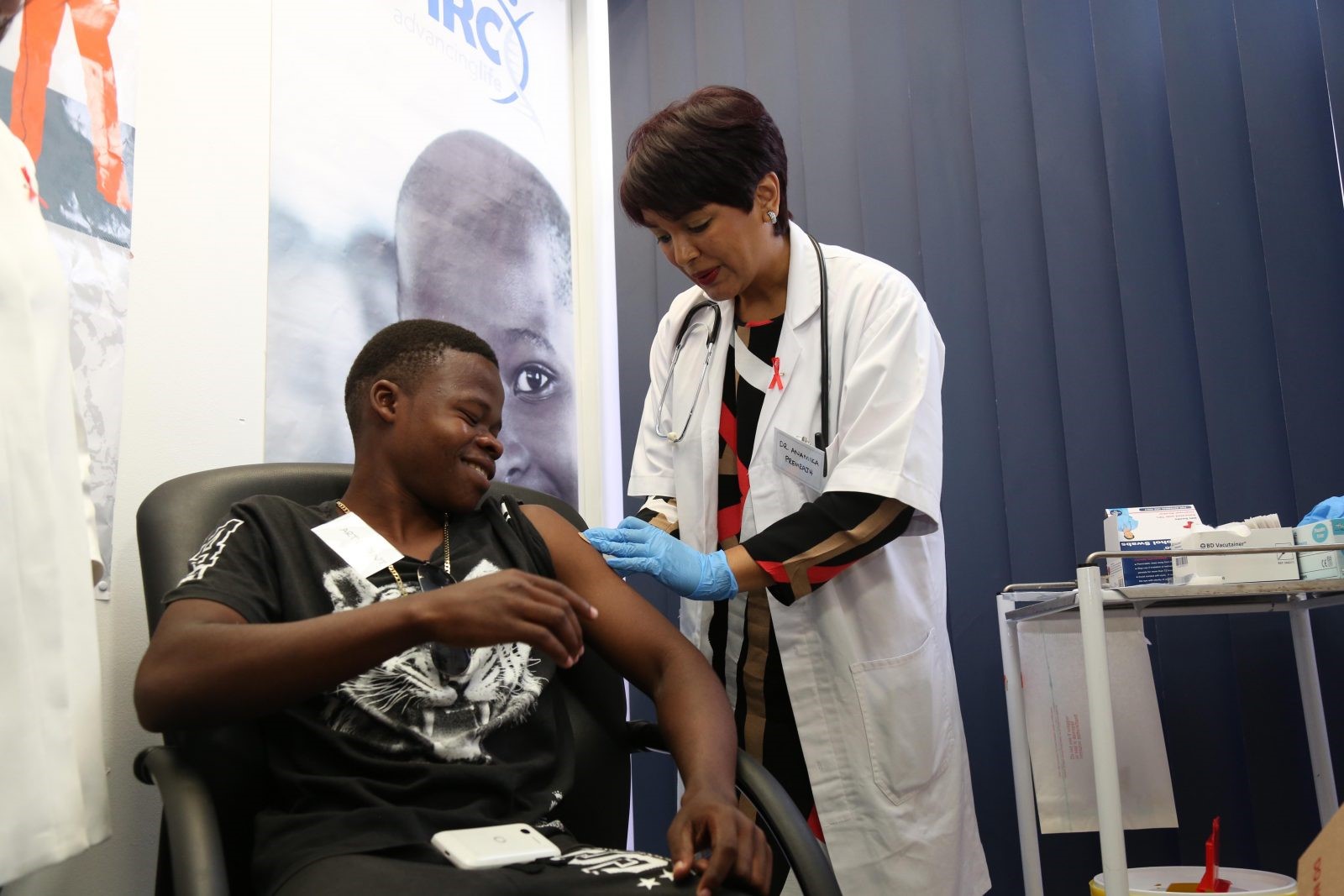
Journal of Empirical Research on Human Research Ethics 2018, vol. 13(5), pages 525-536. https://doi.org/10.1177/1556264618804740. Image credit: The Foundation for Vaccine Research
- Log in to post comments