










































Water and Sanitation Campaign
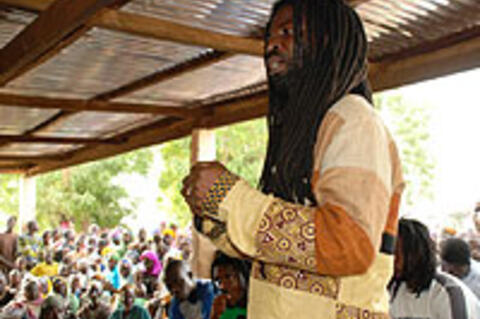
The performing group included local artists Sheriff Ghale, rising talent Abu Sadic, female singer Ramatu Ibrahim (Mama Rams), Rocky Dawuni, Samini (formerly Batman), and others. The concert tour made stops at schools and villages in Gburimani and Yepeligu in the Tolon-Kumbungu District and in Bunbon Nayili in the Yendi District. Through music and speaking with the communities, the musicians appealed to chiefs, elders, and community members to practice key preventive steps: to boil or filter their water before consuming it, wash their hands with running water and soap, eat clean food, and keep their villages clean.
The campaign aimed to encourage dialogue on the community's water and sanitation problems through the entertaining medium of music. It also sought to remind the people about the importance of their children's health. The initiative came about as part of Dawuni’s preparations for the 7th Annual Rocky Dawuni Independence Splash which was held on March 6 2007 at La Pleasure Beach. According to UNICEF, "Dawuni felt compelled to go beyond the usual fun and fanfare of the concert, to help his home country tackle some of the major issues impeding Ghana’s development."
In each community they visited, the musicians interacted with people from the local community to witness and learn about major water, sanitation, and hygiene challenges that cause disease and death - particularly among children.
Health, Environment, Children.
According to the organisers, "Across Ghana, water- and sanitation-related diseases take a heavy toll on children. Diarrhea is responsible for 18% of under-five childhood deaths in Ghana – over 14,000 children whose lives could be saved by simple preventive steps, such as washing hands with soap. Ghana is now the second-most Guinea worm endemic country in the world, next only to war-torn Sudan. In rural areas, only 11% of the population use hygienic sanitation facilities, and only 64 % have access to safe drinking water."
The organisers say that UNICEF and other development partners, in collaboration with the Government of Ghana, have made a number of interventions in some of the most underserved communities throughout northern Ghana, which face particularly difficult water and sanitation challenges. These efforts include the installation and repair of boreholes and other systems to provide safe water supply, provision of latrines and hand washing facilities and the training of community health workers in hygiene promotion and in the early detection, treatment, and reporting of Guinea worm cases. To bolster these interventions, hygiene, and sanitation education aimed at changing behaviour is being undertaken in affected schools and communities.
Environmental Health and Sanitation Directorate, Ghana Health Service, Africa Live, UNICEF.
UNICEF press release dated March 1 2007 (accessed December 4 2007); and UNICEF press release dated March 22 2007 (accessed June 9 2008).
- Log in to post comments