










































Using Technology for Social Good: An Exploration of Best Practice in the Use of Information and Communication Technologies (ICTs) for Development
Catalyst Advisory, LLC
From United Methodist Communications (UMCom), this discussion paper explores the use of information and communication technology (ICT) as a tool for economic and social development. It captures "best practice" in the use of mobile phones and other low-cost communications technologies through a series of interviews with 8 experts and practitioners whose interviews are featured as part of the UMCom blog series Best Practice in ICT4D: A Conversation, which can be found online here. Amongst the interviewees:
- The head of the mobile solutions team at the United States Agency for International Development (USAID), who describes the agency's efforts to use mobile phones to pay teachers in Afghanistan, reducing money lost to graft (money gained by unscrupulous means);
- The founder of FrontlineSMS, a "widely scaled" mobile-text-messaging-based information sharing programme, who provides his top 10 tips for effective use of technology for social good;
- The chair of the Health Board of The United Methodist Church in the Democratic Republic of the Congo, who describes how using FrontlineSMS is changing the way information is shared in the context of acute health emergencies, such as cholera outbreaks; and
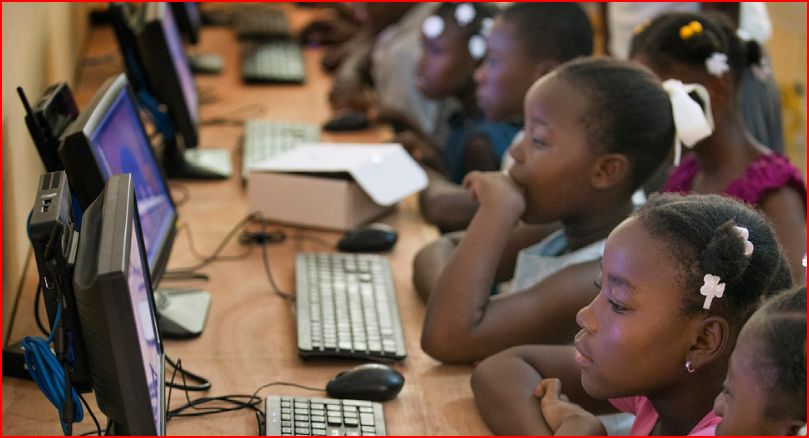
- The programme manager of the Thomas Food Project in Thomas, Haiti, who describes how low-cost solar power is being used to power a new computer centre and generate income that supports a school feeding programme.
The paper begins by providing a brief summary of evolutions in technology and development that have given rise to the field of ICT for development (ICT4D). The introduction highlights transformations in communications technologies and trends in economic development - for example: "More than 7 billion mobile subscriptions are in use today, over 5 billion of which can be found in developing countries. Rising mobile network coverage and falling costs of mobile phone handsets mean that in many parts of the world we are beginning to overcome the digital divide." The second section explores the field of ICT4D more fully, examining how rising access to ICTs is changing development and how technology can best be used in the context of development projects. The third section introduces the concept of user-centred design in development projects and discusses the importance of collaboration with local communities. It introduces the term "agile development", which encourages "brainstorming, prototyping and iterating early in the project cycle to learn quickly what works." The final section looks at key factors that contribute to ICT4D project sustainability. "As the field evolves and moves away from pilot programs that dry up when donor funding runs out, what techniques can practitioners use to ensure that programs continue to meet the needs of the local communities?"
Text boxes throughout the paper provide details on specific ICT4D projects, lists of resources (e.g., reference materials on ethics in ICT projects), and practical tips such as: "Five Steps Toward Using Context-Appropriate Hardware in ICT4D Projects", gleaned from an interview with Kristin Peterson, former Chief Executive Officer (CEO) of Inveneo:
- "Does my technology need to be ruggedized? In many developing countries technology needs to be robust. It has to be survivable in challenging environments with dust, heat and humidity.
- Is my technology low power? Many rural areas and even some urban areas in developing countries have issues with power. Power can range from unreliable, where there is grid access but power may be intermittent, to unavailable where there is no traditional power at all.
- Is my technology adapted to the local environment? Beyond building for a low-power solution if needed, you need to understand what will be supportable and survivable over the long term, which requires an understanding of what power exists, how stable that power is, and what will be needed to operate that system on a regular basis. This also includes an understanding of the mission of the project or organization. If you're designing technology for a school that needs to be open eight hours a day for students, and then four hours at night and four hours over the weekend, then you have to design a power system that will enable regular powering and consistency of use to meet that demand.
- Is my technology affordable? An ICT4D program should consider affordability in both the short term and the long term to be able to deliver a highly sustainable solution. The technology needs to be cost efficient and appropriate across the lifecycle of its use.
- Is my technology locally supported? Remember that technology frequently is just 10% of the solution. Once the technology is implemented, no matter how sustainable it is, you will need to have a technology management and support plan that supports users in that environment. Identifying and training, as needed, local support that can come in to fix things and provide regular maintenance on an ongoing basis is crucial to long-term project success."
Another insight: "Laura Walker Hudson of the Social Impact Lab Foundation adds that it's important to remember to measure and evaluate the effectiveness of ICT interventions where the target audience is internal to the organization, such as in projects designed to improve organizational efficiency and effectiveness, as well as ICT intervention where the target audience is external to the organization. For example, she says, 'If it's [a project to improve] coordination and managing staff and information using SMS [text messaging], people rarely measure impact - but they do if they are sending health message to new mothers using SMS.'"
The below video is a preview of the September 3-5 2014, UMCom ICT4D conference, "Game Changers Summit", at the Gaylord Opryland Hotel in Nashville, Tennessee. Click here for more information.
United Methodist Communications website, August 11 2014. Image caption/credit: "Students work in the computer lab at the Thomas Food Project in Thomas, Haiti. The program is part of a United Methodist Communications effort to use technology for development. A UMNS photo by Mike DuBose"
- Log in to post comments