










































Using Peer Education to Inform Older People About HIV
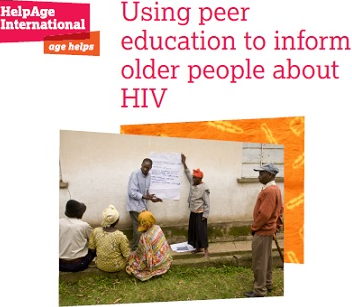
This 4-page brief discusses the use of peer education to communicate information about HIV/AIDS to older people. Published by HelpAge International, the brief explains that prevention efforts have largely been designed for young people, resulting in lower levels of HIV knowledge among those aged 50 and over. However, because older people are at risk of contracting HIV, may be living with HIV, or providing care and education to children affected by HIV, it is crucial that they have access to information so that they can protect themselves and others. An effective way of providing this information is through peer education.
The report explains that peer educators raise awareness by disseminating information and giving people knowledge; they can also become role models by "practising what they preach". As members of their peer group, they can empathise and understand the emotions, thoughts, feelings, and language of those they are talking to, and, therefore, relate to them better. They are able to inspire and encourage their peers to adopt health-seeking behaviours because they can share common strengths, challenges, and experiences. Peer education can also bring about broader changes in society, by modifying norms and stimulating collective action that leads to changes in programmes and policies
Involving older people as peer educators helps give an HIV programme greater relevance to older people in any community. The brief states that peer educators should be recruited from the communities they will be working in. It is important to discuss the recruitment with community leaders and ask for volunteers with the necessary qualities to be a peer educator to come forward. Where possible, training for peer educators should be delivered by other older people, allowing for open discussion of sensitive issues like sex and sexuality. The training programme should be flexible and bear in mind older people's specific needs. Older people learn better when they are engaged by real-life experiences, and with examples or issues that they identify with older age.
As well as visiting people in their homes to discuss HIV and related issues, peer educators can help in other ways by:
- referring people to appropriate services for treatment of STIs, HIV counselling and testing, and other care and support;
- distributing condoms or letting people know where they can get condoms from;
- promoting community events to mark commemorative days such as World AIDS Day (1 December);
- filling out report forms on their activities and undertaking monitoring tasks;
- attending monthly meetings organised by supervisors; and
- holding regular community group sessions with older people on topics related to health, sexuality, social issues, STIs, non-communicable diseases (NCDs), HIV and AIDS, using participatory methods.
In summary, the brief outlines the following as key points:
- Prevention activities are rarely designed for older people – yet they are at risk of contracting HIV, may be living with HIV, or have a role in caring for and educating children and other family members about HIV.
- Training and supporting older peer educators is an effective way of providing information on HIV to older people, as they are more likely to feel comfortable discussing sensitive issues with their peers, and information is more likely to be given in culturally appropriate ways.
- Older people learn better when they are engaged by real-life experiences, with examples or issues that they identify with older age.
- Using participatory approaches and energisers is important in keeping older people engaged and attentive.
- Older peer educators need on-going training and support if they are to stay motivated.
- Peer education sessions should address the specific needs and challenges facing older people. They should be delivered in the local language to ensure full understanding and allow older people to express themselves freely.
HelpAge International website on December 3 2012
- Log in to post comments