










































Using Mobile Awareness-raising Units to Fight Malaria in Niger
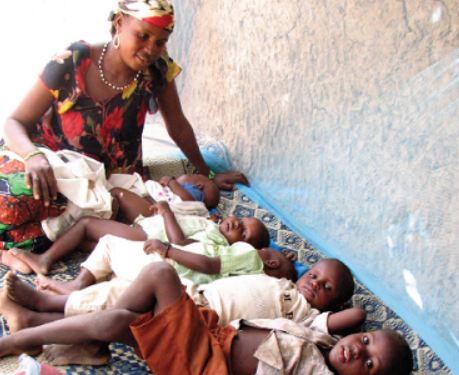
Catholic Relief Services (CRS).
This 2-page brief shares lessons learned and perspectives from the Catholic Relief Services (CRS) related to using mobile health communication caravans to strengthen the access and use of long-lasting insecticide-treated nets (LLINs) by pregnant women and children under five years of age, in an effort to reduce malaria prevalence in Niger.
The brief explains that people living in remote areas often do not have access to television, radio, local health centres, or even community health workers. In response, CRS partnered with the Ministry of Public Health to use government employees and infrastructure to run the mobile caravans, and to show educational videos and host discussions.
As part of this strategy, government communication officers liase with village chiefs and travel up to 100km to reach the most remote communities. The vehicles are equipped with the necessary resources, including projectors, televisions, educational videos, a portable generator, and other educational aids. The communication officer uses music to draw a crowd and provide entertainment while setting up. Once a large group forms, the agent shows a video produced by the project, followed by an interactive discussion session.
According to the brief, over the course of the project, which started in 2008, "more than 2.8 million bednets were distributed to pregnant women and young children, mainly during the 2009 distribution campaign. As of June 2010, subsequent efforts had touched a total of 3,456,616 people through community sensitisation sessions. Of these sessions, the mobile units reached 113,875 individuals in 634 communities."
As stated in the brief, "a 2009 study discovered that among households in possession of a LLIN, infrequent usage was attributable to negligence, lack of knowledge, and complaints that the nets make sleeping conditions too hot. Additionally, use declined dramatically during non-peak malaria season due to the perception of low risk of malaria." For this reason, the mobile units' also started emphasising consistent year-round use of LLINs.
Based on a comparison of survey findings from 2009 and 2010, the brief shows a significant impact on bednet use, especially among pregnant women. The 2010 survey also identified significant regional variations with respondents who cited that they frequently or always sleep under a net during the high risk months of August through November, ranging from just over 50% to 99.9%. The brief explains, that "in one region, of those who owned nets but did not use them regularly, more than half explained their non-usage by voicing their concerns that the nets are dangerous to one’s health. This indicates a need for clear messaging addressing proper usage and the safety of LLINs."
Another area identified for continued education and BCC was around knowledge and action related to causes, symptoms and prevention of malaria. The 2010 survey found that only 19% of mothers and caregivers surveyed could name the cause, symptoms, and at least two methods of preventing malaria. With this in mind, and using information revealed by the survey, "the project implemented several new community-level activities in July 2011. These include advocacy from religious and traditional leaders, the involvement of women’s groups, and household competitions to demonstrate best malaria prevention practices.”
In terms of next steps, the report states that the mobile units will continue to perform sensitisation sessions, particularly in the regions where malaria is endemic and population density low.
Catholic Relief Services websiteon March 20 2014.