










































United Against Malaria at Africa Cup of Nations
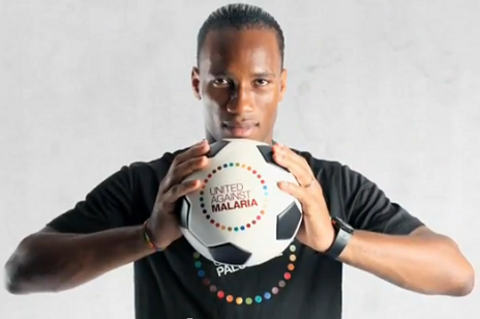
During The Africa Cup of Nations (AFCON) 2013 hosted in South Africa, United Against Malaria(UAM) worked with the Confederation of African Football (CAF) to communicate malaria prevention and treatment messages to football fans throughout Africa. Through pan-African television and radio spots, video, on-site branding, and distribution of print and promotional materials, the campaign sought to reach millions of viewers and listeners with information about anti-malarial nets, diagnostics, and treatment.
The television and radio spots produced as part of the campaign featured internationally recognised African football stars players, including Didier Drogba (Cote d’Ivoire), Samuel Eto’o (Cameroon), and Chris Katongo (Zambia). During each AFCON game, UAM and CAF planned the following activities:
- A 2.5-minute video broadcast in stadium, providing an overview of the campaign and its role during the tournament, as well as a 90-second halftime video featuring football stars Drogba or Eto’o;
- UAM branding on the sidelines;
- UAM branding on the uniforms of all 704 player escorts;
- In-stadium distribution of UAM's signature magazine, GOAL!, which features a combination of tournament information, malaria prevention and treatment messages, and advocacy messages;
- UAM and malaria press materials for journalists and officials;
- CAF distribution of UAM bracelets, which raise money for insecticide-treated nets in malaria-endemic regions of Africa, to a select number of VIPs;
- CAF dissemination of UAM messaging to all 16 qualifying teams; and
- UAM branding and messaging for sports commentators during television broadcasts.
For people who travelled to the games, UAM had prepared a special video that was aired by South African Airways and Mango Airlines. The campaign secured video distribution on 11 top tier Pan-African TV and radio stations, and had local-level PSA distribution on national and community stations in more than 10 countries, and placed more than 75 billboards in 13 countries.
According to UAM, the strategy is primarily intended to reach men, from heads of households to heads of government and private sector, and to a lesser extent women who are also decision makers in government and households. The goal is to bring a veritable change to the attitudes of Africans about malaria control to make it a priority.
Malaria
United Against Malaria was founded during the lead up to the 2010 World Cup in South Africa. It is an alliance of football teams, celebrities, health and advocacy organisations, governments, and corporations who have united together against malaria. As part of the Roll Back Malaria (RBM) Partnership, UAM is made up of over 200 partners from diverse sectors and continents who invest their experience, time, funds, skills and enthusiasm because they share a common goal - to end malaria, which accounts for 174 million cases and 600,000 deaths in Africa every year.
The Global Fund, African Leaders Malaria Alliance (ALMA), Johns Hopkins Bloomberg School of Public Health, GBCHealth, President's Malaria Initiative (PMI), Roll Back Malaria, United Against Malaria
Email from Claudia Vondrasek on January 24 and Malaria Free Future blog on February 25 2013.
- Log in to post comments