










































Understanding Couple Communication and Family Planning in Zambia: Formative Research Study Findings and Recommendations
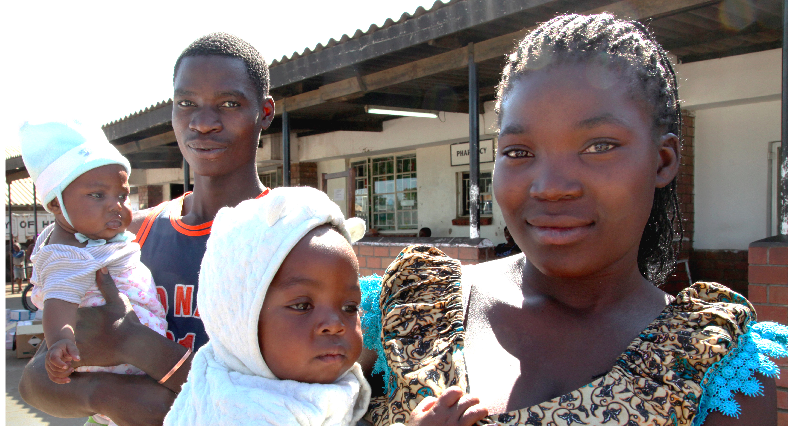
“Little is known about how couple communication and family planning decision-making dynamics play out within the context of child marriages. This study was designed to shed light on these issues in Zambia and to design context-specific family planning interventions that take these dynamics into account.”
This report summarises the results of a formative research study on the role of couple communication in family planning within the context of child marriages in Zambia. The study was designed to help inform service delivery and social and behavioural change communication interventions to improve couple communication and increase male support for voluntary family planning, with a focus on men who have married adolescent girls. Given the high prevalence of child marriage in Zambia and the lack of evidence regarding communication dynamics among couples in which women married before the age of 18, this study both fills a gap in the evidence base and helps to inform Population Services International (PSI)’s family planning programmes in Zambia.
The International Center for Research on Women (ICRW) and Society for Family Health-Zambia conducted the study in two research sites in Central Province, Zambia — a region with one of the highest prevalence rates of child marriage in the country. A cross-sectional qualitative research design was employed to examine the ways in which couples communicate about fertility intentions and family planning use in unions where men have married adolescent girls. Data collection, carried out in December 2015, consisted of 48 in-depth interviews (IDIs) with both members of couples in which women married before the age of 18, and four focus group discussions (FGDs), two with young married women and two with men married to younger women. The study focused on understanding communication dynamics and family planning within marital relationships shaped by early marriage.
For most of the couples in the study, unintended pregnancies were the main cause of early marriage for both sexes. Intra-spousal communication on fertility desires and plans was found to be limited, as evidenced by discordant accounts from spouses on the desired number of children and child gender preferences, family planning use and timing and spacing of children. Women mostly deferred to their husbands’ preferences on family planning and household decisions, and men were regarded as heads of households. Participants considered family planning to be a woman’s responsibility; hence many husbands refrained from accompanying their wives to the clinic in fear of being seen as “weak.” Family members’ expectations and strict gender norms influenced couple communication and family planning decision-making dynamics.
The study findings generally indicate that deeply embedded social norms related to gender roles lead to the unmet need for family planning. This unmet need starts at a young age in Zambia, even before marriage, and in fact is itself a driver of early marriage. It is evident that adolescent girls exposed to early marriage would benefit from efforts to improve intra-spousal communication and partner support for family planning, especially in contexts where unequal gender norms limit girls’ agency to negotiate their reproductive desires. At the same time, increased attention should also be paid to pregnancy prevention among unmarried adolescents, given that unintended pregnancies remain a major contributing factor to school dropout and ultimately early marriage, for both sexes.
The report recommends multi-faceted interventions aimed at transforming the underlying gender norms that limit women’s reproductive agency and that constrain constructive male engagement in family planning, starting at a young age. Since these restrictive norms operate at various levels, interventions need to take a holistic approach to address unmet need for family planning across the life course by transforming gender and age-related norms at the individual, interpersonal, community and structural levels. At the individual and interpersonal levels, it will be important to ensure that access to sexual and reproductive health information starts at an early age and takes into consideration the changing dynamics of interpersonal relationships across the life course, with a focus on communication and negotiation skills to support shared reproductive decision-making. At the community level, key influencers in the community must also be reached to help create an enabling, gender-equitable environment for couple communication and family planning. And finally, it is vital to ensure that the health system supports youth-friendly and gender-sensitive services. The report concludes with a list of recommendations for all three levels. These include:
Individual and interpersonal level:
- Introduce body literacy and comprehensive sexual and reproductive health information to adolescents and young people, both in-school and through community-based groups.
- Reach couples and unmarried youth with information on partner communication skills, especially related to the negotiation of fertility intentions and family planning use.
Community level:
- Reach key individuals/groups that influence social behaviour in the community with messages and information geared towards changing norms, attitudes and ideas on the roles of men and women, e.g. male engagement and support for family planning.
- Train key influencers, such as community and religious leaders, including marriage counselors, on supportive family planning norms, methods and the importance of couple communication and shared decision-making.
Structural level:
- Train family planning providers on counseling tailored for different kinds of couples and according to their life courses.
- Train health care providers on youth-friendly and gender-sensitive services that take couple dynamics into account and offer couple counseling.
(This summary is based on the Executive Summary and Recommendations section (with footnotes removed).
ICRW website on October 4 2017.
- Log in to post comments