










































Ugandan National Health Hotline
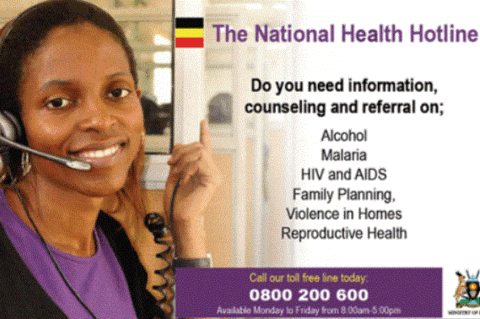
The Ugandan National Health Hotline, launched in 2009 by the Communication for Development Foundation Uganda (CDFU), was established to improve access to information and counselling about issues such as alcohol abuse and gender-based violence. The hotline is a specialised telephone service that listens to and counsels callers, disseminates information, and refers callers to services and resources for further help. Over the years, the Health Hotline has expanded to provide a reliable, anonymous, and non-judgmental service for callers seeking information, counselling, and referrals concerning HIV, family planning, reproductive health, malaria, and safe male circumcision, as well as gender-based violence, and alcohol abuse. The hotline was formed in collaboration with the United States Agency for International Development and the Health Communication Partnership.
Eight full time counsellors and four part-time volunteer counsellors, who speak over 10 languages between them, receive an average of 300 calls per day from all parts of Uganda. The Hotline operates from 08.30am – 5.00p, Monday through Friday. According to the Communication for Development Foundation, hotlines offer an effective way to provide callers with accurate information, counselling, and referrals to appropriate community-based services or resources. The anonymity of a hotline is a key asset, especially in working with adolescents, because it allows the caller to ask questions that may be difficult or awkward to address in a face-to-face context.
Through frequent training and mentoring, the counsellors have built their skills to counsel callers on a variety of issues, and to ensure quality and consistency in the way they greet and respond to callers' needs. CDFU engaged the services of counsellors from a number of organisations to develop training materials on telephone counselling, alcoholism/substance abuse, and rape counselling. Click here to access these resources.
In addition, the Hotline has an SMS platform which enables clients who are not able to call to send text messages (SMS) and get their question answered.
According to CDFU, the calls in any particular month reflect the key health communication campaigns which are running in the country at that time. Therefore, not only does the hotline provide a valuable service to the callers, but detailed data collected from the calls also provides valuable feedback about how well a campaign is reaching the target audience as well as information about the quality of the services being provided. Hotlines can also be used to clarify information if misconceptions and myths exist about a certain topic. In addition, hotlines can provide information to advocate for improved services - for example, when callers phone in to complain about a lack of condoms at clinics.
HIV/AIDS, Family planning, Alcohol abuse, Gender based violence
Since 2009, the Hotline has attended to over 250,000 calls from all parts of Uganda and some border towns of Sudan and Tanzania. The majority of calls are on HIV/AIDS (37%) followed by alcohol abuse (32%) and family planning (12%).
Communication for Development Foundation Uganda (CDFU), United States Agency for International Development, The Health Communication Partnership
K4health website on July 29 2013
- Log in to post comments