










































Tsogolo Langa - My Future! Campaign
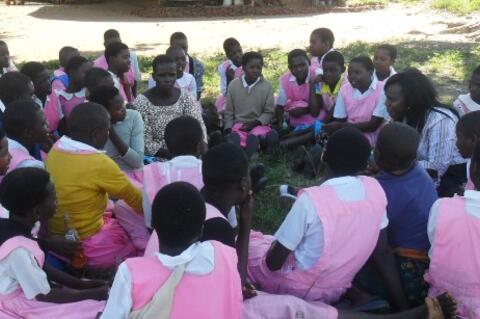
Launched in 2010, the Tsogolo Langa - My Future! project is working to promote girls education in the Zomba district in Malawi. The project intends to increase retention of girls in a selection of primary schools by increasing awareness of girls’ right to education amongst girls and mothers, increasing efficacy among primary school girls to claim their right to education, and increasing active support by traditional leaders, religious leaders, school management committees, and parents. The project is led by Pakachere Institute of Health and Development Communication (IHDC) in partnership with Swedish Organisation for Individual Relief (SOIR). The project uses a three tiered approach which includes mass media, community mobilisation, and grass-root advocacy.
A key part of the project is the production and airing of Tsogolo Langa (My Future!), a 30- minute radio magazine programme that features experiences of young girls and the challenges they face in accessing education. It also features parents, traditional leaders, and gender and education experts who debate on some of the community and structural level factors that affect access to education by the girl child.
Community mobilisation includes the establishment of 48 radio listener clubs for girls and mothers from 24 primary schools. The girl clubs have on average 25 members each and are supervised by female teachers. The mother groups comprise of 10 women who operate on a volunteer basis. Each group has trained facilitators and a wind up radio. They meet once a week after school to listen to the programme and hold facilitated discussions. After each discussion, they agree on an action point, which is an activity that the group does to actively promote girls education in their specific communities.
Complementing the mass media strategy and community mobilisation activities by radio listener clubs are quarterly advocacy meetings. These are used to mobilise support from traditional leaders, religious leaders, school management committee members, parent-teacher association members, headmasters and parents to be actively involved in girl’s education within their communities. In these dialogue sessions, participants map out key issues that affect girls' education in their communities and formulate action plans of how they will go about addressing those barriers.
The project is part of a larger gender programme by SOIR which is working to contribute to the reduction of gender inequalities in education through the promotion of girl's education. As part of monitoring activities, a field monitoring officer visits the schools four times a week and on a Friday, compiles a monitoring report for the week.
Education, Gender Inequality
Pakachere Institute of Health and Development Communication (IHDC) in partnership with Swedish Organisation for Individual Relief (SOIR).
Email from Basimenye Nhlema on August 1 2013.
- Log in to post comments