










































Trust, Communication, and Community Networks: How the CORE Group Polio Project Community Volunteers Led the Fight against Polio in Ethiopia's Most At-Risk Areas
CGPP (Stamidis, Bologna); CGPP/Ethiopia (Bisrat, Tadesse); Jimma University (Tessema); Johns Hopkins Bloomberg School of Public Health (Kang)
"By engaging local communities, sharing knowledge, acting as bridges to health posts, and pushing to reach the 'unreachable,' CGPP CVs have established themselves as crucial assets in the community."
In 1999, the CORE Group Polio Project (CGPP) began its community-centred polio eradication efforts in Ethiopia, using community volunteers (CVs) to ensure that no child has missed polio vaccine. This article, which is part of a series of articles detailing the work of the United States Agency for International Development (USAID)-funded CGPP (accessible through Related Summaries, below), documents the efforts of CVs and highlights strategies, successes, and contributions to the Global Polio Eradication Initiative (GPEI); the last case of wild poliovirus (WPV) in Ethiopia was reported in 2014.
As the authors explain, challenges to control polio transmission in Ethiopia include rugged terrain, widely scattered population settlements, well-traveled borders with polio-endemic areas, weak health service systems, and limited participation of community members in planning of vaccination activities. These barriers result in low community awareness about polio vaccination and acute flaccid paralysis (AFP) surveillance. Evidence cited in the article shows that approaches using CVs can help resolve misconceptions surrounding vaccines and increase the accessibility of remote communities to routine vaccinations through referrals and mapping of communities. "Gains in immunization coverage are attainable by building the community's trust through meaningful contact as part of a larger strategic effort."
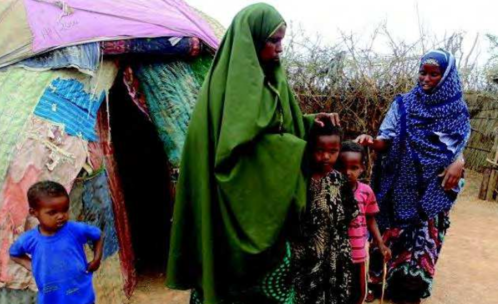
In this context, the CGPP CVs were established in 2003 to supplement the work of the government-sponsored health extension worker (HEW) cadre. CVs go house to house in their communities, providing health education, tracking pregnant women and newborns, making referrals, tracking immunisation defaulters and referring them to health facilities, and searching for cases of AFP, measles, or tetanus. During supplemental immunisation activities (SIAs), they mobilise families to increase the demand for immunisation. CGPP/Ethiopia positions more than 12,000 CVs along and across the borders between Ethiopia and South Sudan, Kenya, and Somalia.
Data show demonstrable progress facilitated by CVs in CGPP implementation areas of Ethiopia between 2012 and 2017. Oral polio vaccine (OPV) 3 coverage increased from 40.6% to 73.2%, and the percentage of fully immunised children nearly doubled from 24.7% to 43.6%. Relatedly, 58.9% of caregivers reported they had received information about the most recent polio campaign from CVs; this is an increase from a baseline of 41.3% in 2012. In addition, a higher percentage of caregivers received information about polio from CVs in 2017 (58.7%) than in 2012 (31.8%).
Qualitative data for the present study were collected from the CGPP implementation areas in 85 border woredas (districts) of Benishangul-Gumuz; Gambella; Oromia; Southern Nations, Nationalities, and Peoples' Region (SNNP); and Somali. A total of 151 in-depth interviews were conducted with CVs, parents, CGPP partners, and project stakeholders.
Key results of the study, which are illustrated in the article by quotations from study participants, include:
- Who are CVs? - Most CVs are women (50-75%), who are selected from the communities they serve in, and they have a keen understanding and knowledge of the culture, values, and norms in the community. After they are selected, the CGPP partners provide a 3-day initial training session, followed by refresher trainings and knowledge building through supportive supervision visits to CVs and through monthly meetings with HEWs. (The request for additional training was a universal response during interviews.) CVs receive small incentives for their roles; during active case searches and reporting, they are provided with mobile phones and solar lights to enable them to record and report cases. As noted here, to be effective, CVs need to be accepted and respected by the community and must be able to model positive behaviours and communicate in the local languages.
- CVs' role in building trust and empowering communities - At the inception of the CGPP, the CVs' work was "made difficult not only by the low priority given to polio immunisation but also by misinformation, the spread of rampant misconceptions about vaccines, and harmful cultural practices....Initially, CVs encountered tension, disrespect, and lack of trust. Some CVs faced inhospitality; other CVs considered quitting their roles. Yet, because of a belief in importance of their work, they persisted. Over time, they slowly established trust, built rapport, and improved relationships with the families in their communities." Part of what enabled the CVs to secure the buy-in of community members was the training in interpersonal communication and social mobilisation skills they received; furthermore, parents grew increasingly receptive to messages from CVs on vaccination and child health because they began to see the number of cases of polio, measles, and tetanus decline in their communities.
- CVs (and HEWs) as trusted sources of information and awareness about vaccines and child health - Women discussed the credibility and trust they had in CVs and the ability of CVs to provide information through regular interactions at their homes and through "mothers' groups", a safe space for women to learn about the importance of vaccines and other positive health-seeking behaviours. Some mothers commented on the freedom and opportunity these groups gave them, and their power in changing potentially harmful traditional norms. Fathers cited CVs and HEWs as trusted sources, but relied more on health posts, religious leaders, and doctors or nurses for vaccination information.
- CVs' reports of changing community attitudes, practices, and health - "Providing accurate knowledge on the benefits of polio and other routine immunizations, understanding social norms of the community, and investing time to listen and respond to parents' concerns contributed to shifting attitudes and practices and ultimately to changing behaviors."
- CGPP's ability to reach the unreachable through community networking, collaboration, and surveillance - "The CGPP has used an approach that is strongly rooted in the communities where it works. Community buy-in, involvement, and trust have ensured the success of the program....The CGPP has been able to harness the power of communities to change the local narrative around vaccination and to provide support for the improvement of other health-seeking behaviors." In addition, stakeholders credited the CGPP's ability to create a system that works in conjunction with the government system.
- How did the CGPP CVs become successful? - Participants cited training, knowledge about polio and health, supervision, building trust in communities, consistent one-on-one household contact, and understanding of the community as key ingredients of success. "Training and learning opportunities, in particular, have prepared CVs to be advocates for polio and routine immunization and to proudly serve as champions of child health....Community volunteers cited that building relationships based on trust, respect, and sound interpersonal communication is the primary reason for the hard-fought success."
- Future roles for the CGPP CVs - "Not only are documenting and sharing the lessons learned in the polio eradication effort seen by those interviewed as important to the program's legacy, but so is the preservation of the infrastructure - both physical and human."
Following reflection on these results, the authors recommend that the CGPP continue to:
- Provide CVs with ongoing support; continued training will give them the ability to make stronger linkages and referrals to health facilities and services.
- Work with partners and government entities to strengthen health systems, so that the increased demand for services they stimulate can be met, particularly in pastoralist areas that have traditionally been left behind.
- Find innovative ways to engage and support mothers - e.g., by providing childcare during mothers' meetings and holding meetings at times that do not conflict with the schedule of daily chores.
- Focus on male engagement by ensuring that men have solid information about immunisation and are actively involved in their children's vaccination.
- Extend future CV involvement beyond polio immunisation and surveillance to reach a broader set of activities related to reducing the number of deaths from readily preventable or treatable conditions and diseases.
- Think carefully about how the CGPP experience can be applied in the Ethiopian context for the longer term beyond polio eradication, documenting the formation of the CGPP's partnerships and networks and their growth from the community to national levels.
American Journal of Tropical Medicine and Hygiene, 101(Suppl 4), 2019, pp. 59-67. https://doi.org/10.4269/ajtmh.19-0038. Image credit: CGPP/Ethiopia
- Log in to post comments