










































Timasukirane ("Let's Talk Openly")
The radio talk show is anchored by former Power 101 DJ Edward Kankhomba - known by his fans simply as Eduardo - and involves young people speaking directly and frankly about sexuality and HIV/AIDS-related issues. Broadcast on Malawi Broadcasting Corporation (MBC) Channel 2, this programme aims to explore myths about sex and HIV infection, and listeners are encouraged to ask questions which are answered by health personnel and other experts. Wherever possible, fully trained experts who are also young people are invited, as they act as role models and support a peer-to-peer approach. The show also includes a segment called "Loto Langa" (My Dream), which focuses on career guidance and features young people who have achieved some level of career success who advise listeners about issues related to education and training. In all areas of the programme, issues are explained through the personal experiences of the featured young people, rather than an authoritative opinion. According to Story Workshop, these personal experiences told by fellow youth are more successful in influencing others to make positive changes in their attitudes and behaviour.
The second part of Timasukirane is a serial drama broadcast weekly on MBC 2. The radio soap series is situated at a Malawian secondary boarding school and follows the ups and downs of its students, their families and teachers, and the surrounding villages. It deals with the young characters' relationships and the challenges they face related to HIV and AIDS, and follows them through a gradual process of change in attitude and behaviour. According to Story Workshop, this allows the listening audience to identify with and follow the same processes.
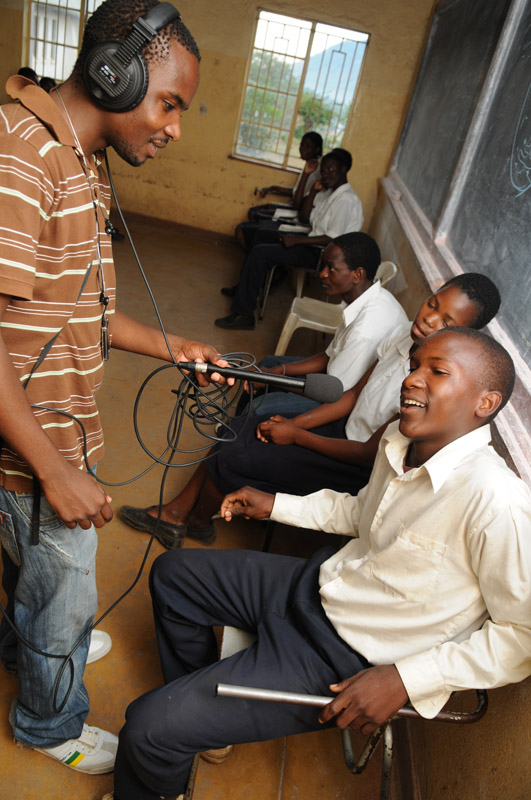
At a grassroots level, radio listening clubs of young people have been established across Malawi and they supply focused feedback on the messages they have received. The project also involves peer education training programmes in five districts, where young people are trained in HIV/AIDS awareness and related issues in order to provide their peers with education and appropriate advice.
The talk show went on air in March 2007 on MBC Radio 1, while the drama series started broadcasting weekly in April 2007 on MBC 2.
Health, HIV/AIDS, Reproductive Health, Youth
Overall, the programmes aim to increase perceptions of risk among young people, allowing them to recognise their own risky behaviours like inconsistent condom use or having many sexual partners. According to Story Workshop, instead of sending messages to young people on what they should and should not do, the programmes seek to explore the barriers young people experience when trying to behave responsibly and safely.
According to the organisation, the radio initiative also aims to create an open environment in which young people can feel free to discuss sexuality alongside other issues which affect them, allowing them to take mental steps towards behaviour change. It is also hoped that parents, teachers, religious leaders, and health personnel - all of whom work with young people - will listen to the programme to allow an open dialogue, free from judgment between the generations. In addition, by providing information about HIV and AIDS and how to support those affected, Story Workshop hopes to challenge stigmatisation of people living with HIV/AIDS and the unwillingness to reveal one's HIV-positive status.
Story Workshop monitors the effects of the programmes partly through National Audience Competitions, where listeners have to answer questions about the programmes and issues discussed in order to win a prize. The answers are used to judge the effectiveness of the messages and the resulting feedback database also enables Story Workshop to understand listenership patterns across the country so that initiatives on the ground can be more focused.
National Aids Commission of Malawi.
Email from Effie Makepeace of Story Workshop to Soul Beat Africa on December 11 2007; email from Joke van Kampen to The Communication Initiative on June 26 2009; and Story Workshop website on April 14 2008 and June 25 2009.
Comments

- Log in to post comments