










































Technologies for Monitoring in Insecure Environments
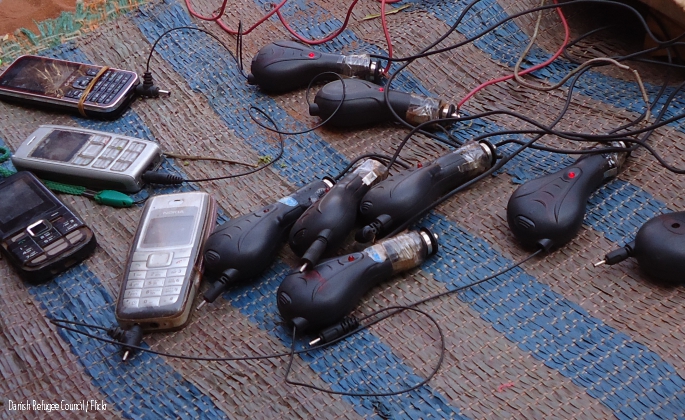
"In some of the most insecure humanitarian contexts, monitoring aid programmes is particularly important to humanitarian organisations. Did assistance get to the right people? Have aid trucks safely reached their intended location? How do affected populations assess the services provided? Amidst access constraints, attacks and the risk of aid diversion, those questions remain difficult to answer. M&E [monitoring and evaluation] practitioners are therefore optimistic about the use of technology tools like mobile phones or GPS [global positioning system] trackers when working in insecure environments."
Early research by the Secure Access in Volatile Environments (SAVE) research programme, in close collaboration with aid agencies in Afghanistan, Somalia, South Sudan, and Syria, showed that organisations are interested in exploring technologies for monitoring, but are unsure about advantages and downsides of existing tools. To help address these concerns, this toolkit provides an overview of different technological tools for monitoring in insecure settings based on lessons from existing experience and pilot projects. Funded by the United Kingdom Department for International Development (DFID), SAVE is a 3-year research programme that aims to contribute solutions for providing effective and accountable humanitarian action amid high levels of insecurity.
The research team collected all information for the toolkit through a literature review and interviews with practitioners in both the 4 focus countries and globally. The toolkit focuses on 6 technologies that practitioners consulted as part of SAVE deemed useful in insecure environments because they can function without constant electricity supply, across large distances and without advanced computing skills. The chapters focus on: (i) using mobile phones for monitoring and gathering feedback [pages 7-25]; (ii) digital data entry with tablets or smartphones [pages 26-43]; (iii) remote sensing and aerial imagery with satellites, radars, or unmanned aerial vehicle (UAVs) [pages 44-65]; (iv) location tracking [pages 66-80]; (v) complementing feedback mechanisms with radio programmes [pages 81-98]; and (vi) communications with online platforms [pages 99-116]. Each chapter: looks at benefits of a specific technology; discusses practical and ethical challenges as well as mitigation measures; runs through the concrete steps for implementation; and provides insights from applications in Afghanistan, Somalia, South Sudan, and Syria. The toolkit provides information on how the different applications work, conditions and costs involved, benefits for M&E, and limitations and challenges encountered. At the end of each chapter, SAVE offers a collection of resources for those seeking to learn more.
Most of the lessons identified during the research are specific to each tool and therefore reflected in the individual chapters. However, when using or considering using technological applications for monitoring, SAVE suggests that the following larger points should be taken into account:
- "Take your time....Consulting with partners who already use the technology, and developing a thorough understanding of who influences and spreads information in the specific context, is critical for success. Also, factor in time to win the support and trust from colleagues and affected populations for the solution, and work with users when inventing, designing and testing tools. Challenges can stem from inherent biases of some technologies - for example, men are more likely to own the household phone, making it difficult for women to use phones anonymously. Concerns can also arise from technical problems or be linked to resistance to change among staff. It is important to proactively address such concerns before they develop into general mistrust and rejection of a particular technology.
- Do a proper risk-benefit analysis....Do not use technology when data collected cannot be adequately protected and is so sensitive that it could put people at risk; when acceptance of a certain tool is very low and using it can create security risks; when the lack of infrastructure makes a project too costly; or when your organisation cannot guarantee long-term implementation...
- Watch out for digital risks and privacy concerns....Increasing digitisation means increasing dependence on tools, which makes a potential attack on digital systems more harmful. At the same time, intrusion becomes more rewarding when attackers get their hands on greater amounts of information. Furthermore, technology-enabled aid often depends on for-profit actors, including businesses like Google, Dropbox or Facebook. It is important to keep in mind that aid organisations forfeit some control of their data by using third party tools..."
117
SAVE website, January 3 2017; and email from Lotte Ruppert to The Communication Initiative on January 4 2017. Image credit: © Danish Refugee Council/Flickr