










































The Team Tanzania - Television and Radio Series
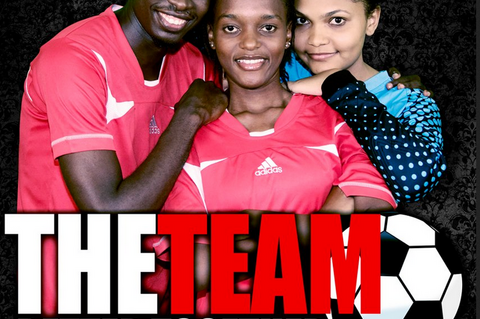
Launched in February 2013, The Team in Tanzania is a television and radio drama, which uses the fictionalised stories of young male and female footballers to reflect on gender equality in Tanzania. Led by Search for Common Ground with support from KPMG Advisory Limited Tanzania, the goal of the project is to contribute to strengthening the implementation and enforcement of gender-sensitive legislation in Tanzania. The series is a local adaptation of a multi-national television drama initiative being undertaken by SFCG which is designed to use sport as a unifier to transform social attitudes and diminish violent behaviour in countries dealing with deeply rooted conflict in Africa, Asia, and the Middle East. The drama is complemented by community outreach.
The Team Tanzania is intended to be a platform for men and women to engage in empowering and proactive discussions around gender inequality. This is accomplished by identifying key attitudes and behaviours embraced by both men and women which limits their ability to engage equally. The series showcases success stories and positive role model, and is designed to engage and transform society's gender norms through participatory activities and community outreach work. The project addresses key issues such as women's consideration in inheritance issues, women's leadership, gender-based violence (GBV), retention of girls in secondary school, and identity of men and women.
The Team: Television series
The Team 13-episode television series was produced by Alkemist Media, with co-production support from Common Ground Productions. Set in a Tanzanian secondary school, the programme addresses gender issues prevalent in Tanzania, such as rape and impunity; early marriage and teenage pregnancy; and various gender stereotypes, while focusing on the empowerment of young girls to make choices that will improve their lives and the life of women in Tanzania. The story revolves around three main characters: Upendo, Baraka, and Sophia, three 16-year-old youths from different backgrounds who have known each other all their lives. The Team introduces Ms. Wito, a dynamic civics teacher, who turns the world of 3 teenagers upside down when she challenges them with controversial questions like "Who are you?". On the edge of adulthood, they are searching for their own identities while facing family and cultural pressures. According to SFCG, the key to writing the series is to create realistic characters in believable situations.
The Team: Radio Production
In addition to the TV series, SFCG, through its media arm, Common Ground Productions, also supports the production of The Team radio series to reach a broader audience, particularly in rural areas throughout the country. The radio production company B-HITZ, with support from SFCG, has produced 50 radio episodes of The Team. The series, which is also called "Wamoja", is set in a rural area, reflecting the reality of its audience. It addresses gender stereotypes and seeks to positively transform gender norms. The main character is Dr. Atu, who moved to a rural area after the Government appointed her to work as a medical doctor in the Malele village. Dr. Atu, who loves soccer, decides to form a female soccer team to promote collaboration between the village youth.
Outreach Campaign
SFCG is working with PUSH Mobile and social media experts to launch and sustain a multi-pronged marketing strategy in order to attract the maximum number of viewers and ensure that the key target audience watches the programme. SFCG is also working with local partners to implement an outreach campaign in order to maximise the impact of the television and radio show. Activities such as mobile theatre or SMS monitoring will engage a cross section of stakeholders into discussions on the main themes of the programme and increase dialogue in society around gender equality.
Consultation Workshops and Baseline Assessment
While developing the project, SFCG conducted a baseline analysis and held workshops with local stakeholders in order to understand the specific core attitudes and behaviours affecting women's rights, their well-being, and participation in local and national decision-making. These steps sought to ensure that the project is both relevant to and rooted in the Tanzanian context. They also allowed for the development of context-aware key messages and themes representative of different perspectives and regions of the country.
For more information on the series, visit The Team Tanzania website.
Gender Equality
According to SFCG, in many ways Tanzania has a model legal system for addressing gender issues. The country has ratified the main international conventions protecting the rights of women and its Constitution makes provisions to ensure the representation of women in Parliament. In the 2012 Women in Parliament World Classification, Tanzania ranks 19th, tying with Spain, and is way ahead of its neighbors Kenya or Burundi. Yet, there is a gap between law and practice.
Search for Common Ground, Accountability in Tanzania Programme,