










































Tanzanian Men as Equal Partners Project
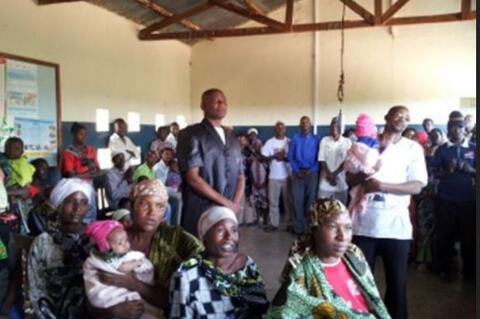
Launched in September 2011, the Tanzanian Men as Equal Partners Project (TMEP) is working to engage with men and encourage them to be active participants in issues related to sexual and reproductive health and rights (SRHR). The project is designed to increase access to accurate information and promote dialogue on SRHR, while increasing the use of reproductive health services. The project is led by the Swedish Association for Sexuality Education (RFSU), in partnership with the Health Actions Promotion Association (HAPA), and Resource Oriented Development Initiative (RODI).
At the national level, TMEP focuses on three components: communications, advocacy, and capacity building related to engaging men. The communications work is being undertaken mainly through a collaboration with Femina, an organisation working in health communication for youth, who are using the Fema and Si Mchezo magazines and the Fema TV Talk show to reach a large audience. TMEP also translates essential SRH information materials into Swahili. The advocacy strategy focuses on building a coalition of partners to explain and promote male involvement to government and relevant civil society development organisations. Capacity development of partners and stakeholders is a key aspect of the project. TMEP is working to build the capacity of HAPA and RODI, the project’s local implementing partners, as well as trainers at national and regional levels.
At a community level, TMEP began implementation by informing, sensitising, and mobilising stakeholders and the wider community about the project, and SRHR in general. Peer educators were recruited, who then facilitated local events to provide information and education, distribute condoms, and refer clients to relevant SRH services. Led by the peer educators, clubs were established in schools and among community members to discuss sexuality, gender, and SRH matters, as well as to promote gender equality and male involvement. Club members also spoke to their family and friends about what they discussed in these clubs.
The project is also working to encourage people to use health services, such as family planning, and HIV and AIDS prevention, care and treatment for both men and women. Recognising that service providers play a role in encouraging or discouraging men and women from accessing services, the initiative includes capacity building at the service delivery level. This includes developing service providers’ understanding of a rights based approach to SRH service delivery, how to become more male friendly, and how to encourage increased uptake of voluntary counselling and testing, sexually transmitted infection diagnosis and treatment, anti-retro viral therapy, and family planning.
Sexual Reproductive Health Rights
A project review in 2013 noted increased awareness and access to services. For example, the TMEP baseline study in 2010 observed that only 56% of men and 58% women interviewed in Rukwa reported to have ever heard about SRH rights. But, during a review conducted in 2013, the percentage men and women reported to have heard about SRH rights increased to 99.1 % and 99.2%. In addition, “statistics availed by TMEP show that [in 2013], the project managed to achieve a 93% increase in number of men who attended SRHR clinics for PMTCT." As well, the report noted that "while the number of attendances for HIV/AIDS voluntary counselling and testing (VCT) has doubled from those reported in 2012, the number of those accessing ARVs has dropped from 62,165 (2011) to 23,281 (2013). Overall, the project maintained the trend to reach more men than women, as designed."
The Swedish Association for Sexuality Education, Health Actions Promotion Association (HAPA), Resource Oriented Development Initiative (RODI)
The Swedish Association for Sexuality Education website, IPPmedia website, allAfrica website on May 20 2014.
Image credit: Joyce Tesha
- Log in to post comments