










































Survival Stories Project
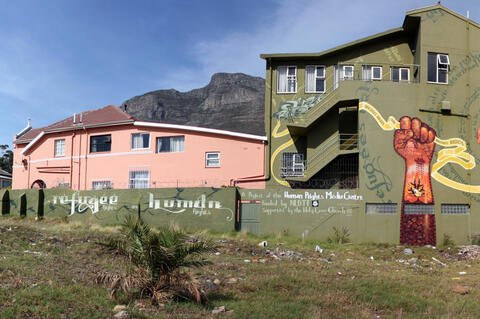
In 2002, HMRC interviewed 39 refugees from Angola, Democratic Republic of Congo, Burundi, Rwanda, Sudan, Uganda, Cameroon, and Chad for the Survival Stories Project. Thirteen of these stories were selected, edited, and compiled into a book titled "Torn Apart: Thirteen Refugees Tell Their Stories". The Human Rights Media Centre followed the same basic interview formula for each storyteller. During six workshops, storytellers were asked about childhood memories, perceptions and experience of the conflict in their home countries, the effect of conflict on their lives and on their families, communities and countries, as well as their journeys through Africa to Cape Town, their experiences in their new country, and hopes for the future. Some stories were recorded in the storyteller's mother tongue which were translated and published in English.
According to HRMC, building trust was complicated because refugees have had many terrible experiences. Many participants felt a sense of relief from sharing their stories and recounting their experiences. Others said their nightmares were recurring and they were referred to the Trauma Centre for counselling. The HRMC also secured funds from Themba Lesizwe for healing workshops facilitated by the Institute of Healing of Memories. HMRC adds that the slow and careful way in which the project unfolded gave interviewees the time and space to develop trust. The question of whether to attach their real names to their stories was on-going and three storytellers chose to use pseudonyms.
The stories were a launching point for various other media programmes. In 2005, HRMC worked in collaboration with the Institute for Democracy in Southern Africa’s Democracy Radio Project to develop community radio programmes, which focused on women and children's stories. In 2006 – 2007, two workshops were held with project participants to conceptualise the content of a wall mural titled Refugee Rights are Human Rights which was spray painted by local artists on the Holy Cross church in District Six, Cape Town.
As a continuation of the Survival Stories Project, HRMC produced "In Our Shoes", a 40-minute documentary film set in Cape Town which focuses on the discrimination refugees and asylum seekers in Cape Town experience in their everyday lives. The refugees shared details of their experiences at school, work, and where they live, and speak about the discrimination they face, ranging from name-calling and exclusion to extreme and violent xenophobia. They also offer their insights into the reasons for this unwelcoming atmosphere, comment on local South African’s lack of knowledge about the situation refugees are in, and offer some solutions to counter discrimination and xenophobia. These stories are interwoven with discussions by two groups of Khayelitsha residents who hold opposing views about refugees and immigrants, highlighting local perceptions and prejudices. Additional interviews with South Africans further comment on the prevailing negative attitude to immigration and their opinions on this subject.
With support from the Foundation for Human Rights (FHR), as of 2011 HRMC and the Whole World Women Association (WWWA) are collaborating to do panel research interviews with the 13 storytellers featured in the book "Torn Apart". The 2011 interviews will be merged with the 2002 interviews, and will be published in a second edition in 2011. According to the HRMC, the introduction will be rewritten and will include information regarding Disability Grants for disabled refugees. The information at the back of Torn Apart, which includes background to the conflicts in Chad, Democratic Republic of Congo, Angola, Burundi, and Rwanda, as well as where to apply for refugee status and service providers in the Western Cape, will be updated. The Foundation for Human Rights is also funding community dialogues, two community-driven wall murals, and book launches of the second edition of "Torn Apart".
Human rights, Refugees
The Human Rights Media Center works to advance awareness and activism about human rights through the documentation and dissemination of oral histories through a variety of media forms and social interventions.
Human Rights Media Centre website on October 2 2011
- Log in to post comments