










































State of South Africa's Fathers 2021
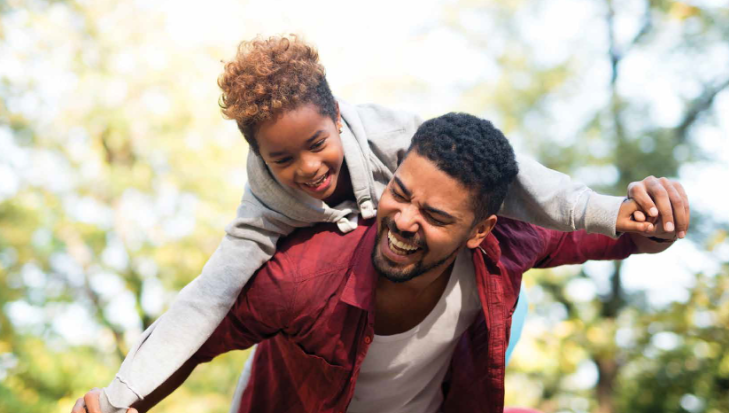
Sonke Gender Justice (van den Berg); Human Sciences Research Council (Makusha); Stellenbosch University (Ratele)
"...an incorporation of close emotional involvement and caring as part of their masculine identities can contest harmful and limiting social norms of fatherhood, and contribute to more gender-equitable practices..."
The State of South Africa's Fathers (SOSAF) 2021 is the second edition of an ongoing series of reports on fatherhood in the country. SOSAF 2018 established a reference point for future efforts to cultivate increased, positive involvement of men in their own children's lives so that every child has nurturing, nonviolent, and engaged adult men around them. SOSAF 2021 offers specific recommendations for shifting norms towards gender-equitable parenting, highlights men's caregiving as an institutional and social priority, and promotes a nuanced approach to fatherhood for improved support for families in South Africa (SA). The report can be used in the development of policy and legislation for families, labour market regulations, educational curricula, and other training materials. It can also be a source of expert information for advocacy and community groups, individual families, and legislative committees.
The report focuses on fathering as extending beyond biological relationships and reproduction to include other men who, through kinship norms, take on fathering roles in different contexts. In exploring the ways in which men become social fathers, cultural norms about older brothers, uncles, and grandfathers in the SA context are relevant and are considered in the report.
SOSAF 2021 was produced by a group of authors (led by the people named above), including academics, practitioners from various organisations, postgraduate students, and young people writing about their own fathers. The report includes results from a national survey on father and fatherhood in South Africa. Conducted by an international research company, the online survey (June 3-17 2021) covered a sample of 1,003 men from all the provinces of the country who have biological children or act in the capacity of fathers for children. The main survey goal was to gain insights into a range of attitudes and practices related to the lives of fathers and the current state of fatherhood in the country.
In this report, the survey data is discussed (for a visual synopsis, see pages 168-172) alongside pertinent data and scholarly work on topics related to fatherhood including kinship, non-normative fatherhood, the economy and fathers, fathers and mental health, and fathers and violence. Chapters are supplemented by cases on fathers and fatherhood. Following each chapter are essays on fathers, written by children and young people who took part in a writing competition run by the FunDza Literacy Trust and Heartlines.
Select findings from the survey and analysis:
- Most children in SA live with men, but 1 out of 5 non-resident fathers had contact with their child at least twice a week.
- Two-thirds of survey respondents who are not the child's biological father but who care for the child did homework with the children they care for.
- Many fathers desire close relationships with children, and fathers report participation in a range of daily caregiving activities.
- The state's discriminatory treatment of unmarried fathers and the lack of state recognition of the role they and their kin play in caring for children is an area of research and implementation that needs to be strengthened.
- 73% of respondents agreed that it is appropriate for men to be preschool teachers.
- Having a job and providing for your children are still considered the most honoured form of masculinity and fatherhood in SA. Men who are unable to provide for their children and families face shame and humiliation, and they are more likely to disengage from their families. The gender-based division of labour frames childcare as an arena for mothers, although 77% of respondents agreed that men are as good caregivers as women.
- There is a need for increased and targeted efforts to make gender equality more practical instead of remaining an abstract concept - e.g., by encouraging egalitarian views and practices between partners, by providing gender-neutral toys and play, and by advocating for fathers and sons to do more housework.
- The experiences of fathers who are incarcerated, single, gay, or teenagers demonstrate the difficulty in disrupting stereotypical notions of fatherhood.
- A comprehensive strategy against violence in different forms, inclusive of males and females, is imperative in SA. As far as men who are fathers are concerned, the vulnerability of men implies the need to consider both the violence that fathers commit against others and the violence they suffer(ed) from others.
- Fathers' perinatal depression negatively affects baby care and bonding, as depressed men display fewer positive behaviours such as sensitivity, warmth, and responsiveness, and increased negative behaviours such as hostility and disengagement. To avoid or mitigate the effects of adverse events working their way from the father to the mother and the child, fathers need gender-specific mental health care and support for their own needs.
In conclusion: "The importance of fathers' participation in childcare is well documented and this report is underpinned by a shared value of greater positive male involvement in children's lives. To the extent that the economic, cultural, political, legal, and immediate family environments have the potential to encourage or discourage men to participate in the care of children, it is desirable that researchers, practitioners, and policymakers develop and promote measures and policies that enhance fathers' involvement in their children's lives."
The report is affiliated with the MenCare global fatherhood campaign (see Related Summaries, below) and complements the State of the World's Fathers reports produced by Promundo. SOSAF 2021 was supported by DG Murray Trust, the Oak Foundation, and the United Nations Children's Fund (UNICEF) SA.
Emails from Sonke Gender Justice and Kopano Ratele to The Communication Initiative on November 17 2021 and November 19 2021, respectively. Image credit: Sonke Gender Justice