










































Stand Up! Security Guide for Human Rights Defenders in Africa
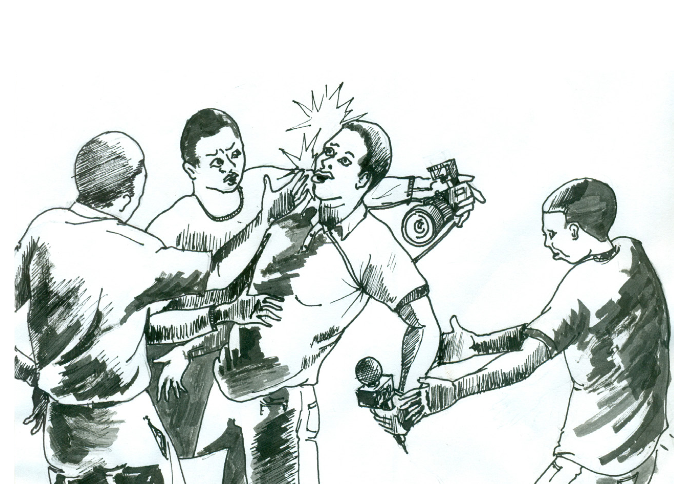
“Across the East and Horn of Africa sub-region, we have documented worrying patterns affecting the work of human rights defenders. These include increasing online surveillance, judicial harassment and spurious prosecutions, physical attacks and threats against defenders and their families, targeting of non-governmental organisations’ information through break-ins or confiscation of documents, the list goes on.” Hassan Shire, Executive Director of DefendDefenders.
This manual on security is intended to serve as a tool for human rights defenders (HRD) in the East and Horn of Africa sub-region to equip them with the necessary strategies and responses to tackle the often volatile environment they operate in. The guide seeks to help HRDs become more safety conscious, improve communication and planning within communities of human rights defenders, and improve the robustness of the response when threats do manifest themselves.
HRDs can be people working for human rights organisations, journalists, and ordinary citizens. As explained in the guide, “Anyone can be an HRD regardless of educational background, professional qualifications, gender, age, race, social group, or nationality. If a street vendor or a banana seller denounces the mistreatment of fellow sellers by local tax authorities, s/he is considered an HRD. In some cases, HRDs can be found in both private and government sectors. All actions taken by HRDs must be peaceful.”
The manual was developed by the East and Horn of Africa Human Rights Defenders Project (DefendDefenders), an organisation working to strengthen the work of HRDs throughout the region by reducing their vulnerability to the risk of persecution and by enhancing their capacity to effectively defend human rights. The manual reflects DefendDefenders’ experiences over the past 11 years, focused on ensuring defenders’ safety, security, and protection through trainings on security management, technical support, security guidelines for defenders most at risk, and organisational support.
The manual consists of two books:
Book One covers personal, physical, and organisational security planning. HRDs can learn the essential framework for security analysis and planning as well as the support mechanisms available at the regional and international level for human rights defenders. For example, it will help them identify a security incident or a threat and how to react to these kinds of incidences.
Book Two covers digital security for electronic devices, and online accounts and communications. It extends the lessons of security management into the digital realm with risk assessments of electronic workspaces and the essential steps to secure human rights work when its conducted from phones, computers, email, websites, social media accounts, and more.
English
33
DefendDefenders website on May 15 2017.