










































South Sudan Community Radio Audience Feedback Study 2012-2013
Internews (McMurry), The Speaking Earth Institute (Lockhart)
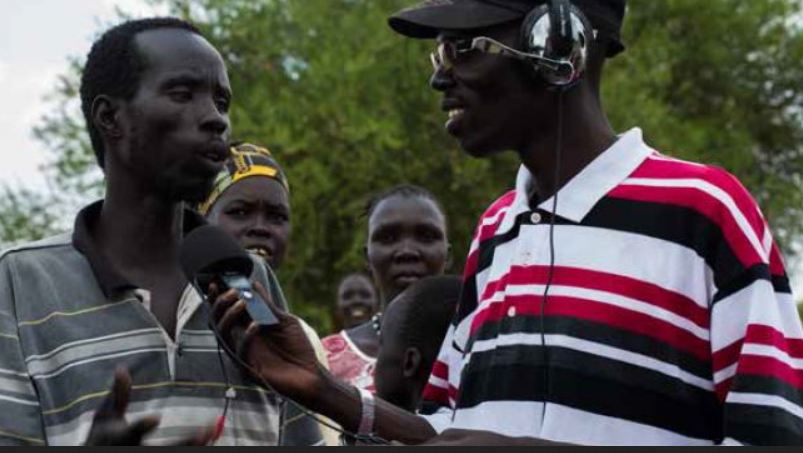
This 34-page report shares findings from an Audience Feedback Study conducted to assess the information needs of the populations served by Internews’ network of community radio stations in South Sudan, and how the stations are meeting those needs. According to the report, overall, the most pervasive theme for people – despite location, demographic characteristics, or group affiliation – centred on the various challenges and obstacles they faced personally and in terms of building healthy, vibrant communities. As they discussed their information needs and the role of radio in their lives and communities, individuals did so against a general backdrop of adversity and sense of powerlessness.
Among the many challenges identified by study participants, those associated with violence and insecurity were notable because they were discussed at great length by everybody regardless of location or demographic characteristics. People were worried about the ongoing tension and intermittent fighting between the Sudan People’s Liberation Army and Sudan Armed Forces, the uncertain situation in the contested Abyei region, and the internal conflict between the Murle people and the South Sudanese government in Jonglei State. In addition to these wider conflicts, individuals pointed to a sharp increase in youth gang activity and the chronic problem of inter-tribal cattle raiding, both of which resulted in frequent and deadly clashes. There was a general sense that violence could erupt at any time and one simply had to accept that as a fact of life.
Individuals from all locations identified a long list of problems and challenges beyond violence (though in many instances they were described as overlapping with violence or in terms of a causal relationship). Most other problems were chronic in nature; individuals described them as ongoing, persistent issues that undermined community wellbeing and made their daily lives much more difficult. Primary among these were: lack of educational opportunities and jobs; health-related issues; food insecurity; the rural-urban divide (in terms of uneven development); the decline of tradition; and problems associated with specific groups, especially youth, women, and returnees.
According to the report, the information needs of people from all four locations were extensive, and are outlined as follows:
- Governance and development: People from all locations expressed a need for more information on governance and development. Individuals also saw this area as one where they could hear directly from government officials, as well as engage directly with them (via radio shows with a call-in format, for example). They expressed considerable interest in having government representatives discuss what could be complex concepts and ideas involving democracy, how it is actually implemented, and the role of local community leaders.
- Security and the promotion of peace: Almost everyone viewed national and regional security issues as a critical area for information. This included delivering timely updates on any outbreaks of violence, large-scale movements of troops/people, and the current status of peace negotiations, the referendum process, and related efforts to foster stability. Developing various media-based, proactive strategies to promote peace was considered a significant part of this area.
- Crime and punishment: People from all locations defined crime and punishment as an important information need. The crimes themselves were local ones and similar in nature: public intoxication, prostitution, petty theft, and assaults/fighting. Again, this was an information area where it was considered important to hear directly from government officials. In the case of crime and punishment, however, people generally wanted to hear from the local commissioner and police (this was also considered a means of holding them accountable).
- Putting youth on the right track: People from each location were extremely concerned about the youth. Youth were not only viewed as the major force behind criminal activity, but as generally having lost their way in terms of understanding and adhering to traditional notions of morality, respectful behaviour, and proper conduct. For this information area, people felt it was important to hear directly from elders, traditional authorities, and other community leaders, as well as those youth who could serve as good role models.
- Livelihoods: Livelihoods was another commonly cited information need. People specifically mentioned the need for advice on subsistence agriculture and how to establish a small business (for example, a tea shop in the central market place). Relatedly, some individuals suggested the need for information and advice involving personal financial management and small-scale investment. This information area was strongly infused by ideals involving self-sufficiency and individual responsibility, which were themselves positively associated with both "traditional culture" as well as the post-independent environment of South Sudan.
- Health: Information involving health issues was also a popular and widespread topic of discussion. Individuals recognised the essential role of radio as a public health tool, and appreciated its use in disease prevention efforts and health-related reporting. As with other information needs, people placed particular value on the role of knowledgeable persons from the community who could directly address the public. In the case of public health, people identified staff from local non-governmental organisations.
- Group rights issues: In keeping with the two groups who tended to define community problems as issues particularly relevant to them, women and returnees placed a strong focus on information needs in terms of their own plight. They often situated these needs in an overall framework of empowerment and equal rights. While many information needs expressed by individuals here overlapped with other areas – development, education, hearing directly from government officials, etc. – the overwhelming desire was for information that could help affect change for women and returnees themselves.
- Local-global connections: News and information from other parts of South Sudan and around the world was another important information need, which might be better described as a need for making local-global connections. A key factor here involved people’s desire to receive national and international news that was applicable to local issues or that could be informative or useful to their situation. People expressed particular interest in comparison-based news on development and security/peace issues in particular. In general, the primary interest was for national and international news through the lens of local needs and issues.
- Local community topics and announcements: Another information area that people prioritised involved locally relevant topics and community announcements. Examples here included reporting the high prices of goods in the local market place (and possible price tampering by local traders/merchants), promotional events, visits by dignitaries, and giving local non-governmental organisations the opportunity to discuss their missions and particular programmes. However, the most iconic and frequently mentioned topic in this area was to set aside airtime for a community-wide lost and found programme whereby announcements could be made regarding lost cows, children, and/or items like wallets and cell phones.
The report offers a number of reccomendations.
- The basics: meeting the information needs of communities: The most fundamental recommendation highlighted is that community radio stations must continue to meet the information needs of their listeners. While those needs have been described at length, it is also important to recognise that they are constantly evolving. As anywhere, information needs in South Sudan are shaped by a wider set of conditions and circumstances that are themselves in a perpetual state of flux. It is important to maintain a consistent and sustained focus on both information needs and the conditions that shape them at the local and national level (and international level with respect to specific issues).
- Anticipate and prepare for growing tensions regarding the role of community radio: The report states that community radio stations must also anticipate and prepare for potential tensions/issues in terms of the expectations various stakeholders will place on them. Listeners/community members clearly see the role of community radio as a government watchdog and in terms of social advocacy. Several government officials interviewed viewed the role of community radio as a mouthpiece for government itself, even suggesting that increased monitoring of programme content was necessary. Community radio stations may also face increased tension as they try to find the right balance between advocacy journalism (e.g. being proactive, educational, preventative, etc.) and traditional journalism (reporting on news and events in a largely reactive manner). Related tensions could arise with respect to reporting on violence and security issues. The community radio stations will need to balance a conflict resolution approach to journalism (promoting peace by highlighting the wider, structural causes of South Sudan’s various conflicts) and a more traditional, descriptive journalism that reports on violence, conflict, and security issues in what can often be a simplistic and narrow manner.
- Combining research with implementation to resolve information access problems: Community radio stations will need to more clearly identify the information access problems among people from outlying payams and villages in their respective broadcast areas. Research on this localised form of the rural-urban divide should then be used to directly inform future radio distribution programmes. According to many people from these areas, past radio distribution efforts – which did not work in conjunction with the community radio stations – were poorly planned and plagued with problems, and the radios did not reach outlying villages. It is also important to clearly identify the information access problems of specific groups – namely, women and returnees.
- Measuring social impact: Given that a fundamental role of community radio stations is to make a positive social impact, it is important to refine and develop more sophisticated ways (quantitative and qualitative) to assess and measure radio’s impact in areas like public health, gender equality, civic awareness, conflict resolution, etc. In the end, awareness of an issue is rarely ever enough; positive and sustained behaviour change is the ultimate objective. Getting to such a point might include working in closer collaboration with the appropriate NGO/CBO on developing evaluation and monitoring activities that revolve around a specific radio programme and topic (e.g., combining media and communications research with epidemiological methodologies and approaches to better assess the impact of radio programmes in the area of HIV/AIDS prevention).
Internews website on January 10 2014.
- Log in to post comments