










































South African National HIV and AIDS Communication Survey 2006
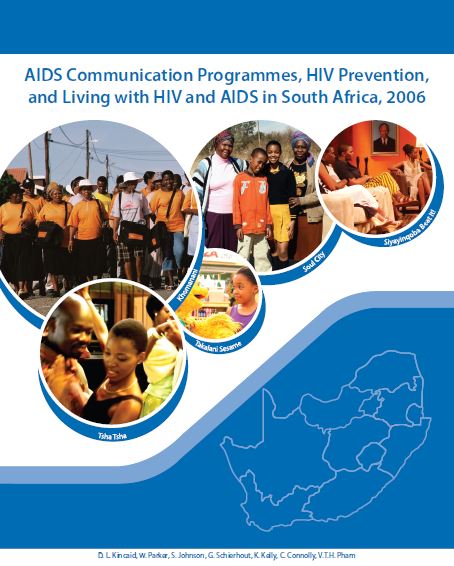
Published in November 2006, this 10-page resource shares the results of a survey carried out in South Africa by a research team from the Centre for AIDS Development, Research and Evaluation (CADRE), Health Development Agency (HDA) representing Khomanani, Soul City, Johns Hopkins Health and Education in South Africa (JHHESA), and Johns Hopkins Bloomberg School of Public Health (JHSPH). The study looked in detail at the effects of national AIDS communication interventions and aimed to show the separate and combined effects of all the interventions.
The research team hoped to inform understanding of how exposure to the main national-level communication interventions that use mass media shapes AIDS-related knowledge and behaviour, with the goal of identifying successes and gaps and informing future strategy. The survey included more than 8,000 respondents across South Africa, and examined how exposure to more than 20 AIDS communication interventions (which included the national Khomanani Campaign, the educational drama series Tsha Tsha, and the Soul City and Soul Buddyz educational programmes) shaped their knowledge and behaviour.
According to the nationwide survey the combined efforts of many AIDS communication campaigns in the country showed positive impacts on HIV prevention behaviours, increased positive attitudes towards people living with HIV/AIDS and increased community involvement in response to the epidemic.
Looking at the impact of television and radio programmes, a substantial dose response was reported on sexual behaviours. For example, condom use at last sex increased from 34% among those not reached by any programs, to 60% among those exposed to ten or more programmes – an increase of 26%. Impacts were also found on other prevention behaviours as well as increases in voluntary counseling and testing (VCT) for HIV, general AIDS knowledge, and knowledge of antiretroviral therapy.
The following are some of the conclusions drawn from the study:
- knowledge and behaviour findings consistent with other surveys;
- overall high awareness of and exposure to the epidemic;
- high levels of access to radio and television, and high exposure to mass media components of national interventions;
- high levels of response to VCT and condom promotion communication;
- communication campaigns need to take into account the severity of the epidemic and key epidemiological drivers;
- there is very low awareness, and poor ‘top of mind’ awareness of importance of limiting sexual partners and delaying of sexual debut;
- partner turnover is exacerbated by late marriage and overall low levels of marriage;
- reducing partner turnover and delaying sexual debut require urgent intensified focus;
Core themes include:- limiting lifetime number of sexual partners;
- avoiding casual sexual partners;
- avoiding high partner turnover;
- avoiding concurrent sexual partners;
- delaying first sex in new relationships;
- delaying first sex amongst teenagers and;
- avoiding older sexual partners (amongst teenagers).
- after controlling for the effects of 17 socio-demographic control variables related to AIDS related behaviour, the joint effects of all 14 AIDS media programmes was found to have a substantial impact on seven important attitudes and behaviours related to HIV/AIDS;
- the cumulative effect of 14 television and radio programmes on using condom with one’s most recent partner to prevent HIV is as strong as the standard social-demographic and socio-economic factors and;
- mass media AIDS programmes create an environment conducive to discussion and social capital in local communities that in turn have direct effects on AIDS related behaviour.
JHUCCP website, and JHHESA website.
- Log in to post comments