African development action with informed and engaged societies

After nearly 28 years, The Communication Initiative (The CI) Global is entering a new chapter. 

Following a period of transition, the global website has been transferred to the University of the Witwatersrand (Wits) in South Africa, where it will be administered by the Social and Behaviour Change Communication Division. Wits' commitment to social change and justice makes it a trusted steward for The CI's legacy and future. 

On the transfer, co-founder Victoria Martin expressed her pleasure to see this work continue under Wits' leadership, knowing that co-founder Warren Feek (1953–2024) would have felt deep pride in The CI Global's Africa-led direction. 

As Wits, we honour the team and partners who sustained The CI for decades and look forward building from that strong base. This includes co-founders Warren Feek (1953-2024) and Victoria Martin as well as La Iniciativa de Comunicación (CILA), which continues independently at lainiciativadecomunicacion.com with links to The CI Global site. We are also eager to forge new partnerships and entertain new ideas as we consider how best to contribute to social and behaviour change in our rapidly evolving environment.

If you are joining the International Social and Behaviour Change Communication (SBCC) Summit in Panama, please join Wits and CILA on Monday, 22 June, to share your thoughts and suggestion for the relaunch of the Communication Initiative. We will be in Pacifica 5 from 12-1:25 for the Refuel, Reflect, and Renew Lunch Series: The Communication Initiative: celebrating a driving force for Communication for Social Change and the way forward. We will reflect on the legacy of Warren Feek and family in creating the Communication Initiative, consider the contributions of CI over the years and then turn our attention towards the future in this dynamic session. 

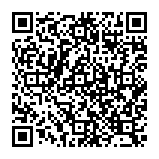
If you are unable to join us in Panama, we still want to hear from you. Please contribute your thoughts by following this link: https://redcap.link/CommunicationInitiative2026 or reaching out to ci_surveys@commint.com

You can also follow the QR Code:

 https://redcap.link/CommunicationInitiative2026

Time to read
6 minutes
Read so far

Soul Beat Malaria Extra - Issue #7

0 comments
Issue #
7
Soul Beat AfricaHaving trouble viewing this email? Launch it in your browser
Subscribe | Unsubscribe | View Newsletter Archives|
break1
January 21, 2012 Issue 7
Facebook Twitter More...
Soul Beat Malaria Extra
Where Social and Behaviour Change is Central to Eradicating Malaria
break1
(Photo credit: Pedro Sa Da Bandeira)

This issue of the Soul Beat Malaria Extra shares with you a variety of recent malaria news, resources, and initiatives that are using communication strategies to raise awareness about malaria, and to spark action to end this disease
In this Issue: News: WHO Malaria Report released, launch of a new project in Nigeria, and news of the first inSCALE technical meeting in Uganda. Resources: Malaria Train the Trainer Manual, and a pictorial booklet and cartoons from Zambia. Initiatives: LLIN projects in Ghana and Benin, and a radio project in Uganda. Training: MENTOR Initiative Malaria Control in Humanitarian Crises Training.
We hope you find these selections useful and invite you to visit the Soul Beat Africa Malaria website, where you will find more resources. If you have not yet registered, we hope you will take the time to join us on the Malaria Online Social Network for knowledge sharing and upcoming discussion and exploration of social and behaviour change communication (SBCC) for malaria prevention, control, and treatment in Africa.


About Soul Beat Malaria
lead with pride
Soul Beat Malaria Extra is a newsletter for practitioners utilising social and behaviour change communication (SBCC) for malaria prevention, control, and treatment in Africa. It keeps you in touch with an ever-growing collection of practical tools, research, and resources together with inter-active forums that link an increasing network of people and organisations committed to expanding the use of SBCC in African malaria initiatives.

break1
MALARIA NEWS
break1
World Malaria Report 2011 Released


The World Malaria Report 2011 was released in December 2011. It summarises information received from 106 malaria-endemic countries and a range of other sources. It analyses prevention and control measures according to a comprehensive set of indicators, and highlights continued progress towards global malaria targets. The report shows clear progress in the fight against malaria and a decline in estimated malaria cases and deaths. For the first time, the report contains individual profiles for 99 countries with ongoing malaria transmission. Click here to download the report from the WHO website.


MAPS Project Launched in Nigeria
cdc


The Malaria Action Program for States (MAPS) project, funded by the United States Agency for International Development (USAID) through the President's Malaria Initiative, was launched in December 2011 in Abuja. The project is designed to support state level management, prevention, treatment of malaria, as well as demand creation for commodities and services. The programme provides a unique opportunity to extend reach from federal down to community level and spans all the processes and systems involved. The project is managed by a consortium of partners led by FHI 360, Malaria Consortium and Health Partners International. Click here for more information.

inSCALE Project's First Technical Advisory Group Meeting in Kampala
cdc
In December 2011, inSCALE held its first technical advisory group meeting. The Malaria Consortium invited a group of nine experts from all over the world to Kampala, Uganda, to discuss progress of the inSCALE programme and the design of innovations that will help Community Health Workers in Uganda and Mozambique perform their daily work. The inSCALE programme uses Community Health Workers who are trained to provide free diagnosis and care for children in their communities, and aims to identify and document best practices to improve quality of care and increase coverage of community health work in rural areas. Click here for more information.
break1
RESOURCES
break1
Malaria Educator Manual

cdc

This manual forms part of SC Johnson's Anti-Malaria Information, Education, and Communication (IEC) learning tools which seek to help non-governmental organisations, governments, businesses, and community health groups raise awareness about malaria and reduce the rate of new infections among people living and working in the hardest-hit regions of the world. Developed in conjunction with GBC Health (formerly the Global Business Coalition on HIV/AIDS, Tuberculosis, and Malaria) and adapted from the World Health Organisation (WHO) Malaria Manual for Community Health Workers, the manual was developed in a "train the trainer" format, to provide information to educate employees, customers, and the broader community on the risks of malaria. Click here for more information and to download this resource.

A Village Without Malaria - Story Book

cdc

This pictorial booklet, "Umushi uwabula ubulwele bwa Malaria" (A Village Without Malaria), was published to promote the benefits of using malaria bednets to protect families in Zambia. Designed to be used by health workers to sensitise communities on the dangers of malaria, it was developed by the National Malaria Control Centre (Zambia Ministry of Health) in conjunction with USAID and Society for Family Health. Click here for more information and to download this resource.

Annie Anopheles Malaria Cartoons

cdc

Annie Anopheles is an animated film series of four cartoons about malaria prevention. They were created by the Health Communication Partnership (HCP) Project led by the Center for Communication Programs of the Johns Hopkins University (JHU/CCP). This series seeks to change malaria-related prevention and treatment behaviours. Each cartoon covers a different malaria related behaviour: one on the importance of sleeping under long-lasting insecticide treated nets (LLINs) to prevent malaria, one on intermittent presumptive treatment (IPT) for malaria in pregnancy, one on indoor residual spraying (IRS), and a final one on seeking appropriate treatment for malaria. Click here to find out more and to view these cartoons.
Click here for more Malaria Resources from the Soul Beat Africa Malaria themesite.
break1
 
The President's Malaria Initiative

cdc

The President's Malaria Initiative (PMI) seeks to reduce malaria-related deaths by 50 percent in 15 focus countries in Africa by expanding coverage of effective malaria prevention and treatment measures to the most vulnerable populations: pregnant women and children under five years of age. To access communication materials developed by USAID/PMI partners go to the PMI Special Collection on C-Hub. C-Hub is a service of C-Change that provides a place to find and share communication materials on development.
break1
INITIATIVES
break1
Promoting Malaria Prevention and Treatment (ProMPT)

cdc


Launched in 2009 to strengthen malaria prevention and control in Ghana, the Promoting Malaria Prevention and Treatment (ProMPT) project is working with Ghana's National Malaria Control Program to distribute LLINs more efficiently and use communication to increase use. The project is led by University Research Co, LLC (URC), in collaboration with the Malaria Consortium and the Population Council, with support from USAID through the President's Malaria Initiative. ProMPT works with NGOs, communities, and the private sector to improve LLIN distribution, train healthcare providers, and implement communication and community awareness activities. Click here to find out more.

SANGUE Project

training

In 2008, Catholic Relief Services (CRS) launched a five-year programme in Niger entitled SANGUE, with the goal of ensuring that by 2012 at least 80% of children under five years of age and pregnant women are sleeping under a LLIN. With funding from the Global Fund to Fight AIDS, Tuberculosis and Malaria, the project uses multi-media, including radio, television, and video, to promote the benefits of using treated nets. A major component of the project is working to build the capacity of four local partners. Click here to find out more.

Under the Mango Tree Radio Project

training

In 2008, Catholic Relief Services (CRS) launched a five-year programme in Niger entitled SANGUE, with the goal of ensuring that by 2012 at least 80% of children under five years of age and pregnant women are sleeping under a LLIN. With funding from the Global Fund to Fight AIDS, Tuberculosis and Malaria, the project uses multi-media, including radio, television, and video, to promote the benefits of using treated nets. A major component of the project is working to build the capacity of four local partners. Click here to find out more.
break1
EVENTS & TRAINING
break1
Malaria Control in Humanitarian Crises Training (April 16 - 20 2012) Mombasa, Kenya

This 5-day MENTOR Initiative training programme seeks to ensure evidence-based decision making by health care providers in humanitarian crises situations. Participants will learn to assess, plan, implement, monitor, and evaluate effective and coordinated malaria prevention and control strategies. This will be reflected in their overall response to acute emergencies - conflict and natural disasters for populations including IDPs, refugees, host communities - and countries moving through crises into reconstruction phases. Click here to find out more about this training Please submit your Malaria events and trainings in Africa to soulbeat@comminit.com

break1
Subscribe to the Soul Beat Malaria Extra E-magazine

cdc

The Soul Beat Malaria Extra e-magazine, supported by PMI and C-Change and implemented by Soul Beat Africa, is an e-magazine that highlights social and behaviour change communication (SBCC) case studies, reports, analyses, and resources related to Malaria. Please encourage your colleagues and friends to subscribe here and select Malaria under Development Issues.
break1
ONLINE SOCIAL NETWORK
break1

Register to participate
If you are active on or interested in effective malaria action please join the Soul Beat: Malaria Social Network

Share your knowledge

Do you have programme descriptions, strategic planning documents, training manuals or other resources you think are useful to other working on SBCC and Malaria? If you do please go to the knowledge sharing area of Soul Beat Africa's Malaria Network where, once you've registered, you can upload the resources you want to share.

break1
Facebook Twitter More...
Subscribe | Unsubscribe | View Newsletter Archives 


This publication is made possible by the support of the American people through the United States Agency for International Development (USAID) under the terms of Agreement No. GPO-A-00-07-00004-00. The contents are the responsibility of The Communication Initiative and the C-Change project, managed by FHI360, and do not necessarily reflect the views of USAID or the United States Government.

break1