










































SMS for Life

Through the use of mobile phones, SMS technologies, and websites, SMS for Life delivers antimalarial stock information to track and manage these medicines. Healthcare staff located at local public clinics receive automated SMS messages each week that prompt them to check the remaining stock of antimalarial medicines. Using toll-free numbers, staff can reply with an SMS to a central database system providing details of stock levels. Electronic maps are used to provide a geographic overview of medicine stock status and needs. The programme is designed to help ensure that deliveries of medicines are made before supplies run out.
The concept of using text messaging to improve stock management was developed by healthcare company Novartis and further researched and refined in collaboration with a team of international students taking part in the IBM internship programme Extreme Blue. IBM provided management resources to the project and Vodafone was invited to develop and manage the system. After visits to clinics, hospitals, and dispensaries across Tanzania, IBM, Novartis, and Vodafone initiated a 6-month SMS for Life pilot, covering 226 villages and over one million people in different locations across Tanzania. Novartis took the lead in defining the proposed solution, sourcing the partners, establishing a Steering Committee, and liaising with the Ministry of Health of Tanzania.
For more information about SMS for Life, please visit the project website.
Malaria, Health, Information and Communication Technologies.
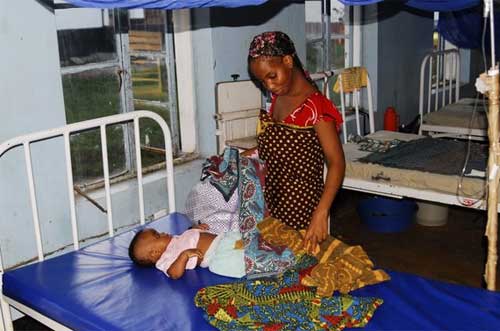
In 2010, malaria killed 655,000 people, 91% of malaria-related deaths occur in Africa, the majority of whom are children under 5 years of age. The World Health Organization (WHO) estimates that a child dies from the disease every 60 seconds.
Malaria is a treatable and preventable disease, but treatments such as artemisinin-based combination therapies (ACTs) are not always available to patients, particularly those living in remote areas. In many countries, mothers have only a 50% chance of obtaining an antimalarial for their child at a local health facility. Research conducted by partners involved in the SMS for Life project found that antimalarial medicine supply challenges were essentially logistical and technological and were also due to the unavailability of information. Enough medicines were available, but sufficient quantities were not getting to local clinics in a timely manner. SMS for Life was developed to combat this logistical shortfall.
During the first eight weeks of the SMS for Life pilot in Tanzania, the number of health facilities with stock-outs in one district alone was reduced by over 75%. In addition, at the beginning of the pilot, 26% of the facilities had no dose form of the Novartis ACT and, by the end, this figure had been cut to less than 1%.
Following the pilot, as of February 2013, SMS for Life has been rolled out across Tanzania, with over 5,000 public health facilities trained and reporting on a weekly basis. Tracking of tuberculosis and leprosy medicines has also been added.
In Ghana, also following a pilot in six districts, sponsored by the Swiss Tropical and Public Health Institute (Swiss TPH), Novartis is working with the Ghana Health Service on planning a full country scale-up. In Kenya, another pilot has been completed, and Novartis is working with the National Malaria Control Program (NMCP) on a plan for a full country scale-up. In Cameroon, with support from the Norwegian Agency for Development Cooperation (NORAD), Novartis and its partners are in the planning phase for a full country scale-up of malaria medicine tracking, in addition to collecting patient surveillance data on the use of rapid diagnostic tests.
Since 2001, Novartis has delivered more than 500 million malaria treatments to patients in the public sector of more than 60 malaria-endemic countries.
The RBM Partnership is the global framework for coordinated action against malaria. It seeks to provide a neutral platform for consensus-building and developing solutions to challenges in the implementation of malaria control interventions and strategies. RBM also facilitates the incubation of new ideas and lends support to innovative approaches. The Partnership promotes high-level political commitment in an effort to keep malaria high on the global agenda. Founded by the United Nations Children's Fund (UNICEF), WHO, the World Bank, and the United Nations Development Program (UNDP) and more than 500 partner organisations, the Partnership works to secure policy guidance and financial and technical support for control efforts in countries and monitors progress toward universal goals.
IBM, Vodafone, Novartis, and the Roll Back Malaria Partnership.
Roll Back Malaria website [last accessed February 15 2013]; Novartis Malaria Initiative website [last accessed February 15 2013], IMD SMS for Life case study, accessed via the Novartis Malaria Initiative website [last accessed February 15 2013].
- Log in to post comments