










































Sierra Leone's Changing Media Landscape Offers Fresh Opportunities for Development Communications
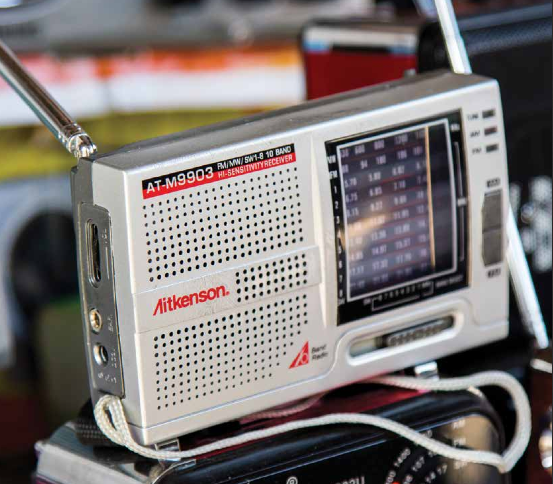
“Mobile phone uptake in Sierra Leone has burgeoned making mobiles the most accessed form of communication on a weekly basis alongside radio.”
This research summary looks at the results of a national survey on the use of mobiles and media, such as radio and social media, in Sierra Leone. Conducted by BBC Media Action in late 2015, the survey was designed to inform the development of communication initiatives for audiences in Sierra Leone. It used a nationally representative sample of 2,500 adults aged 15 and above, drawn from all 14 districts in Sierra Leone.
The following are some of the key findings as outlined in the report:
- "Radio continues to be the most effective media platform for reaching a wide audience. With 81% of Sierra Leoneans having access to radio, it reaches a greater proportion of the population than TV (45%) or the internet (16%).
- Mobile phones are now as accessed as radio, and while 68% of respondents said that they typically listened to the radio at least once a week, some 67% reported having used a mobile phone in the past week.
- The number of radio stations has increased since the turn of the century, particularly of local stations. As a result, radio listenership has become more fragmented. No one station has the capability to reach a national audience on its own.
- Radio and mobile phones are the media with the most evenly represented access across demographic groups and the best to reach women and rural audiences. Eighty-seven per cent of men and 80% of women have access to mobile phones.
- However, gender, location, education and income levels continue to be determinants of access to media, with urban, male, well-educated and better-off audiences able to access more media platforms and more frequently. For example, newspapers and internet primarily reach urban and male audiences.
- Despite rapid growth in access to mobile phones in recent years, there are caveats both to distributing and receiving content by mobile phone. Phones are mainly used for making calls and only 31% use them to send texts. This is compounded by low literacy – particularly in rural and older audiences. Those seeking to use phones for mass communication, therefore, should consider the use of audio content.
- Social media is a small but growing phenomenon, especially among younger audiences in Freetown. Usage is linked to the ownership of smartphones, which make up less than a quarter of all phones owned in Sierra Leone."
The report concludes with a brief outline of some of the implications of these findings for using radio, mobile phones, and social media as part of a communication strategy.
For the full report, see Related Summaries below.
BBC Media Action website on November 23 2016.
- Log in to post comments