Shamba Shape Up
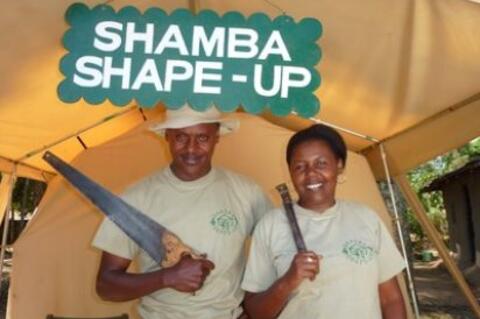
Launched by Mediae in 2012, Shamba Shape Up is a make-over style television series for East Africa's rapidly growing rural and peri-urban television audience designed to deliver agricultural and rural livelihoods information to benefit both farmers and international research organisations. Using an "edutainment" approach, the series features the Shamba Shape Up presenters and guest experts who address the needs of small, diverse farms ("Shambas") around Kenya and Tanzania, investigating specific local challenges and problems, and using the latest and appropriate ideas and technologies to transform the shambas and the livelihoods of their owners.
Communication Strategies
The show began airing weekly on Citizen TV in Kenya in 2012 in both English and Kiswahili versions; as of 2021, it airs in Kenya, Tanzania, and Uganda. Episodes are available free online on the SSU website (with an example from Episode 11, 2021, visible by clicking below.)
According to Mediae, through carefully explained, practical demonstrations, SSU shows how different practical and accessible methods and approaches can bring about significant improvements on small farms, often at very low, or even no cost. The SSU team visit a different farm each week in a different area of the country. The team involve the film crew and a number of experts from partner organisations who specialise in the topics to be covered in the episode. The core of the series tackles issues surrounding livestock, poultry, crops, and soil fertility. Other relevant topics such as financial planning, solar power, and harvesting rainwater are also included, depending on the needs of the farmer in the episode. Typically, the film crew spend 4 days with one household, allowing enough time to build any improvement structures and invite the experts in to advise. These experts include veterinarians, soil analysts, and specific crop specialists from partnering companies in Kenya.
During each episode, viewers are invited to send an SMS to a short code number with their name and address to request a free leaflet about the practices covered during the episode or to ask questions. SSU uses a custom-built database to manage these SMSs and has an administrator who can respond to questions directly or tag them for someone else to respond to. (Click here to access the leaflets for each series.)
Mediae is working with local and international research and agricultural support organisations, including the United Kingdom's Department for International Development (DFID), Natural Resources International, Research-Into-Use, and others, to access tried and tested technologies, processes, and best practices for use in African farming. According to Mediae, by working with audiences and thorough research, they have been able to focus on practical information for East African farmers, creating a TV show that they hope delivers information in an accessible format.
Development Issues
Agriculture, Rural Development
Key Points
SSU estimated the audience in the first series was around 7 million, with this number rising to 11 million by the end of series 3. If even just 10% of the viewers of series one adopt new practices as a result of the show, that's 700,000 farmers whose sustainable livelihoods have become more informed and productive.
During the first broadcast run, they received over 25,000 SMSs from viewers and have sent out over 16,000 leaflets to date. A survey of just over 800 farmers with access to television, which was sent prior to the first episode airing and after the final episode aired, revealed that 36% of respondents had changed their farming practices as a result of watching the show. (Click here for more recent impact data and reports.)
SSU builds on the success of Mediae's 4-part documentary "Schools Shape Up", which followed the experience of Marsabit Girls Secondary School, a remote school struggling to deliver quality education in the deserts of the far north of Kenya. SSU also builds on the popularity of a pilot episode produced in 2007 that was tested widely with audiences in Kenya and Tanzania.
Partners
African Enterprise Development Fund (AEDF), Climate Change Adaption and Food Security (CCAFS), International Centre for Insect Physiology and Ecology (ICIPE), the UK Department for International Development (DFID).
Sources
Mediae website on March 2 2010, Shamba Shape Up Profile [PDF], and SSU website on May 30 2013 and December 1 2021.
Comments

LOVE SSU
SHAMBA SHAPE UP HAS CHANGED MY LIFE WITH ITS GREAT FARMING PRACTISES. KEEP UP THE GUD WORK.