










































Sambaza Peace Game
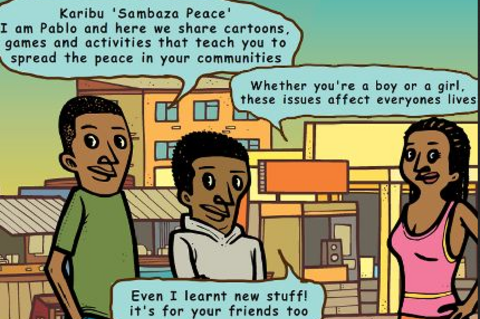
Sambaza Peace is an interactive, digital, and mobile learning game programme designed to develop a culture of peace among young people by providing them with knowledge, skills, values, and attitudes needed for harmonious co-existence and non-violent living. The project has been running from 2007 and was first run as a pilot in 5 youth centers in Nairobi, Kenya. The game was developed by NairoBits, Mama Bits, and Butterfly works, and includes online, mobile phone, and board game versions.
According to the producers, young people are particularly vulnerable to crime and violence both as victims and perpetrators, and they are also important resources in finding effective solutions. Through the programme young people learn to communicate their needs, prevent escalation of violence, enhance their self-esteem, negotiate with family, friends, community, and school for their betterment in an assertive and peaceful way.
Sambaza Peace is a cartoon based lesson programme which comprises games, activities, and online discussions, and are intended to be used by a facilitator. The tools include the following:
- Sambaza Peace online game.
- Sambaza Peace on cd-rom which is the same as the website but can be played without internet connection.
- A board game called Geth2o, which can be played as part of a lesson programme or stand alone.
- A mobile game also called Geth2o, which is a single player mobile phone game with the same game dynamics as the board game.
The games are intended to be used by an engaged facilitator, though they may also be played by youth alone. The programme is designed to assist the trainer as much as possible, and a facilitators’ guide has been produced to provide guidance. The programme is also supported by the Sambaza Peace facebook group for discussions and to spread the word.
Twelve young people were selected from various Slum Information centers to be trained to run the pilot version of Sambaza Peace with youth groups in and around Nairobi. At the end of the pilot, Sambaza Peace will incorporate lessons learnt, finish the development of the product, and upscale the programme across Kenya with partners. Development is happening in collaboration with a concept group of NairoBits students, alumni, youth workers, teachers, parents, police, and government representatives. The project is intended to emphasise the need to use new and innovative approaches to engage young people who are important change agents.
Conflict, Youth
Butterfly Works, Nairobits, MamaBits