










































Radio for Peace, Democracy, and Development in Sudan
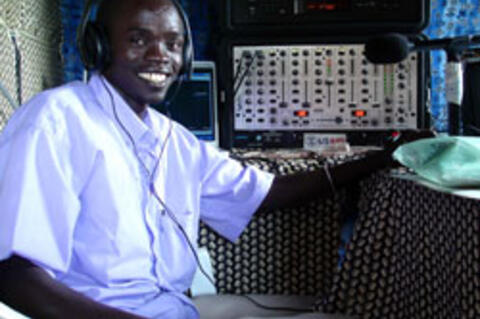
The project centres around the creation of five, soon to be six, community radio stations, in Malualkon, Leer, Kauda, Kurmuk, and Turalei broadcasting to a radius of approximately 30 miles in each location. Each of the stations broadcasts six days a week for a minimum of eight hours per day, in at least ten different languages.
According to Internews, as there was no existing communications infrastructure in the five communities in which Internews implemented the project, the agency did everything from constructing the buildings and transmission towers to equipping the studios and training the journalists. Because electricity is unavailable in the region, Internews installed alternative energy sources in the stations, such as solar and wind power, a backup battery, and generator systems.
In addition, the stations' staff are continually trained in reporting, production, and management, and are gaining an understanding of their role as community journalists and the media's role as watchdogs of good governance and democracy. As part of the project, journalists also receive ongoing training to provide their communities with information about the peace agreement, the new constitution, community news and information, and a number of issues around the resettlement of returning refugees.
Internews also introduced a radio station exchange programme in response to journalists' desire to learn about the stations Internews had set up in other communities. Journalists are able to travel to other sites to see how the radio station operates. According to Internews, the programme fosters new friendships and opens new pathways to peace as the journalists, who are from different ethnic communities, learn from each other and discover commonalities. For example, during one exchange visit, four of the reporters were Nuer, from Unity state, and four were Dinka, from Northern Bar el Ghazal. During the conflict period, they would never have met each other, never have seen each other's communities, or stood in each other's studios. Though there is relative peace now, these two groups were enemies at one point during Sudan's long-running civil war. After meeting, the journalists created programmes about each other's culture and traditions.
Conflict, Peacebuilding
Internews and United States Agency for International Development (USAID).
Internews Press Release - Jan 30 2008. and Internews Press Release - Oct 16 2008, and Internews Press Release - July 7 2009 - all accessed on December 16 2009.
- Log in to post comments