










































On Pense à Toi [We Are Thinking about You]: An Interactive Media Campaign to Raise Awareness of Zoonoses among Rural Populations in Mali
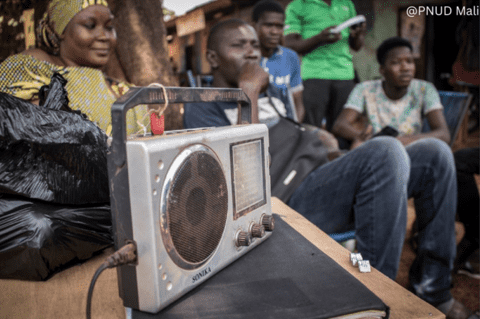
"Je suis très contente de l'émission 'On Pense A Toi'. Beaucoup de femmes dans les villages que je visite m'ont dit qu'elles ont commencé à mettre en pratique les conseils donnés dans l'émission." - Senedia Sidibé, Présidente des femmes rurales de Sikasso ["I am very happy with the programme 'On Pense à Toi'. Many women in the villages I visit have told me that they have started to put into practice the advice given in the show." - Senedia Sidibé, President of Rural Women of Sikasso]
Mali is a majority agro-pastoral country, with the majority of the population leaving in rural areas with little or no knowledge about the risks associated with zoonotic diseases. Thus, to raise awareness among the rural populations in Mali about diseases that can be transmitted from animals to humans and vice versa and to ensure they have sufficient information to protect themselves and their communities, the Breakthrough ACTION project and its local partners developed, with the participation of priority populations, an informative and fun interactive radio show called "On Pense à Toi". In order to, on the one hand, broaden the audience and adapt to different listening uses and, on the other hand, promote interaction between listeners and speakers or moderators, the show was supported by WhatsApp groups. The primary audience is made up of shepherds and animal owners (mainly men) living in semi-urban and rural areas with access to radio and WhatsApp and having a basic level of education. Other audiences include people whose activities involve handling animals or animal products, as well as community health workers (human and animal health) and leaders of pastoral, women's, and youth associations.
"On Pense à Toi" is a prototype resulting from an HCD process carried out in the health district of Yanfolila (Sikasso region) with rural communities to determine actions promoting awareness of said communities to the risks posed by zoonoses. From this process, it emerged that the broadcast of a series of radio programmes that were both fun and informative, involving experts and positive deviants, on themes relating to zoonoses could positively influence the perception of risks linked to zoonoses and induce social change, as well as the adoption of preventive behaviours. A previous baseline study revealed that radio was one of the most effective means of communication for talking about zoonoses in rural areas.
The 60-minute weekly variety show programmes were produced, broadcast, and/or rebroadcast by community radio partners of the project. Featuring interviews with experts in human, animal, and environmental health or community resource persons, the programme themes relate to the good management of animals to avoid the emergence or spread of zoonoses. Answers to listener questions are collected via WhatsApp or telephone call. Musical interludes are featured.
WhatsApp groups are created and moderated by each radio station involved; listeners are invited to subscribe. WhatsApp groups serve as:
- A complementary distribution platform: An audio file of each episode is uploaded to the WhatsApp group. Group members can access it on demand and also share it with their contacts.
- A platform for exchange and discussions: Members of the group can share their concerns relating to zoonoses and their experiences, particularly in putting into practice the behaviours promoted during the broadcasts.
A pilot phase was conducted in 2021 in the health districts of Yanfolila, Sikasso region, and Diéma, Kayes region, with 5 participating radio stations. Following the pilot, the first phase of the project was deployed from August 16 2022 to October 20 2022. It involved 26 radio stations in 3 regions and 11 districts. The 56 programmes produced and broadcast by 8 radio stations were rebroadcast by 18 other radio stations, for a total of 364 rebroadcasts. The total audience for this period is estimated at 1,227,735 people, and the 11 WhatsApp platforms had a total of 658 members.
Phase 2 of the project was launched in March 2023 through a partnership with Radio Kledu conglomerate. This radio conglomerate has a national reach and will allow the expansion of the coverage and thus the audience of the show. Furthermore, this national radio station broadcasts its programmes via social media, notably Facebook and YouTube (see example video, below).
Context:
Livestock breeding is one of the main economic activities in Mali, representing around 15% of the Gross Domestic Product (GDP). The sector is characterised by a predominance of traditional family farms, where the cohabitation between wildlife, livestock, and humans creates a favourable environment for the emergence and spread of zoonoses.
Impact:
According to organisers, Phase 1 of the programme was appreciated overall - both by service providers and listeners - and seems to have had a positive impact, particularly on the propensity of listeners to have their animals vaccinated. The head of the Livestock Department in Sikasso said: "Really, the show helped us since we noticed that more people come with the dogs for vaccination. Also breeders use our service or private ones to vaccinate their animals. I can say that we have achieved our goal." The themes discussed were deemed relevant, particularly given the responsiveness of listeners, as indicated by Alassane Sidibé, Host at Radio Wassoulou (Sikasso): "The show produced a lot of reactions, as evidenced by the increased telephone calls during the broadcast. Some listeners even stopped by our station to thank us for choosing themes that correspond to their daily lives." In addition, listeners seem to be in favour of adopting the advice and recommendations shared during the programme.
Emails from Stephanie Clayton to The Communication Initiative on November 20 2023 and December 4 2023, and "On pense à toi": Une campagne médiatique interactive qui sensibilise les populations rurales aux zoonoses" and "'On pense à toi' campagne médiatique interactive d'information et de sensibilisation aux zoonoses". Image credit: @PNUDMali
- Log in to post comments