










































A PATH Update: Shaping the Market for Neonatal Resuscitation Equipment
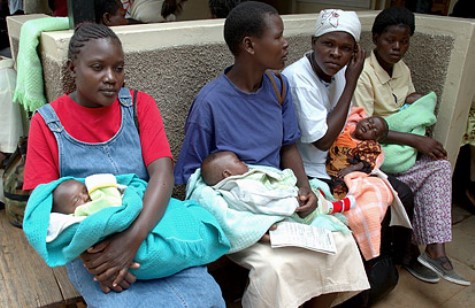
"This report describes how PATH, in collaboration with partners, undertakes distinct activities at each phase of the value chain - from research to scale-up - to shape the global market for basic neonatal resuscitation equipment for developing countries, as well as some potential risks and mitigation plans going forward."
In order to "shape the global market and accelerate introduction and scale-up of basic neonatal resuscitation equipment (reusable bag and mask newborn resuscitator, reusable manual bulb suction device and resuscitation training mannequin) for developing countries", PATH describes distinct sets of activities at each phase, from research to scale, that "must be properly performed and bottlenecks [that] have to be identified...as well as some potential risks and mitigation plans going forward."
The five main activities for shaping the market to accelerate scale-up include:
- "Global landscape analysis to understand availability and accessibility of neonatal resuscitators in the global market
- Market assessment in two regions of Sub-Saharan Africa to articulate market dynamics [Southern African Development Community - SADC and Economic Community Of West African States - ECOWAS]
- Initiating a public-private partnership to develop high-quality, low-cost resuscitation devices
- Developing and providing guidance for low-resource countries for their procurement decisions" - This guidance was based upon evaluations of devices that were then compiled in a Practical Selection of Neonatal Resuscitators, Version 3: A Field Guide.
PATH also surveyed neonatal experts to determine practices and preferences related to resuscitators in developing countries. In 2008, a participatory evaluation was conducted in KwaZulu Natal, resulting in the preparation of a field guide specifically for South Africa. "This guide presents the criteria used during the device evaluation, evaluation results for each device, and suggestions on how to choose a resuscitator."
In order to build demand, "[t]he Helping Babies Breathe (HBB) Global Development Alliance (GDA) was created in 2010" as an evidence-based educational programme "to train birth attendants in developing countries in the essential skills of newborn resuscitation, with the goal of having at least one person who is skilled in neonatal resuscitation at the birth of every baby."
A suite of equipment, available at a guaranteed at-cost price through 2015 to public-sector procurers, was developed by Laerdal Global Health, accompanied by a procurement and logistics document from PATH, also available in Spanish. The risks and benefit of this "sole-source" style of supply are outlined on a chart on page 6 of the document, with a risk mitigation analysis that includes using the PATH purchasing guide to encourage and inform countries about the use, quality, characteristics, and availability of resuscitation devices.
PATH website, November 13 2014, and email from Siobhan C. Brown to The Communication Initiative on November 21 2014.
- Log in to post comments