










































Participatory Integrated Climate Services for Agriculture (PICSA): Field Manual
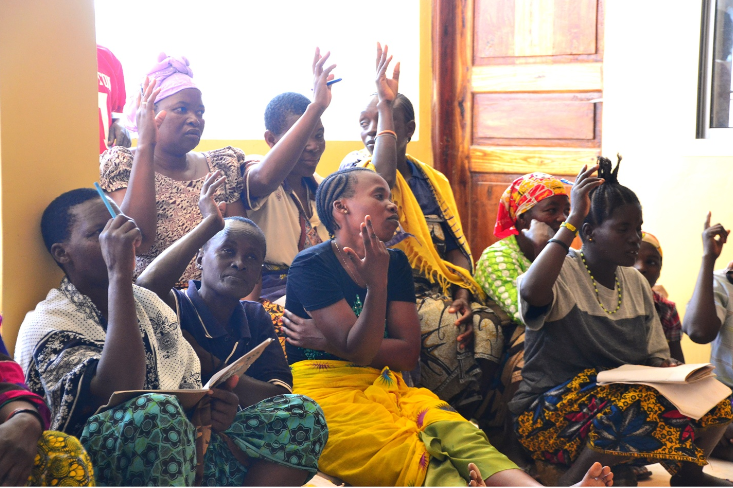
The Participatory Integrated Climate Services for Agriculture (PICSA) approach is inspired by the belief that smallholder farmers are key to food security in sub-Saharan Africa, where two-thirds of the population depend on small-scale, rain-fed farming as their main source of food and income. Critical farming and household decisions depend upon the weather - for example, how much rain falls, the length and start date of the rainfall season, and the timing of dry spells. Such aspects of the weather vary considerably from year to year. PICSA aims to facilitate farmers to make informed decisions based on: accurate, location-specific, climate and weather information; locally relevant crop, livestock, and livelihood options; and with the use of participatory tools to aid their decision making.
This field manual is a step-by-step guide to working though the PICSA approach with farmer groups. It is primarily for the use of facilitators (e.g., non-governmental organisation (NGO) and extension field staff who have received training in the use of the PICSA approach). The PICSA approach is divided into 12 steps to be carried out with groups of farmers. Key components include: providing and considering climate and weather information with farmers; jointly analysing information on crop, livelihood, and livestock options and their risks by field staff and farmers; and sharing a set of participatory tools to enable farmers to use this information in planning and decision-making for their circumstances. Due to the location-specific nature of PICSA, there are a number of preparatory activities that need to be completed before field staff are trained in the approach. The details of these activities can be found in the document "Preparing for PICSA" on the PICSA website.
Throughout the steps, tips for successful facilitation are offered. For instance: "When you explain an activity it is often useful to provide an example. After introducing some examples, it is important to remember that in all participatory methods it is the participants (farmers) that complete the activities. The facilitator facilitates the process, supports the farmers and asks questions. For example, if the activity involves drawing diagrams then after providing an example to the farmers they should be doing their own drawing."
65
CGIAR website, accessed on November 10 2015 - sourced from C4D Network Slimline Twitter Trawl: 2 - 8 November 2015. Image credit: Cecilia Schubert - CGIAR Research Program on Climate Change, Agriculture and Food Security (CCAFS)