










































Narrowing the Gap: Scaling up Adolescent’s Access to Quality Information and Utilization of Services on HIV Prevention, Treatment, and Support Services
This qualitative evaluation report shares findings from an assessment of Adolescent Club activities led by Pakachere Institute of Health and Development Communication (IHDC) in Malawi. The clubs were formed to support the provision of comprehensive knowledge about HIV and AIDS and sexual reproductive health (SRH) to adolescents, focusing on increasing demand and uptake of HIV testing and counselling (HTC). According to Packachere, "Active participation of adolescents in SRH and HIV prevention activities has the potential to build their ability to demand and access services. Interventions for adolescents must focus on building skills and making them 'do it for themselves.'"
The first phase of the project, covered by this report, took place between February and December 2013 and comprised 18 clubs in Thyolo and Blantyre rural communities in Malawi, funded by the Deutsche Gesellschaft für Internationale Zusammenarbeit (GIZ) through the United Nations Children's Fund (UNICEF) Malawi (the initiative has since been expanded.) Participants undertook weekly tasks, guided by a matron and patron, from an activity book. These activities included outreach to create demand for HTC services among fellow adolescents and organising HIV testing days. They were required to present their weekly tasks to club members or communities, with each member given a chance to lead a session. "The clubs were oriented to an active learning process adapted from the child to child approach which required young people to be actively involved in finding out more about HIV and AIDS and how they can prevent transmission and infection."
In order to create an enabling environment, bi-monthly meetings were conducted with parents, traditional leaders, and Village Health Committees in order to collectively encourage parents to support adolescents’ efforts to access HTC and other SRH services. The qualitative evaluation was done using focus groups and individual in-depth interviews among clubs, matrons and patrons, parents, traditional leaders, and District Youth Officers.
The report outlines assessment findings around four key objectives:
- Increasing adolescents' understanding of HIV modes of transmission:
- Increase adolescents' understanding of their risk to HIV infection and the importance of HIV testing:
- Build efficacy among adolescents to be able to demand and access HTC and other referral services, as well as motivating each other to do the same:
- Increase the ability of parents and guardians to motivate and create an enabling environment for adolescents to access HTC and other referral services freely:
The assessment found that adolescent club members "demonstrated an increased understanding of transmission modes of HIV" including greater awareness around the risks of multiple partners, early pregnancy, and mother-to-child transmission.
The study also found that club members gained greater awareness of their own risks related to early sex and multiple partners. In terms of testing, "adolescents reported that they realized the importance of HIV testing while some reported that the fears they had regarding HIV testing were addressed." The HTC open days were found to offer increased access to testing, though the high demand meant that not all adolescents were able to be helped.
The findings point to improved self-efficacy. "Through the clubs, adolescents were able to consult their parents, matrons and patrons who assisted them to organize HTC sessions." The assessment also found that club members reached out to fellow adolescents who were not part of the clubs to motivate them go for HTC through the HTC day that they had organised.
The clubs were reported to be welcomed and supported by parents and traditional leaders, who saw the value in their children participating. One of the club activities was tasking members with speaking to their parents about issues they previously would not have, and this was said to help to increase communication and encourage parental support for HTC.
The report also outlines a number of specific findings, which, according to the report, suggest that members enjoyed the club and learned a lot, and that participating in the clubs resulted in positive behaviour changes. This included fewer sexual partners, resulting from increased awareness and being kept busy with club activities. According to the report, the club activities helped adolescents become more comfortable with testing and speaking openly about issues related to HIV, including with their parents. Along with improved HIV skills and knowledge, participants also gained communication, public speaking, interpersonal, organising, and drama skills.
In terms of challenges, the assessment found that some parents were still reluctant to allow their children to participate and that materials and training for the clubs was not sufficient. The need for more visits, both from Pakachere and among clubs, as well as the importance of respecting time were identified as issues for improvement.
Email from Simon Sikwese to Soul Beat Africa on December 10 2014.
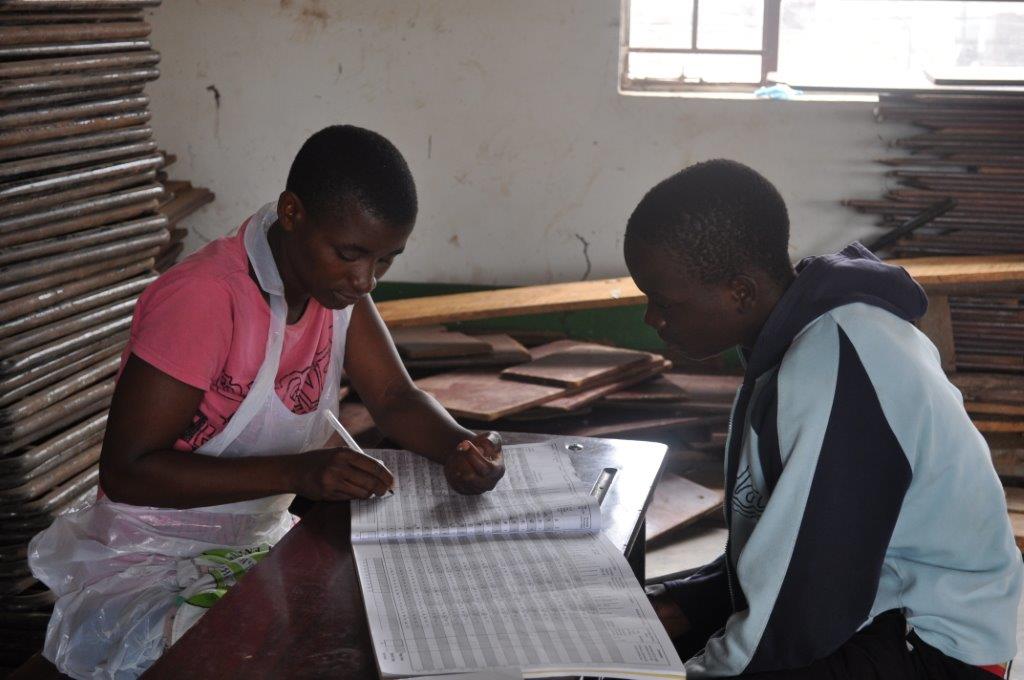
Image of an HTC counselor taking particulars of an adolescent before counseling and testing him. Credit: Pakachere
- Log in to post comments