










































1 minute
Musical Life in Guyana: History and Politics of Controlling Creativity (Caribbean Studies Series)
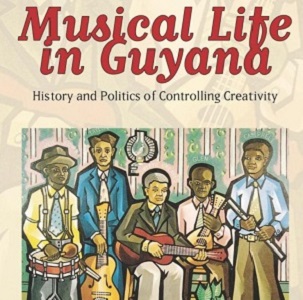
Musical Life in Guyana is the first in-depth study of Guyanese musical life. It is also a richly detailed description of the social, economic, and political conditions that have encouraged and sometimes discouraged musical and cultural creativity in Guyana. The book contributes to the study of the interactions between the policies and practices by national governments and musical communities in the Caribbean.
Vibert C. Cambridge explores these interactions in Guyana during the three political eras that the society experienced as it moved from being a British colony to an independent nation. The first era to be considered is the period of mature colonial governance, guided by the dictates of "new imperialism," which extended from 1900 to 1953. The second era, the period of internal self-government and the preparation for independence, extends from 1953, the year of the first general elections under universal adult suffrage, to 1966, the year when the colony gained its political independence. The third phase, 1966 to 2000, describes the early postcolonial era.
Cambridge reveals how the issues of race, class, gender, and ideology deeply influenced who in Guyanese multicultural society obtained access to musical instruction and media outlets and thus who received recognition. He also describes the close connections between Guyanese musicians and Caribbean artists from throughout the region and traces the exodus of Guyanese musicians to the great cities of the world, a theme often neglected in Caribbean studies. The book concludes that the practices of governance across the twentieth century exerted disproportionate influence in the creation, production, distribution, and consumption of music.
- Log in to post comments