










































Mozambique Flood Recovery Radio Project
The project worked with three community radio stations located in the Gaza region of Mozambique, which is an area highly prone to flooding - Radio XaiXai, Radio Comunitaria do Chibuto, and Radio Vembe in Chokwe. The goal of the project was to support community radio stations to develop magazine style programmes which would include interviews with specialists, voices from the community, short dramas, and other segments to share information and ideas with their listeners around the flood recovery process. Key information included addressing aspects such as staying healthy, food security, a return to livelihoods, and the reconstruction process.
The project involved the following activities:
Production of a pilot toolkit
In order to provide the participating radio stations with a model programme and resources to help guide production of subsequent magazine programmes, a set of pilot materials was created. Each station received copies of the toolkit during a 3-day training session. The toolkit comprised the following on CD and in a printed manual format:
- a 15-minute pilot programme, demonstrating a fully produced high quality, produced model of a magazine style programme on flood recovery;
- a set of pre-recorded audio materials to help stations produce their first programmes - 4 recorded interviews with disaster risk reduction (DRR)/flood recovery "experts" and 4 testimonials of people affected/ involved with flood recovery;
- original theme music;
- 4 short drama insert scripts that could be recorded/adapted/ translated;
- ten thematic issue guides covering: housing and shelter; women/ gender; children and education; emotional health; food security; resettlement; health; water and sanitation; migration; and livelihoods;
- a contact list for sources; and
- background materials.
3-day Station-based Training
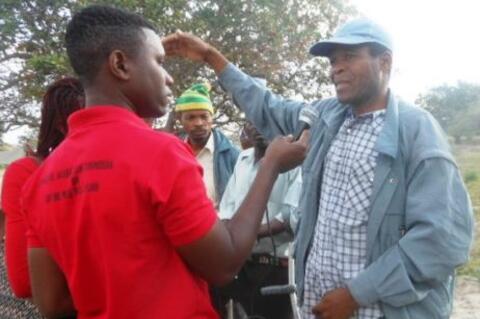
In July 2013, a three person team travelled to Gaza to work with community radio stations to produce the first programmes on flood recovery and disaster risk reduction. The hands-on workshop focused on producing magazine programmes – including planning, going out to the field to do interviews, writing and recording reports, and putting the programmes together. Using the toolkit for guidance, the group planned out their magazine programmes, stories, and interviews. The journalist then went out into the field, particularly visiting relocation camps, to collect interviews.
Magazine programme production and mentoring support
In order to encourage radio stations to continue to use the tools and training to create programming, the project included ongoing monitoring and mentorship. Stations sent the programmes to CMFD for review and comment. A follow-up visit to each station was conducted 3 months after the initial training. In order to encourage the participating radio stations to produce high quality programmes, an awards programme was created. At the close of the project the best programmes received a monetary award to recognise their efforts.
Click here to listen to some of the programmes produced by the radio stations on the IOM Mozambique blog.
Disaster risk reduction (DRR) and recovery, Migration
International Organisation for Migration (IOM) Mozambique, CMFD Productions
CMFD Productions website on September 30 2014.