










































mHealth for Behavior Change Communication Brief: Why mHealth Messaging?
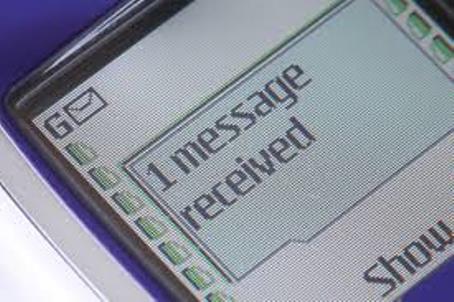
"Mobile messaging has been shown to be successful for many health behaviors, including medication adherence, chronic disease self-management, and disease prevention."
This MEASURE Evaluation Technical Brief explores mHealth technology, sending behaviour change communication (BCC) and informational messages on health over mobile devices - how it has been used, channels available, a summary of behavioural theories and message frames, and steps in creating a programme. The brief gives a sampling of topics for which mobile messaging programmes have been developed, e.g., adherence for antiretroviral drug regimens or pregnancy-related knowledge and antenatal care visits for pregnant women, and recommends the mHealth Evidence website for more evidence.
A further sample of specific programmes to address the information needs of individuals living in low-resource settings includes, for example, Stop Smoking Services SMS (short message service), a United Kingdom National Health Service (NHS) programme or MomConnect, "a South African National Department of Health (NDoH) program which uses SMS to register pregnant women in South Africa and provide stage-based messages throughout pregnancy and up to the child’s first birthday".
A chart of technology channels (page 1) includes the pros and cons of: SMS, USSD (unstructured supplementary service data), MMS (multimedia message service), IVR (interactive voice response), and data (apps and internet). These channels vary in: devices that can receive them, possible message length delivery, channel ability to respond to prompts or make requests, delivery of video or audio, and cost, etc.
A chart on page 3 gives key considerations for message programme framing including:
- Guiding Behavioral Theories and Message Frames - choosing the guiding theory: "Evidence shows that BCC programs are more effective when informed by theories of behavior, and that the way a message is framed can influence the way a person interprets and accepts the message."
- Context for Target Population - creating messages with the understanding of a user's perspective, constraints, etc.
- Frequency of Message Delivery and Amount of Messages - determining both frequency and random or ordered delivery, with consideration for stages of information needs and evidence-based approaches.
- One-way vs. Two-way Messages - debating lower cost of one-way messaging technology versus evidence of better success with an interactive programme.
- Guidelines for Resource Recommendations and Referrals - setting standards for use of internal or outside referrals, after checking their capacity to handle services.
- Message Tone - adopting a tone that is authoritative or friendly, etc.
The steps of programme formation include the following:
- Step 1: Identify the team and manager.
- Step 2: Specify exactly what the programme aims to address through messaging - "The goal of the program can be defined using a SMART sentence, which helps to ensure that results are specific, measurable, achievable, relevant and time-based (SMART)....[Example structure]: The scope of this messaging program is to (verb) (target audience) preposition (action/fact) (time), as measured by (quantifiable indicator metric)."
- Step 3: Create messaging programme framework - Bring in stakeholder and evidence-based input.
- Step 4: Identify programme constraints - "Potential constraints to consider are the program budget, additional costs associated with implementation, organizational capacity, costs transferred to the message recipient (e.g., mobile network operator SMS fees), mobile connectivity, access to a mobile phone by the target audience, and literacy and/or numeracy of the target audience."
- Step 5: Develop or adapt the first draft of the message library - Develop comprehensible messages focused on the key points identified in the topic list, reviewed to ensure they meet goals of the SMART statement.
- Step 6: Conduct expert review - Gather an expert review team, looking for "factors such as scientific accuracy, practicality, and cultural appropriateness."
- Step 7: Gather feedback from audience - Methods include "surveys, focus groups, in-depth interviews, usability testing on a mobile device, or short-term implementation of the messaging program in the context of the message recipient’s real life (e.g., a one week trial period followed by a survey or interview)."
- Step 8: Message refinement - Refine messages based upon feedback and expert review results.
- Step 9: Continual review of content and channels - Develop a schedule for regular reviewing for continued meaning, accuracy, and relevancy.
- Step 10: Evaluation of programme success - Measure not only the intended health outcomes but also audience satisfaction and perception.
The brief concludes with a discussion of translation into multiple languages and the complexity of the need for special characters, etc. Back translation to the original language is recommended as a way to check tone and meaning in the translations.
Measure Evaluation website, October 9 2015.
- Log in to post comments