










































Memory Studies - A Brief Concept Paper
University of Cape Town
"The concept of collective memory rests upon the assumption that every social group develops a memory of its past which allows it to preserve and pass along its self-image."
The paper outlines the evolution of the multidisciplinary field of memory studies, explaining terms such collective memory (first used in the early 1900s), cultural memory, historical memory, and collected memory, and investigating how memory studies and media studies intersect. The paper has been published as part at of the Media, Conflict and Democratisation (MeCoDEM) project which investigates the role of traditional media and information and communication technologies (ICTs) in conflicts that accompany and follow transitions from authoritarian rule to more democratic forms of government. The project seeks to investigate the interplay between media and democratisation conflicts, which it defines as “conflicts that are either triggered by the transition process or caused by incomplete consolidation”. Research is focused on four countries: Serbia, Egypt, Kenya, and South Africa, which were chosen because they reflect different experiences of democratisation conflicts and because they differ widely in terms of their political, social, economic, and cultural makeup. This research paper forms part of the project’s internal investigations in order to help determine the MeCoDEM project’s approach and strategies.
The paper starts off by defining the field of memory studies. “Memory studies is a multidisciplinary field which combines intellectual strands from anthropology, education, literature, history, philosophy, psychology and sociology, among others (Roediger & Wertsch, 2008).” The paper explains that collective memory is memory that is shared among members of a social group or community, be it a nation, an institution, a religious group, or a family, and that memory research is often used in in the context of political transitions where countries and communities need to deal with past collective hurts and trauma in the present.
A discussion of the methods used in memory studies explains how attention to questions of methodology has been limited in memory studies because much research has been more concerned with theoretical issues. Methods that have been used include studying primary historical and archival sources, oral histories, case studies, interviews, and surveys. It also looks at methods such as discourse analysis, which has been used in processes of remembering, showing how people co-construct the past in their joint production of the social worlds they inhabit through speech and language.
The paper offers some thoughts about how memory studies and media studies intersect, particularly given that the mass media plays a key role in the constitution of memory. In the context of the media, it makes the point that the politics of remembering is intrinsically connected to power, as what is produced by the media depends on who is in power. Also, media can only be seen as “'the first draft of history', recording events as they happen, negotiating history and memory.” On the other hand, other theorists have pointed out that the media often includes a treatment of the past when reporting on the present, which could be considered a form of memory work.
A brief discussion of the critiques of memory studies highlights the fact that “the field has not paid attention to the problem of reception (in terms of methods and sources) and thus cannot illuminate the sociological basis of historical representations.”
The paper concludes that “the MeCoDEM project can draw upon conceptual notions from the field of memory studies, in order to interrogate the media’s role in constructing and disseminating collective memories of conflict in the transitional countries that form part of the project.”
MeCoDEM website on September 12 2016.
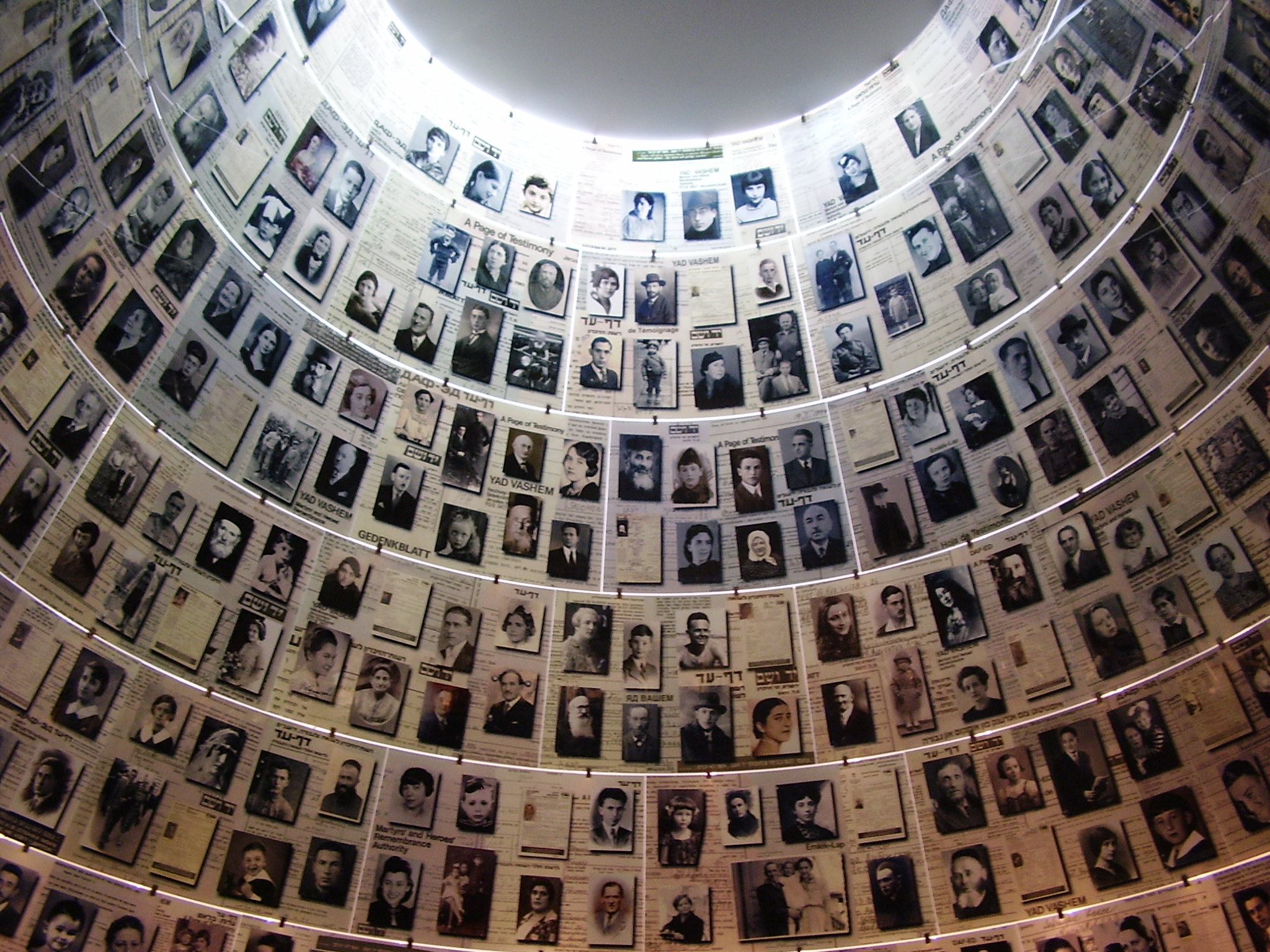
Image credit: Hall of Names at Yad Vashem, © Israel Ministry of Tourism